
Bridal Headpieces by Dress Silhouette: A Style Guide
Key Takeaways
The most flattering headpiece by dress silhouette is the one that balances your gown rather than competing with it. Start with shape, then refine the choice around your hairstyle, neckline, venue, and budget.
- Match the accessory’s visual weight to the fullness and detail of your dress.
- Use veils, tiaras, combs, vines, and crowns to create balance from head to hem.
- Let your neckline, back, fabric, and embellishment guide the finish.
- Plan the headpiece with your hairstyle and any ceremony-to-reception change.
- Beautiful bridal accessories can feel elevated without overspending.
Start with the silhouette before choosing a headpiece
Your dress silhouette gives you the first useful clue about your headpiece. A full gown can carry more height, while a sleek slip dress often looks best with something refined and light. Before saving accessory photos, look at the whole outline of your outfit. This is the same starting point recommended in a helpful silhouette guide, where shape, fabric, and embellishment work together.
.jpg)
Match visual weight from head to hem
Think of your outfit as one long line, from the top of your hairstyle to the end of your train. A large crown above a simple gown can make the head feel visually heavy, while a tiny pin may disappear beside a grand skirt. The goal is not to match every detail, but to create a pleasing rhythm.
A quick way to check the balance is to compare these three elements:
- the volume of the skirt
- the scale of the bodice details
- the size and shine of the headpiece
If one element dominates, adjust one of the others rather than adding more sparkle everywhere. A balanced look usually feels more effortless in photographs, too.
Balance volume without competing with the dress
A headpiece should frame your face and finish the outfit, not fight with the gown for attention. If your dress has a dramatic skirt or heavily decorated bodice, try a cleaner accessory with one clear focal point. If the dress is quiet and streamlined, a vine, halo, or sculptural comb can bring in the interest.
Balance is the bridal secret: choose one or two areas to make memorable, then let the rest support them. This keeps the look modern instead of crowded.
Consider the dress’s neckline and back
Necklines change where the eye rests, so your headpiece should work with that focal point. A high neckline may pair nicely with an updo and a slim tiara, while a strapless gown leaves room for more detail near the face. If your dress has an open back, think about whether a long veil or trailing vine will highlight it or hide it.
Your hairstyle matters here, too. A comb tucked into a low bun can echo an open back beautifully, while a headband keeps attention near the face. For more accessory pairing ideas, browse this bridal accessorizing checklist before your fitting.
Let fabric and embellishment guide the finish
A soft lace gown often welcomes pearls, floral details, or delicate metalwork. Clean crepe, satin, or silk can look especially chic with polished metal and fewer stones. You do not need to copy the dress’s embellishment exactly; repeating its mood is usually enough.
Bring a fabric swatch or a clear photo when shopping. Seeing the accessory beside the gown makes it much easier to judge color, shine, and scale than imagining each piece separately.
Headpieces for ball gown and princess silhouettes
A ball gown or princess silhouette already has presence, so your accessory can meet that energy. Height, sparkle, and a veil with movement all have room to work here. The trick is to choose one lead element instead of stacking every dramatic option together. A formal gown can still feel fresh when the headpiece has a clean shape.
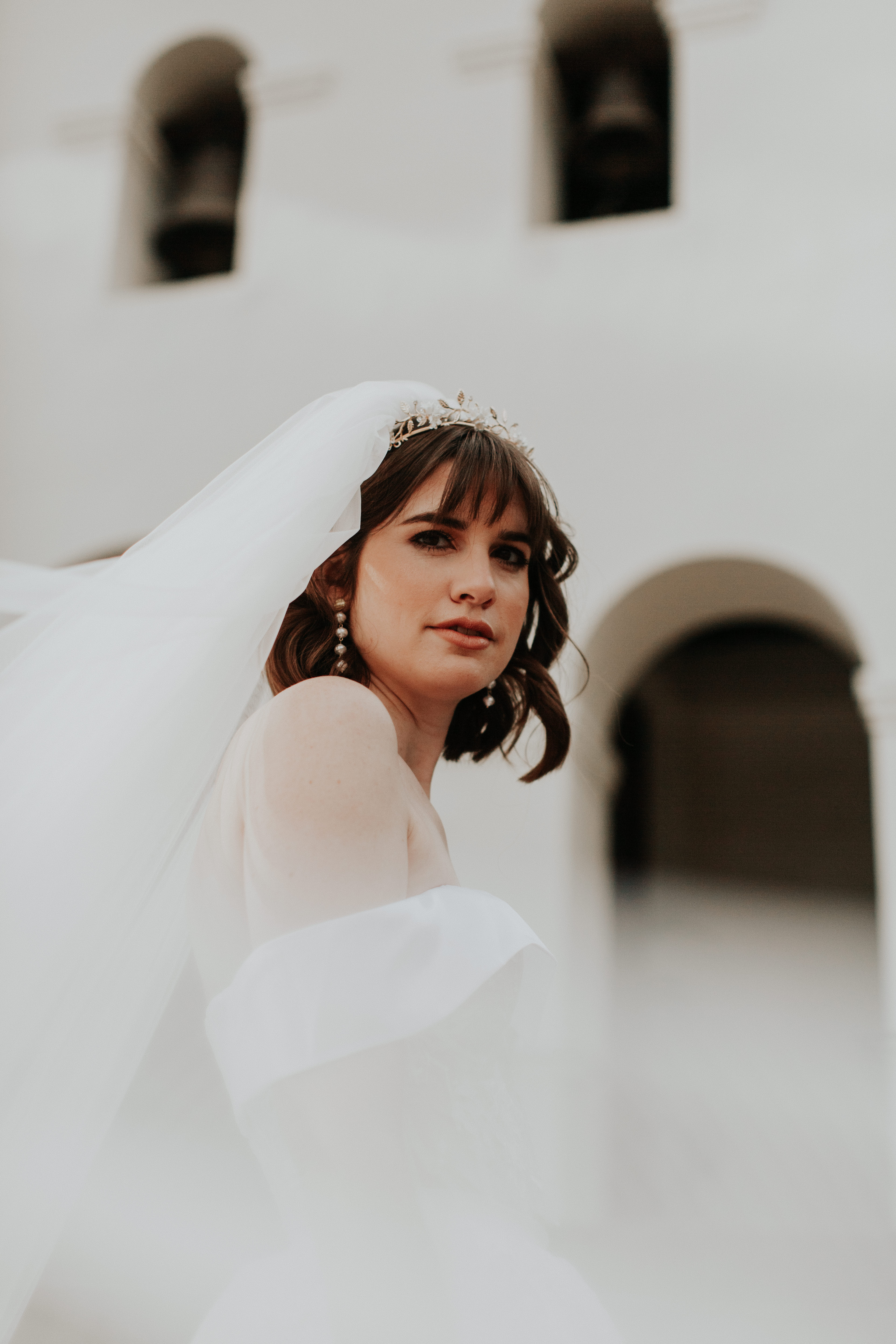
Add height with a tiara or crown
A tiara gives a full skirt a graceful vertical line, especially with a swept-up hairstyle. A crown feels more substantial and works best when the ceremony setting and dress both support a strong statement. Keep the rest of the jewelry edited if the crown is ornate.
If you are unsure which direction feels right, compare the refined scale of a tiara with the fuller presence of a crown in this tiara and crown guide. Then take photos from the front and side before deciding.
Soften a full skirt with a romantic veil
A veil can keep a voluminous gown from feeling too structured. Fingertip, chapel, and cathedral lengths each add a different amount of movement, while a lightly gathered veil brings softness around the shoulders. For a grand dress, a simple veil can be more effective than one with several competing borders.
Try the veil with your headpiece already placed. The pair should feel like one look, not two separate accessories sharing the same hairstyle.
Use a crystal comb for a polished updo
A crystal comb is a lovely choice when you want sparkle without adding height. Tuck it beside a chignon or into the back of a low bun so the dress remains the star from the front. This placement also gives guests a pretty detail to notice as you move through the ceremony.
Make sure the comb has a secure base and does not press uncomfortably against your head. A short trial with your stylist can reveal whether it stays put through hugs, walking, and dancing.
Avoid accessories that overwhelm a statement bodice
If the bodice has lace, beading, appliqué, or a strong neckline, keep your headpiece from repeating every detail. Choose a related finish, such as a small crystal accent or a simple pearl, rather than an exact copy. The result will feel coordinated without looking overly matched.
A bold earring can also change the decision. When the ears and bodice are already doing plenty, a clean veil or understated comb may be all you need.
Headpieces for A-line wedding dresses
A-line dresses are wonderfully adaptable because their skirts have movement without the full scale of a ball gown. They can look classic, relaxed, romantic, or fashion-forward depending on the fabric and styling. That flexibility means many headpieces can work, but proportion still matters. Let the accessory add personality while preserving the gown’s easy line.
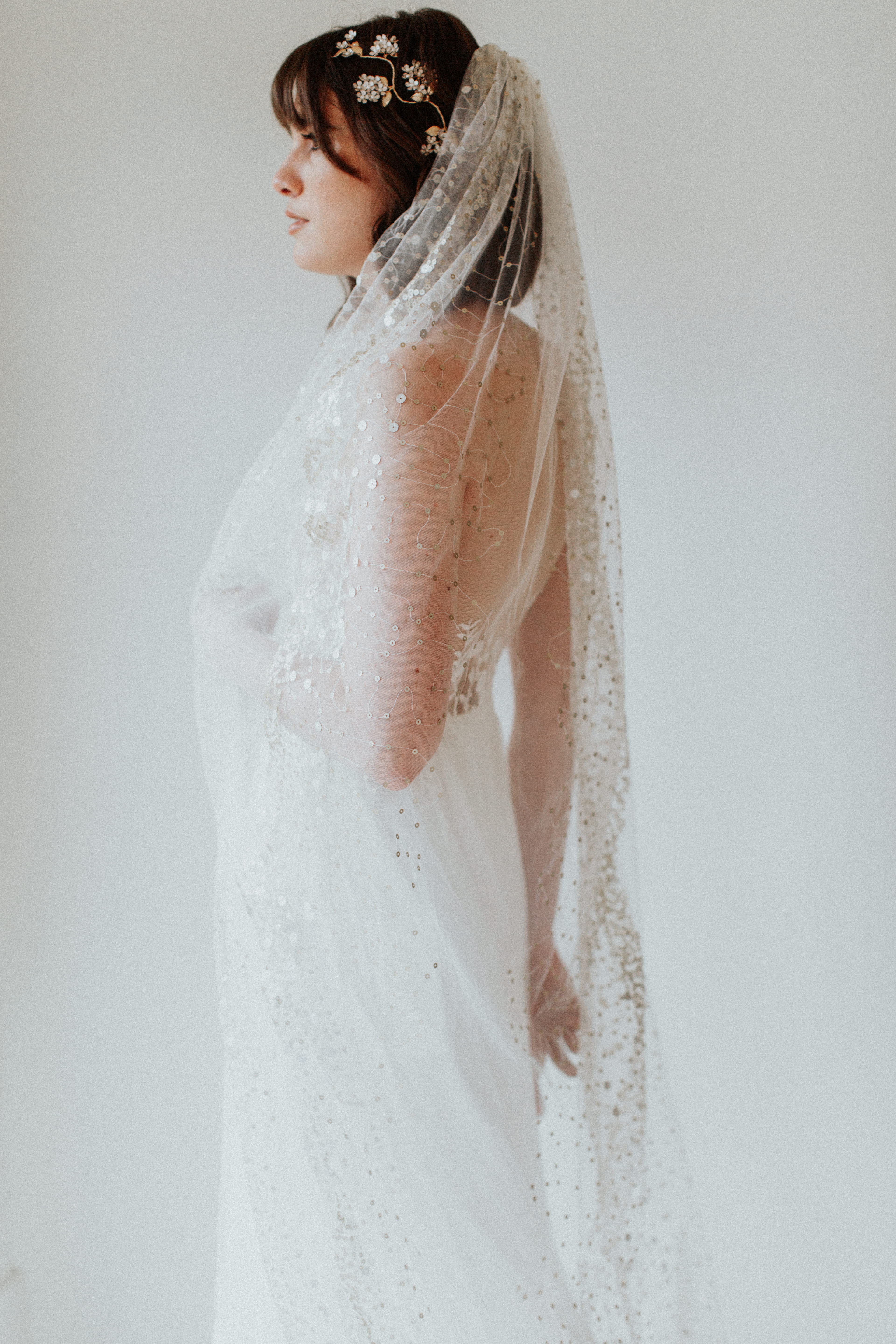
Choose a versatile hair vine or halo
A hair vine or halo can follow the shape of an A-line gown without making the outfit feel too formal. A vine woven through a braid feels relaxed, while a halo worn across the crown gives a more finished effect. These styles are especially useful if you want an accessory that can shift slightly between ceremony and reception.
For a direct look at options suited to different dresses, browse bridal headpiece inspiration. Save photos that show both the accessory and the hairstyle, not just the product on its own.
Pair classic proportions with a fingertip veil
A fingertip veil is a natural partner for many A-line dresses because it adds romance without swallowing the skirt. It works with loose waves, half-up hair, and low updos. A narrow edge keeps the combination light, while a more visible trim can echo lace or embroidery on the gown.
Stand in the veil from several angles. You want the length to frame the dress, not end at an awkward point across the narrowest part of the skirt.
Use a comb to highlight the hairstyle
A comb lets you make the hairstyle part of the accessory story. Place it above a bun for a classic profile, at the side of a twist for a softer look, or beneath a half-up style so it appears as you turn. The best placement depends on where your hair has the most texture and support.
Ask your stylist to pin a sample comb into your trial style. This is a small step, but it helps you judge comfort and visibility before ordering.
Select details that echo the dress without matching it exactly
Look for a shared feeling rather than a duplicate pattern. Tiny pearls can relate to soft satin, botanical shapes can complement floral lace, and warm gold can bring out ivory tones. A little contrast often makes the outfit look more considered.
This is also a good silhouette for mixing accessories thoughtfully. A delicate headpiece with slightly bolder earrings can feel balanced when both pieces leave breathing room around the face.
Headpieces for mermaid and trumpet silhouettes
Mermaid and trumpet dresses create a fitted, confident line before opening near the knee or lower leg. Because the gown already emphasizes shape, the headpiece can either soften that drama or echo it with a sharper finish. Veil length becomes especially useful here. Think about movement as well as sparkle, since a little softness can keep the overall look from feeling too rigid.
.jpg)
Balance a fitted skirt with a longer veil
A chapel or cathedral veil can add beautiful length to a mermaid or trumpet gown. The veil follows the dress’s sleek line and gives the ceremony look a sense of movement. If the gown has a dramatic train, choose a veil that frames it rather than obscuring its shape.
A fingertip veil is still a lovely option for a lighter, more contemporary result. Try both lengths during your fitting and take a few steps so you can see how each one moves.
Add softness with pearls, flowers, or a delicate vine
Pearls, small flowers, and fine vines soften the fitted silhouette without taking away its polish. Place them along a low bun, through a braid, or slightly off-center for an organic finish. The detail does not need to be oversized to show up in portraits.
If the dress is heavily beaded, choose one gentle motif and repeat it sparingly. Too many different textures can make the clean shape of the gown harder to appreciate.
Use a low-profile comb for sleek hairstyles
A low-profile comb works beautifully with a smooth bun, sculpted ponytail, or polished half-up style. It adds a glint at the back without changing the clean outline of the hairstyle. This is a smart choice when you want the dress and your face to remain the main focus.
Test the comb while moving your head. A piece that feels secure when standing still may need extra pins if the hairstyle is very smooth.
Know when a dramatic crown works best
A dramatic crown can look striking with a mermaid or trumpet gown when the rest of the styling is intentional and uncluttered. Keep the veil, earrings, and hairstyle simple enough for the crown to have room. This combination suits a bride who wants a clear statement rather than a barely-there finish.
Your venue can help settle the question. A grand interior may support more height, while an outdoor ceremony could call for a lighter crown that will not compete with wind or natural surroundings.
Headpieces for sheath, column, and slip dresses
Sheath, column, and slip dresses have a long, clean line that makes restraint feel very chic. Accessories should usually follow that simplicity, though a vintage veil or a single sculptural piece can add personality. Focus on finish, placement, and comfort rather than sheer volume. The right detail should look considered from every angle.
Keep the look streamlined with a slim tiara
A slim tiara adds definition without breaking the line of a narrow gown. Wear it with a sleek bun, low ponytail, or soft brushed waves for a polished finish. Choose a design with enough shine to be visible, but not so much height that it changes the mood of the dress.
If your gown is minimalist, the tiara can become the main decorative detail. Keep the earrings small or let the veil provide the extra movement.
Add romance with a cathedral or fingertip veil
A long veil creates contrast against a narrow dress and can make the ceremony look feel more romantic. Cathedral length is dramatic, while fingertip length keeps the outfit lighter and easier to move in. A plain edge often suits a slip dress particularly well.
Try the veil with the dress’s fabric in natural light. Satin, crepe, and silk can reflect light differently, so the finish matters as much as the length.
Choose minimalist metalwork for modern gowns
Clean metal leaves, slim bands, and simple geometric shapes suit contemporary gowns. Silver can feel crisp, gold can add warmth, and mixed metals offer a more relaxed styling note when used carefully. Look for a piece that follows the lines of the dress instead of introducing a totally different language.
A narrow headband or a few pins may be enough. Minimal does not mean unfinished; it means every visible detail has a reason to be there.
Use a birdcage veil for vintage-inspired styling
A birdcage veil gives a sheath or column dress a distinct vintage mood without adding much volume. Pair it with a low bun, red lip, or softly waved hair if those details feel like you. The short length keeps the face visible and works well for an intimate ceremony.
Secure the veil close to the crown or side of the hairstyle, depending on the shape you want across your face. Take portraits from both sides before finalizing the placement.
Headpieces for tea-length, short, and unconventional dresses
Shorter and unconventional dresses give you more freedom to play with proportion. A headpiece can be cheeky, sculptural, colorful, floral, or wonderfully traditional—the dress does not have to dictate one formal answer. Keep the scale light enough that the accessory supports the shorter hem. This is a great place to show a little more personality.
Try a birdcage or bandeau veil for a retro silhouette
A birdcage or bandeau veil pairs naturally with a tea-length dress and gives the outfit a defined retro note. Keep the rest of the styling clean so the veil’s shape remains visible. Small earrings and a neat hairstyle can make the whole look feel intentional rather than costume-like.
For a bandeau veil, check how the edge sits when you smile and turn your head. Comfort matters because this style stays close to the face.
Add personality with a floral crown or statement comb
A floral crown can suit an outdoor ceremony or a dress with a relaxed, artsy shape. A statement comb offers a similar sense of personality with a more controlled placement. Choose one focal piece and let the dress remain easy around it.
Floral details do not have to match the bouquet exactly. Repeating one color or shape is enough to create a connection without making the accessories look overly planned.
Match playful proportions with lighter accessories
Short hems tend to look best with accessories that have air and movement. Fine vines, small bows, narrow headbands, and petite combs keep the proportions fresh. Heavy crowns or very long veils can work, but they need a deliberately dramatic styling concept.
Before you decide, take a full-length photo. A headpiece can look perfectly sized in a close-up and surprisingly large when seen with the complete outfit.
Style bridal separates and jumpsuits with intentional contrast
Bridal separates and jumpsuits invite contrast, so you can pair tailored clothing with a soft vine or a clean suit with a vintage veil. The key is to make the contrast feel chosen. Repeat one element—metal tone, pearl, floral shape, or texture—to connect the pieces.
You can also use accessories to shift the mood from ceremony to reception. A veil may provide the bridal note for the ceremony, while a sculptural comb keeps the jumpsuit feeling modern afterward.
Final styling decisions for your headpiece by dress silhouette
Once you know the silhouette, the final decision comes down to how the accessory lives with you. You should be able to sit, hug, walk, and dance without constantly checking it. Bring your actual veil, earrings, or dress photos to the hair trial when possible. The finished look should feel like your personal style, just a little more intentional.
Coordinate the headpiece with your hairstyle
Choose the hairstyle and headpiece together, not one after the other. A comb needs a secure place to grip, a vine needs enough length to weave or pin, and a tiara needs a stable base. If you are undecided, test two hairstyles with the same accessory before ruling it out.
This bridal hair comb guide is useful when you are comparing placement in an updo, half-up style, or flowing hair. Take front, side, and back photos during the trial so you can see what guests and cameras will see.
Choose between silver, gold, pearls, and mixed metals
Silver feels crisp and cool, gold brings warmth, and pearls can soften almost any finish. Mixed metals can look modern when one tone clearly leads and the second appears in small details. Use your dress color, jewelry, and personal wardrobe as the deciding factors.
Do not feel pressured to match every metal exactly. A thoughtful mix often feels more personal than a perfectly coordinated set.
Consider the ceremony setting and reception hairstyle change
Wind, humidity, heat, and dancing all affect your choice. An outdoor ceremony may call for a secure vine or comb, while an indoor evening celebration can support more height and sparkle. If you plan to change your hairstyle, choose an accessory that can move with it or select a second piece for the reception.
Write down the plan for your stylist: where the veil comes out, where the headpiece moves, and which pins are needed. A simple plan makes the transition much calmer on the wedding day.
Shop beautifully without overspending on bridal accessories
Set your accessory budget after choosing the gown, but before falling in love with ten options. Compare the total look, not just the individual price, and prioritize pieces you will genuinely wear for hours. Poppy Lane Bridal is built around direct-to-consumer bridal accessories at factory-direct prices, so you can look for modern, elevated details without assuming a higher markup means better style.
A smart shopping list can include:
- one main headpiece
- one veil or ceremony layer
- earrings that support the hairstyle
- backup pins and a small storage pouch
Poppy Lane also offers a broad selection of bridal accessories and veils for brides who want style that feels accessible and well considered. You can shop headpieces and compare the shape, finish, and styling possibilities before making your final choice. For a wider range of accessory ideas, Unbounce, wine pairing guide, AI healthcare guide, AI design tools, and podcasting studio are separate resources you may come across while researching online, but they are not part of bridal styling.
Shop the collection
When your silhouette, hairstyle, and accessory budget feel clear, browse Poppy Lane Bridal for a polished finishing piece that suits your personal style. You can also explore bridal styles and take your time choosing the detail that makes the whole outfit feel like you.
Conclusion
Choosing a headpiece becomes much easier when you begin with the dress silhouette, then balance scale, finish, hairstyle, and setting. Trust the piece that feels comfortable, photographs beautifully, and lets you feel like yourself from ceremony through the last dance.
Frequently Asked Questions
How do I choose a headpiece by dress silhouette?
Start by comparing the headpiece’s size and visual weight with the gown’s skirt, bodice, and train. Full gowns can carry more height, while sleek silhouettes often suit lighter, cleaner accessories.
Should my headpiece match my wedding dress exactly?
No. It usually looks more natural to echo one detail, such as a pearl, floral shape, metal tone, or level of shine, instead of copying the gown’s embellishment.
What headpiece works best with a ball gown?
A tiara, crown, romantic veil, or polished crystal comb can work well. Choose one main statement and keep the other accessories quieter if the bodice or skirt is already ornate.
Can I wear a headpiece with my hair down?
Yes. Headbands, halos, vines, and some combs can work with waves or half-up styles. Ask your stylist to test the piece in the exact hairstyle you plan to wear.
Is a veil necessary if I wear a headpiece?
Not at all. A headpiece can stand alone, especially with a simple gown or a reception hairstyle. If you want ceremony movement, add a veil that supports rather than hides the accessory.
How can I keep my headpiece secure?
Use a hairstyle with enough structure for the piece and ask your stylist to add pins where the accessory has support. Walk, turn, and move your head during the trial to check its hold.
When should I buy my bridal headpiece?
Choose it after the dress and before the final hair trial. This gives you time to test the hairstyle, coordinate the veil and jewelry, and make any needed adjustments without rushing.