
How to Layer Bridal Jewelry Without Overdoing It
Key Takeaways
Layering bridal jewelry is less about wearing more and more about creating a clear, comfortable composition. Start with your dress, choose one focal point, and edit until every piece feels connected.
- Let your neckline and dress details guide your jewelry choices.
- Choose one hero piece before adding smaller layers.
- Vary necklace lengths, textures, and finishes so pieces remain visible.
- Coordinate earrings, bracelets, and rings without making your hands uncomfortable.
- Test the full look in natural movement and photos before the wedding day.
Start with your dress, neckline, and overall bridal style
Your dress is the starting point for every accessory decision. Before shopping for jewelry, look at the neckline, fabric, embellishment, and overall shape of the gown. The goal is to add interest without hiding the details you already love.
Think of your accessories as part of one outfit rather than separate purchases. A few thoughtful layers usually look more polished than a collection of beautiful pieces competing for attention.
Match jewelry layers to your neckline
A necklace should follow the visual line of your neckline instead of fighting it. A strapless or sweetheart dress can leave room for a short necklace stack, while a V-neck often works best with a pendant or layers that echo the same point. High, halter, and illusion necklines may look cleaner with earrings and bracelets instead.
If you want more guidance on choosing earrings for a specific gown shape, this bridal neckline guide is a useful place to compare proportions. Hold the necklace against a photo of your dress, since the way a neckline looks on a hanger can be surprisingly different from the way it sits on your body.
Use your dress details as a styling guide
Pull one or two details from the gown into your jewelry rather than matching every detail. Crystal beading might suggest a small crystal accent, while lace could pair beautifully with a softer pearl or floral motif. If the dress already has heavy sparkle, slim chains and uncomplicated metal shapes can give your look breathing room.
The same idea applies to color. Ivory fabric may feel warmer with yellow gold or soft pearls, while a bright white gown can work well with silver, platinum-toned finishes, or clear stones. You are looking for harmony, not a perfect duplicate.
Decide whether your look is classic, romantic, modern, or bohemian
Your style direction helps narrow the choices when every accessory starts to look tempting. Classic brides may prefer pearls, studs, and fine chains; romantic looks can take floral details or soft drops; modern styling often suits geometric shapes and clean metal; bohemian outfits can handle organic textures and mixed materials.
You do not have to fit neatly into one category. Choose a dominant mood, then let one unexpected piece make the look feel personal. A simple gown with vintage-inspired earrings, for example, can feel much more individual than a perfectly matched set.
Consider your veil, hair accessories, and other statement pieces
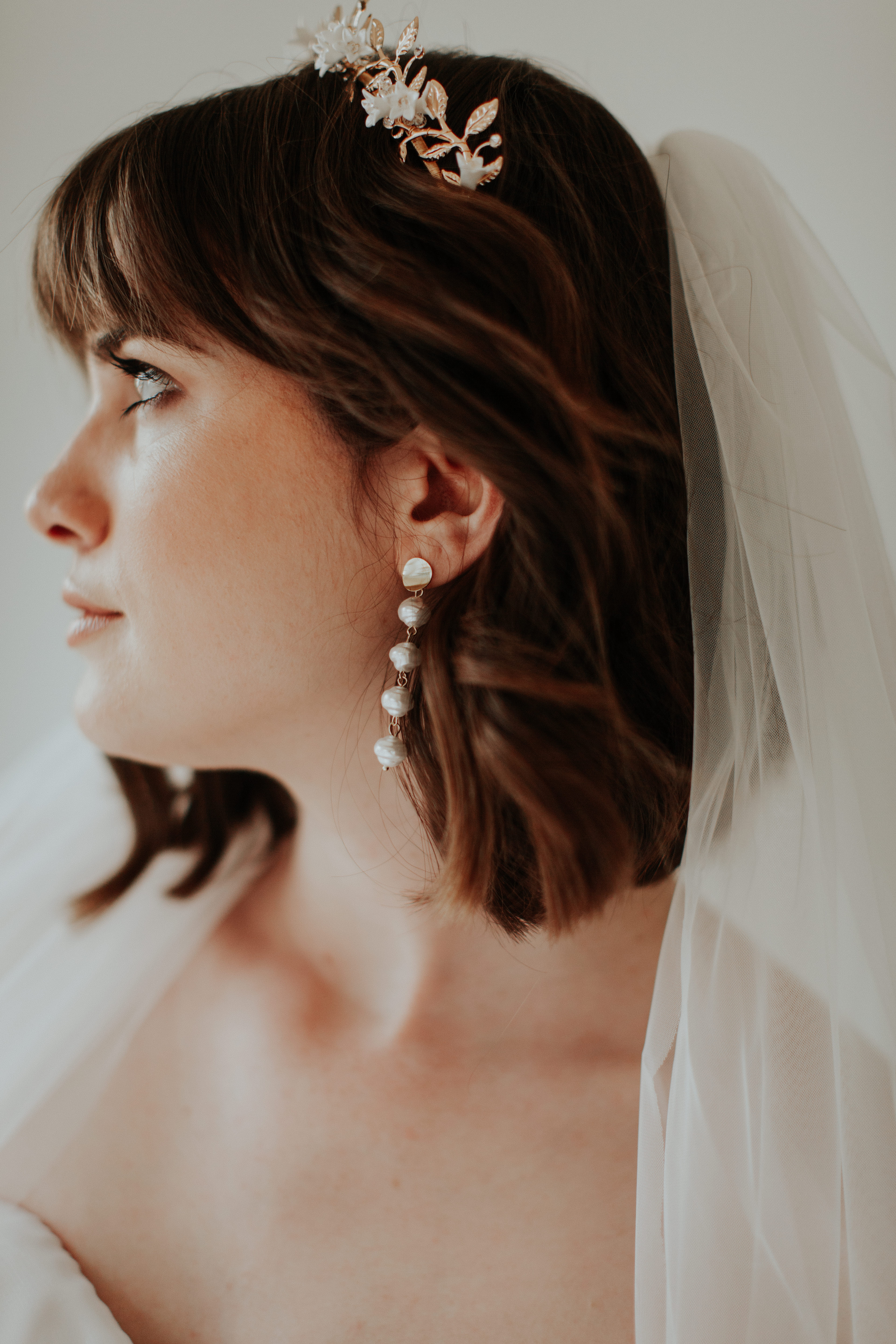
Your veil and hair accessories occupy the same visual space as earrings, so try them together early. A detailed tiara, comb, or pearl headband may already be the hero piece, which means your necklace can be delicate or absent. A plain veil gives you more freedom to add sparkle near the face.
For a broader outfit plan, this dress accessory styling guide can help you think through jewelry, veils, belts, and hair pieces as one composition. Take a quick phone photo from the front and side; it is easier to spot visual clutter in a photo than in the mirror.
Build your look around one focal point
The easiest way to keep layered accessories from feeling overdone is to decide what people should notice first. That could be a necklace, dramatic earrings, a hairpiece, or even the neckline of the dress itself. Once that choice is clear, the rest of the jewelry can support it quietly.
This does not mean the other pieces need to be plain. They simply need less visual weight. A layered look feels intentional when the eye has somewhere to land.
Choose a hero piece before adding layers
Start by placing your favorite accessory beside a photo of your gown. Ask whether it has enough presence to lead the look and whether its scale suits your features, hairstyle, and neckline. Then add only what helps frame or balance it.
A hero piece might be a long earring, a pendant, or a sparkling headpiece. Give yourself permission to stop after one or two additions. Editing creates balance more reliably than adding one final piece “just in case.”
Balance a bold necklace with simpler earrings
A substantial necklace already draws attention to the center of your face and chest. Pair it with small studs, slim drops, or earrings that repeat one detail from the necklace without matching it exactly. This keeps the look lively while preserving a clean line around your face.
Bracelets and rings can stay similarly quiet. If the necklace has movement, a simple bangle or one polished bracelet may be enough to carry the idea through the rest of the outfit.
Let statement earrings lead when your neckline is minimal
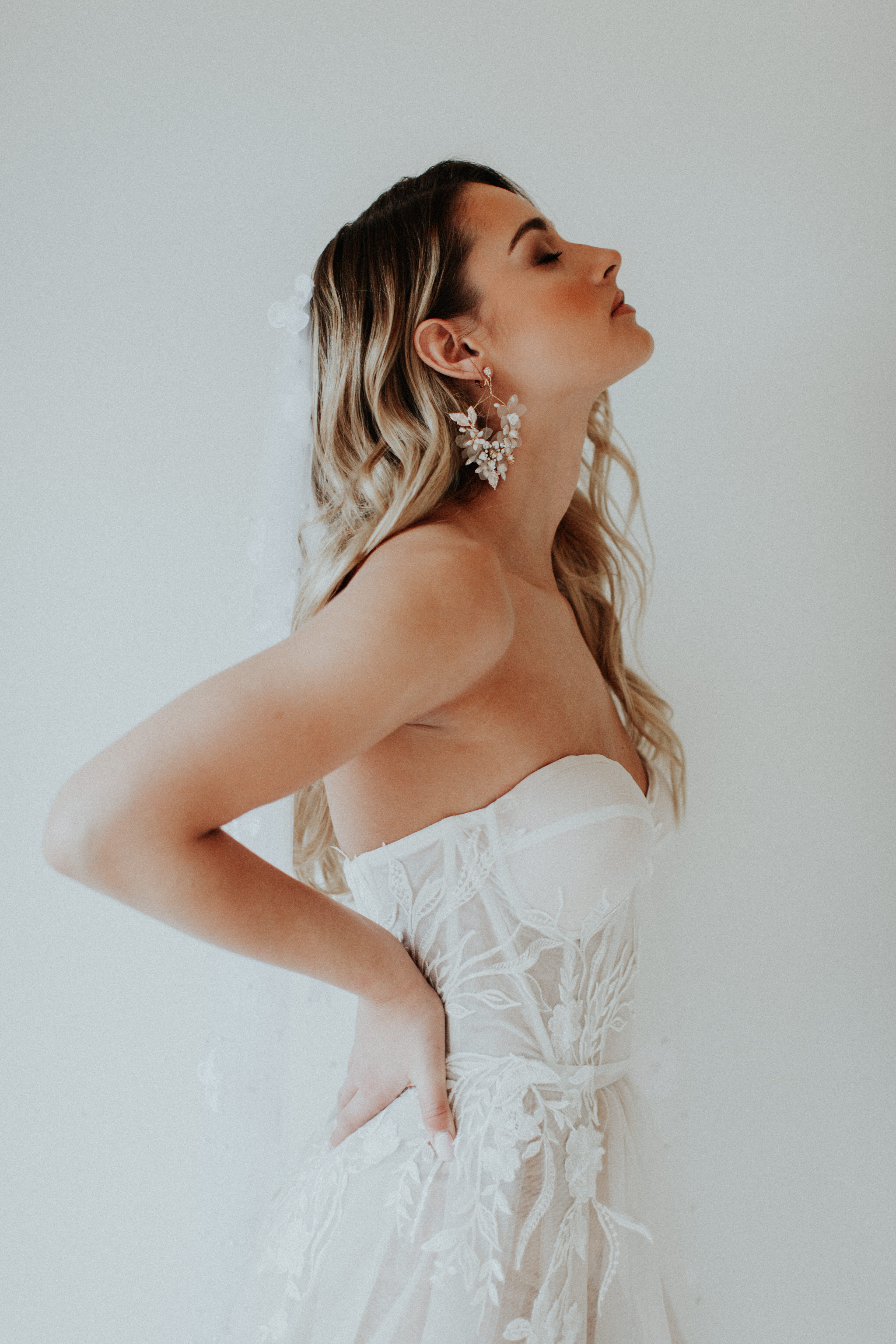
When your dress has a bare, simple neckline, statement earrings can give the look its personality. Choose their length based on your hairstyle: earrings may need more room to show with an updo, while a shorter style can be easier to see with hair worn down.
In that case, skip the necklace or choose one fine chain that sits well below the earrings. This bridal earring inspiration also covers how studs, drops, hoops, and chandeliers can work with hairstyles and veils.
Know when a veil or hairpiece should take center stage
A veil with a decorated edge or a sparkling comb can be more visually important than any necklace. If you love that accessory, let it have its moment. Small earrings and a single ring stack can still make you feel finished without turning your head and neckline into separate focal points.
Try the veil both on and off if you plan to remove it for the reception. Your jewelry can remain consistent, or you can make one small change later, such as adding a more noticeable earring once the veil is gone.
Layer necklaces with intention
Necklace layering works best when each piece has a distinct position. If every chain sits at the same point, the stack can look tangled; if the lengths are too far apart, the pieces may seem unrelated. A little space between layers lets each shape register in photos and in person.
Consider the dress fabric, too. Fine chains can disappear against lace or heavy beading, while a large pendant may catch on a delicate neckline. Lay the necklaces on a flat surface first and photograph the arrangement before trying it on.
.jpg)
Combine different lengths for visible separation
Begin with the shortest necklace and build outward. A close-fitting chain, a collarbone-length piece, and one longer pendant can create a gentle progression, but you do not need three layers for every neckline. Two necklaces with clear separation often look more refined than five crowded together.
Move each clasp slightly to the side or back so they do not all sit in one place. A quick test with a few shoulder rolls will show whether the spacing stays put once you start moving.
Mix delicate chains with one standout pendant
A pendant gives a necklace stack a visual anchor. Pair it with one or two slimmer chains that have a different length or a subtle texture. Keep the pendant proportionate to the dress: a bold stone or large charm may suit a minimal gown, while a detailed bodice may call for something more restrained.
Look for a repeated shape or color across the layers. A small round detail in one chain can quietly connect to a round pendant without making the arrangement feel like a matching set.
Avoid tangles by varying textures and chain styles
Chains with identical links tend to twist around each other, especially when they are similar in weight. Mixing a fine cable chain with a flatter chain or a pendant necklace can create separation and reduce the sense that everything is one knot.
Before committing, wear the stack for at least ten minutes. Bend, turn, and walk around in it. If you are constantly touching the necklaces to reset them, choose fewer layers or use a necklace spacer designed to keep chains apart.
Pick the right necklace stack for your neckline
Use the neckline as a boundary. A low sweetheart or square neckline can frame a shorter stack, while a V-neck generally benefits from a vertical pendant that follows its shape. For an ornate or high neckline, earrings may do more for the outfit than a necklace ever could.
This bridal jewelry collection is a natural starting point when you want to compare earrings, headpieces, combs, tiaras, veils, belts, and pins before deciding which area deserves the most attention. Keep the final stack comfortable against your skin and clear of the gown’s most delicate fabric.
Mix earrings, bracelets, and rings without creating clutter
Jewelry layering is not only a necklace question. Earrings, bracelets, and rings can either carry the same styling story across your outfit or make it feel busy from every angle. Think in terms of rhythm: one repeated detail, a similar finish, or a consistent scale is often enough.
You also need to account for what your hands will be doing. Your bouquet, vows, hugs, and dancing all change how jewelry feels. A beautiful arrangement is not successful if you spend the ceremony worrying about it.
Coordinate jewelry across different parts of your look
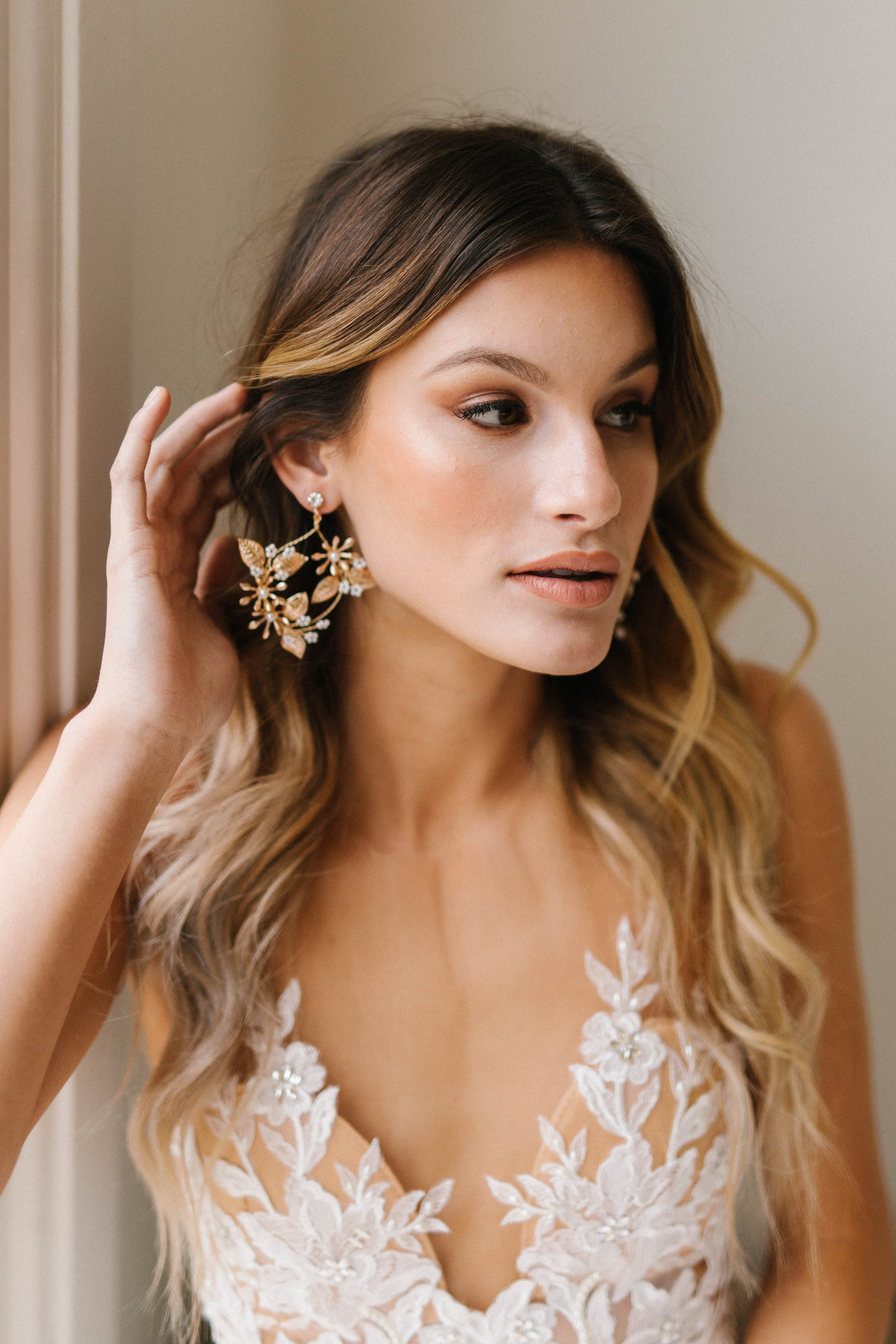
Choose one connecting thread between your accessories. It could be a warm metal, a pearl detail, a clear crystal, or a soft floral shape. Repeat that thread in two or three places, then let the remaining pieces vary slightly.
The rule of three can be helpful here: earrings, a hair accessory, and a belt might share a motif, while the necklace and rings stay simpler. This accessory pairing guide explores that kind of coordination without requiring every piece to come from a single set.
Stack bracelets while keeping your bouquet hand comfortable
A bracelet stack can look lovely in close-up photos, but keep the bouquet hand fairly free. One slim bracelet and one textured bangle may be plenty, especially if the watch side of your outfit already has a corsage, bouquet wrap, or other detail.
Wear the bracelets while holding a similar-sized bouquet or clutch. Listen for clinking and notice whether the pieces slide toward your wrist bone. If they do, remove one or switch to a bracelet with a more secure fit.
Layer rings around your engagement ring and wedding band
Your engagement ring and wedding band are already the center of attention, so start there. Add a slim stacker only if it sits comfortably beside them and does not press against your neighboring fingers. A ring with a different texture can add interest without needing a large stone.
Try the full set while making a fist, holding your bouquet, and fastening a button. Rings that feel fine for a few minutes may become distracting over a long day, particularly if they catch on lace or gloves.
Choose earrings that complement rather than compete with necklaces
Earrings should frame your face, not create a second necklace around it. If your necklace has sparkle and movement, choose earrings with a similar finish in a smaller scale. If your necklace is barely there, earrings can take on more shape or length.
For brides drawn to pearls, these pearl bridal earrings offer a useful styling direction: a traditional material can still feel modern when the silhouette stays clean. Check how the earrings look with your actual hair, since strands can hide delicate details.
Mix metals, gemstones, and finishes thoughtfully
Mixed metals can make a bridal look feel collected rather than overly coordinated. The trick is to repeat something so the combination reads as a choice. Without that connection, a warm gold necklace, cool silver earrings, and colorful ring may look like three separate outfits.
Gemstones, pearls, and crystals can provide the bridge. You do not need to match every color exactly; a shared softness, shine, or shape can be enough to make the pieces sit comfortably together.
Decide whether to stay monochromatic or blend metals
A single metal finish creates a calm, classic effect and can be the simplest route if your dress is heavily detailed. Mixing gold and silver adds contrast and can help you wear pieces you already own. If you blend metals, repeat both tones at least once so one does not look accidental.
You might keep the necklace warm gold while choosing earrings with a small silver-toned detail, then echo that detail in a ring. The contrast should feel visible but not louder than your focal point.
Use pearls, crystals, and gemstones as connecting details
A pearl in the earrings can relate to a pearl in a hairpiece, even when the metal finishes differ. Clear crystals can connect a sparkling comb to a necklace, while a colored gemstone may work as a tiny accent rather than the main event.
Keep an eye on scale. Several oversized stones can overwhelm a soft bridal look, but one colored detail surrounded by simpler pieces can feel wonderfully personal.
Repeat one color or finish to make mixed pieces feel intentional
Pick a detail you can repeat twice. That might be a brushed finish, a rose-gold tone, a milky pearl, or a particular crystal color. Repetition creates a visual thread while still leaving room for contrast.
Place the repeated detail where it will be seen from different angles, such as in the earrings and bracelet. This helps your outfit look connected in both close portraits and wider photographs.
Keep vintage and modern jewelry from looking disconnected
An heirloom necklace can work beautifully with contemporary earrings when one element bridges the styles. Try repeating its metal tone, choosing a modern piece with a related shape, or keeping the rest of the accessories especially simple.
Do not force a vintage item into a look that does not feel like you. The best result usually comes from allowing the older piece to keep its character while the newer pieces quietly frame it.
Make layered bridal jewelry comfortable and photo-ready
Comfort is part of the styling, not an afterthought. You will be sitting, hugging, dancing, posing, and probably adjusting your dress throughout the day. Jewelry that feels light and secure lets you enjoy those moments instead of monitoring every clasp.
Photos also reveal details you may miss in the mirror. Test the complete combination in daylight and under the kind of lighting your venue uses if possible. A finish that looks soft in person may reflect strongly in flash photography.
Test your complete jewelry combination before the wedding
Schedule a full accessory trial when you can wear the dress, veil, shoes, and hairstyle together. Take front, side, and close-up photos, then look at them later rather than making a decision in the excitement of the appointment.
This is the moment to notice whether the necklace disappears, the earrings are hidden, or the headpiece becomes too much. Small changes are much easier now than on the morning of the wedding.
Check for snags, noise, and pieces that shift
Run a piece of fine fabric over your jewelry to find rough edges or catches. Move your head from side to side, hug someone, and walk briskly. Chains, fringe, and stacked bracelets can make noise or shift more than you expect.
If a layer keeps turning, try a different clasp position or a shorter chain. If it still moves, remove it. A stable two-piece combination will photograph better than a five-piece stack that never stays where you put it.
Choose secure closures and lightweight materials
Look for earring backs that feel firm, necklace closures you can fasten confidently, and bracelets that do not open when your wrist bends. Lightweight pieces are often kinder to your ears and shoulders over a long celebration.
Ask your stylist or jeweler about comfort if you are unsure of a piece’s weight. Bring spare backs and a small repair kit with thread, tape, and a few safety pins in your emergency bag.
Make sure every layer works with hugs, dancing, and portraits
Practice the motions your jewelry needs to survive. Lift your arms, hold your bouquet, turn your head, and sit down in the dress. If your necklace catches on the veil or your bracelet hits the bouquet handle, change the combination before the day arrives.
Ask your photographer for a few test shots during the trial. The best layers still show up when you turn slightly away from the camera, and they should not create harsh glare that obscures your face.
Shop and refine your bridal jewelry layers on a realistic budget
A thoughtful accessory plan does not require a huge spend. Start with the pieces that matter most to your outfit and use simpler layers to add dimension. This is where shopping smart helps: you can create an elevated look without paying extra simply because an item is labeled bridal.
Poppy Lane Bridal offers bridal accessories and veils directly to brides at factory-direct prices, with jewelry, hair accessories, gloves, belts, and other bridal essentials available in its direct-to-consumer collection. That kind of approach can leave more room in your budget for the one piece you truly love.
Invest in the pieces that will show up most in photos
Put the most attention toward the accessory closest to your face or the detail your photographer will feature. If the necklace is hidden by the dress, it may not deserve the largest share of your spending. Earrings, a visible hairpiece, or a bracelet holding your bouquet may appear more often.
Prioritize proportion, comfort, and finish over a crowded jewelry box. A well-chosen focal piece can make a small collection feel complete.
Use affordable layers to add depth without overspending
Build around one special item, then look for simple chains, studs, or slim bracelets that support it. Mixing price points is completely fine when the pieces share a finish or motif. The result can feel considered rather than matched from head to toe.
For more ideas on polished accessories at approachable prices, browse this affordable bridal jewelry guide. It is especially helpful when you are comparing earrings, veils, and belts as part of the same spending plan.
Try your accessories with your dress and veil before committing
Do not buy a necklace stack based only on a product photo. Bring dress fabric or a gown photo to the appointment, and try the pieces with your veil and hairstyle. Online, check dimensions, closure details, and any available weight information before placing an order.
A practical buying checklist can also help you compare options. Even when shopping at Poppy Lane Bridal, the smartest choice is the one that suits your neckline, feels secure, and earns its place in the whole outfit.
Remove one piece if the look feels busy or unfinished
Editing is the final styling step. Stand several feet away from the mirror, take a photo, and remove one accessory to compare the two versions. If the outfit immediately feels calmer, the removed piece may not be necessary.
On the other hand, a look can feel unfinished when every item is tiny and there is no focal point. Add one stronger detail rather than several small ones. If you want to shop bridal accessories, start with that defining piece and build slowly around it.
Find Your Finishing Touch
When you are ready to turn your plan into a real look, explore Poppy Lane Bridal’s direct-to-consumer bridal accessories and veils. Choose the pieces that feel like you, then let the rest of your outfit do some of the talking.
Conclusion
The best layered bridal jewelry looks effortless because every piece has a job. Let your dress guide the direction, choose one focal point, vary your layers with care, and test everything in motion before the wedding. A smaller, comfortable combination that feels personal will always outshine a crowded stack.
Frequently Asked Questions
How many pieces of bridal jewelry should I wear?
There is no fixed number, but two or three connected pieces often create enough interest. Let the dress, veil, and hairstyle determine whether you need more or less.
Can I layer necklaces with a detailed wedding dress?
Yes, but keep the stack lighter if the bodice has lace, beading, or embroidery. A short chain or single pendant may add shape without covering the dress details.
Should my bridal jewelry all match?
No. Matching one metal, color, finish, or motif can make mixed pieces feel intentional without requiring a complete set.
What jewelry works best with statement earrings?
Pair statement earrings with no necklace or a very delicate chain. Keep bracelets and rings simple enough that the face remains the main focal point.
How can I stop layered necklaces from tangling?
Choose visibly different lengths and chain textures, and test the stack while walking and turning. A necklace spacer or fewer layers may help if the chains continue to twist.
Should I wear a bracelet on my bouquet hand?
You can, as long as it does not interfere with the bouquet handle or feel tight when your wrist bends. Try it with a similar bouquet before the wedding day.
When should I test my full bridal jewelry look?
Test it during your hair and makeup trial, or as soon as you can wear the dress, veil, and accessories together. Photos and movement tests will reveal problems that a mirror may not show.