Wedding Veil Lengths Explained: Which Style Fits Your Dress
by Poppy <3
Understanding the different wedding veil lengths There really is no single right way to accessorize your bridal ensemble. Exploring different wedding veil lengths is one of the most exciting parts of styling because it essentially sets the tone for your whole look. From the playful bounce of a birdcage to the sweeping grandeur of a cathedral veil, the variety available at Poppy Lane allows you to find something that matches your vision exactly without any unnecessary markups. ### Shorter veils for a playful, vintage look Birdcage and elbow-length veils offer a refreshing, chic vibe. These styles are perfect for brides who want to move freely while keeping an air of classic romance during the ceremony. A lighter, shorter piece ensures you aren't distracted by extra fabric while enjoying your milestone day. ### Mid-length veils for versatile coverage Fingertip and waltz lengths sit comfortably between casual and formal. The Fallon Bridal Veil is a beautiful example of how a well-proportioned fingertip style can perfectly frame your look. These mid-lengths are crowd favorites for their ability to add a touch of drama without dragging behind you as you navigate the aisle. ### Floor and cathedral lengths for dramatic flair When you want an unforgettable entrance, look toward lengths that span beyond the gown. These longer veils serve as a regal extension of your attire, creating a beautiful silhouette whether you are standing at the altar or walking toward the reception entrance. ## How to choose the right length for your gown silhouette Finding the right balance comes down to how your veil interacts with the back and hem of your wedding dress. You generally want to avoid having too many overlapping layers of fabric that can clutter the look of your gown's intricate back details or train. We believe that your accessories should highlight the dress rather than obscure its design, which is why we suggest observing the natural flow of your dress skirt when deciding on the extra length. ### Matching veils with ballgown and full skirt dresses For voluminous skirts, you often want a veil that either ends well above the hem or extends significantly further. A shorter, blusher-style veil can add sweetness, while a long, sheer cathedral veil keeps the focus on the grand shape of your skirt. The goal is to keep things airy so you feel like you are walking on air. ### Selecting styles for minimalist sheaths and column gowns Minimalist dresses offer the perfect canvas for creative veil choices. You can go for an elaborate, heavily embroidered piece or a long, simple veil to elongate your frame. Because these dresses are streamlined, they allow for more experimentation with edge finishes or delicate lace detailing throughout the design. ### Pairing veils with mermaid and trumpet silhouettes These silhouettes feature a dramatic transition point near the knees or hips. A mid-length veil often hits right where the flare starts, which can feel repetitive and busy. Instead, opt for either a very short topper or a long, dramatic cathedral length that flows past the flare of your skirt, creating an unbroken line that adds grace to your movement. To help you decide based on your specific dress type, consider this quick summary of common combinations: | Silhouette | Recommended Veil Length | Visual Benefit | | :--- | :--- | :--- | | Ballgown | Cathedral | Creates an effortless, regal silhouette | | Sheath | Fingertip | Keeps focus on the dress lines | | Mermaid | Waltz | Extends the body line gracefully | ## Considering the formality of your ceremony and venue Your venue plays a huge role in determining how much fabric you actually want to manage. An outdoor garden ceremony might call for a lighter, shorter style that won't get tangled in the grass, while a grand cathedral setting is the ideal moment to lean into maximum drama. You want to feel comfortable and confident in your choice, ensuring your veil functions well within the space you have chosen. ### Veil recommendations for outdoor and garden ceremonies For venues with uneven terrain, keep it simple. Opt for lightweight fabrics that won't catch on branches or heavy petals. You want your accessory to move naturally with the breeze, adding a romantic touch to your open-air photos. ### Selecting the perfect length for traditional church settings High ceilings and long aisles demand presence. Consider a long, regal cathedral piece that follows you behind as you walk in. These spaces were made for the sweeping impact of a longer veil, provided you have bridesmaids to help arrange it for the perfect entrance shot. ### Adapting your veil for intimate or city hall elopements For smaller, low-key ceremonies, a shorter or knee-length veil offers a playful, modern aesthetic. These lengths feel polished enough for an official event but don't overwhelm a smaller setting. You can accessorize with pieces from Poppy Lane Bridal, which offers a variety of timeless styles to suit your unique vision. ## Practical tips for veil comfort and wearability You will be wearing this accessory for several hours, so comfort is a core factor in your decision. It is helpful to consider the weight and the way it anchors into your hair so you can move about with ease throughout the day. We always encourage brides to think about how they plan to move during the reception, whether they are hitting the dance floor or moving from the ceremony to cocktail hour. ### Managing the weight of extra-long cathedral veils While these veils look stunning, they can be surprisingly heavy over time. If you decide to go with a full-length piece, make sure it is attached to a secure, comfortable comb that won't pull on your scalp. You should also consider keeping a second, simpler accessory ready for later in the evening if you want to swap out. ### Ensuring easy movement at your reception If you plan on dancing, a long veil can easily get caught on guests or furniture. Many brides choose to remove their long veil after the ceremony, or opt for a simple pinning technique to keep the fabric away from the floor. Consider these steps for a smooth transition during your event: - Assign a bridesmaid the task of helping you adjust your veil for photos. - Switch to a lighter, shorter piece for your first dance. - Ensure your hair stylist tests your veil placement during your trial. - Keep a small supply of extra pins in your bridal clutch. These minor adjustments can make a world of difference when you are busy enjoying your special day. ### Weighing the pros and cons of using a detachable blusher A blusher is a beautiful tradition for the ceremony, but it can be a bit much for dinner or dancing. A detachable layer allows you to have the formal face-covering for your walk down the aisle and then keep the rest of the headpiece for the duration of the party. It is a smart way to get two looks out of one accessory without the extra expense. ## Styling your hair and headpiece with different lengths Your hairstyle should hold the weight of your veil without feeling strained. A high bun is a natural anchor, providing a sturdy base for a long, heavy veil to sit securely. Conversely, wearing your hair down requires a bit more coordination with bobby pins or a small comb to keep everything in place. ### Placement options for high buns and updos A high bun creates a beautiful point of convergence for your veil, allowing it to fan out or trail directly down your back. This placement is incredibly secure, meaning you won't have to worry about your headpiece shifting during your photos. It is an ideal setup for brides who want to incorporate a decorative comb or tiara. ### Integrating hair vines and decorative clips with your veil Many brides love to stack a veil with a delicate hair vine for a bespoke look. You can tuck the veil comb into the base of your hairstyle and secure the vine around it, creating a seamless piece of floral or crystalline art. This combination feels professional and curated without looking over-the-top. ### Adapting your look when wearing hair down For an effortless, romantic vibe, many brides choose loose waves or a soft half-up style. Because there isn't a tight bun to grip, ensure your stylist uses firm, supportive pins to keep your veil from sliding. A lighter, shorter veil is often more manageable here, but full-length veils can work beautifully with long hair if pinned by a professional. ## How construction and fabric influence veil drama The actual material of your veil dictates how it hangs and interacts with the light. Sheer, fine tulle creates a subtle, ethereal effect that highlights your gown's details, whereas heavy lace or dense beading makes a bold, visual statement. Whatever you choose, remember that the quality of these materials will dictate how gracefully it dances during your photographs. ### The impact of sheer tulle versus heavy lace appliqués Sheer tulle is lightweight and airy, perfect for a subtle touch that doesn't hide the embroidery of your gown. Heavy lace appliqués, however, have a bit of structure and weight. If you go for a design with significant lace, make sure it complements the lace on your dress rather than competing with it. ### Choosing the right edge finish for your desired aesthetic The edge of your veil is the final note of your look. A raw, cut edge is minimal and soft, while a beaded or lace-trimmed edge adds a touch of classic luxury. Think about the style of your dress and choose an edge that pulls the whole look together into something cohesive. ### How veil fullness dictates the overall silhouette Fullness refers to how much fabric is gathered at the comb. A low-fullness veil is sheer and narrow, perfect for a modern, sleek aesthetic. High-fullness veils are dramatic and lush, creating a striking spread on the floor that frames you beautifully. ## Conclusion Choosing the perfect accessory is about finding a balance between your personal aesthetic and the practical needs of your wedding day. Whether you settle on a dramatic piece that trails miles behind you or a subtle, chic length that touches your fingertips, the most important part is feeling like yourself. By considering the construction, silhouette, and your unique venue, you can confidently pick a style that enhances your radiance and provides exactly the touch of magic you need for the walk down the aisle. ## Frequently Asked Questions ### What is the most popular wedding veil length for modern brides? Fingertip length is widely considered the most versatile and popular choice because it complements almost every gown silhouette and provides a balanced, approachable look. ### Should my veil be longer than the train on my dress? While personal preference is key, a general rule of thumb is to choose a veil that is either several inches longer than the train or significantly shorter to avoid a messy, cluttered appearance where the fabrics fight for dominance. ### How do I store my veil to keep it from wrinkling? You should hang your veil in a garment bag in a cool, dry place away from direct sunlight, or drape it over a padded hanger to prevent harsh creases from setting into the tulle. ### Can I wear a headpiece and a veil at the same time? Yes, you can absolutely wear both by placing one in front of the other or by selecting a hair vine that can be woven around the base of your veil comb for a cohesive, decorated look. ### Is it better to choose a single-tier or multi-tier veil? Single-tier veils offer a sleek, modern, and lightweight feel, while multi-tier veils provide more volume and allow for the traditional blusher layer during your ceremony. ### How do I secure a heavy cathedral veil to my hair? We suggest using a long, high-quality comb with flexible teeth, and we recommend having your stylist use hidden bobby pins as an extra layer of security to ensure the weight doesn't pull on your hair. ### What fabric is best for a veil that catches the light? Soft tulle with delicate pearling or light embroidery is ideal for catching the light, while heavy satin-trimmed edges offer a structured, more traditional reflection that feels very formal.
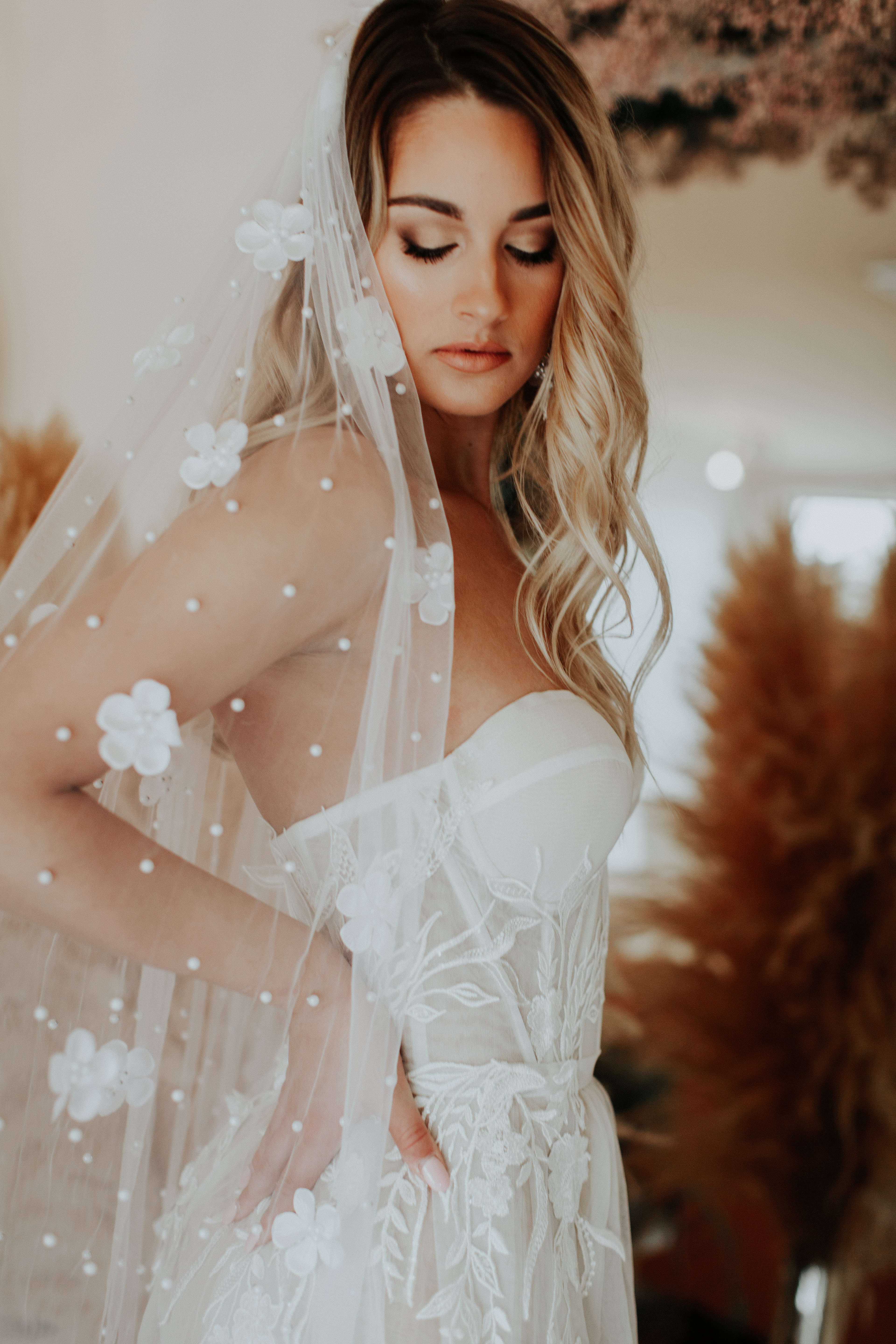 Finding the right balance comes down to how your veil interacts with the back and hem of your wedding dress. You generally want to avoid having too many overlapping layers of fabric that can clutter the look of your gown's intricate back details or train. We believe that your accessories should highlight the dress rather than obscure its design, which is why we suggest observing the natural flow of your dress skirt when deciding on the extra length. ### Matching veils with ballgown and full skirt dresses For voluminous skirts, you often want a veil that either ends well above the hem or extends significantly further. A shorter, blusher-style veil can add sweetness, while a long, sheer cathedral veil keeps the focus on the grand shape of your skirt. The goal is to keep things airy so you feel like you are walking on air. ### Selecting styles for minimalist sheaths and column gowns Minimalist dresses offer the perfect canvas for creative veil choices. You can go for an elaborate, heavily embroidered piece or a long, simple veil to elongate your frame. Because these dresses are streamlined, they allow for more experimentation with edge finishes or delicate lace detailing throughout the design. ### Pairing veils with mermaid and trumpet silhouettes These silhouettes feature a dramatic transition point near the knees or hips. A mid-length veil often hits right where the flare starts, which can feel repetitive and busy. Instead, opt for either a very short topper or a long, dramatic cathedral length that flows past the flare of your skirt, creating an unbroken line that adds grace to your movement. To help you decide based on your specific dress type, consider this quick summary of common combinations: | Silhouette | Recommended Veil Length | Visual Benefit | | :--- | :--- | :--- | | Ballgown | Cathedral | Creates an effortless, regal silhouette | | Sheath | Fingertip | Keeps focus on the dress lines | | Mermaid | Waltz | Extends the body line gracefully | ## Considering the formality of your ceremony and venue
 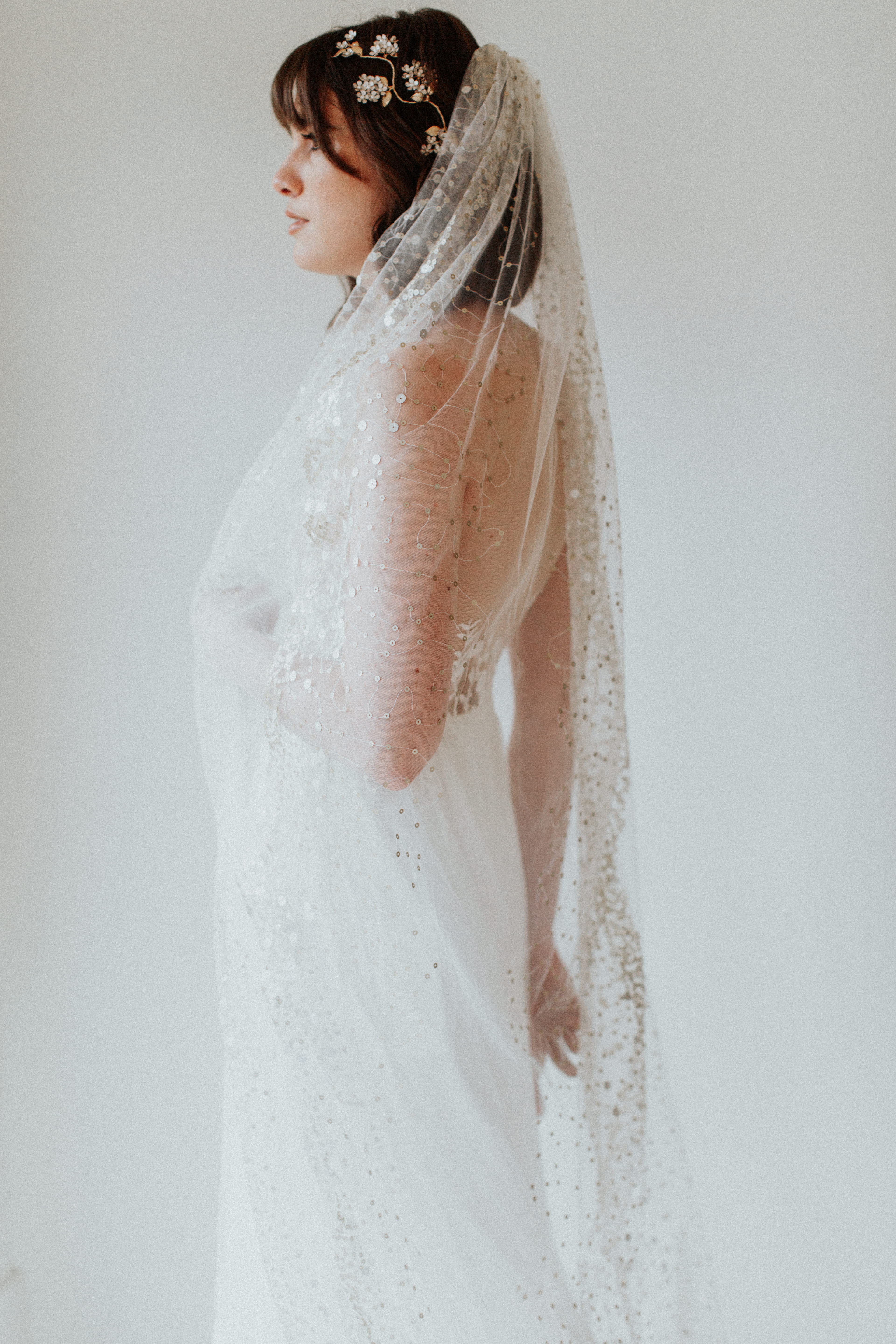 Your venue plays a huge role in determining how much fabric you actually want to manage. An outdoor garden ceremony might call for a lighter, shorter style that won't get tangled in the grass, while a grand cathedral setting is the ideal moment to lean into maximum drama. You want to feel comfortable and confident in your choice, ensuring your veil functions well within the space you have chosen. ### Veil recommendations for outdoor and garden ceremonies For venues with uneven terrain, keep it simple. Opt for lightweight fabrics that won't catch on branches or heavy petals. You want your accessory to move naturally with the breeze, adding a romantic touch to your open-air photos. ### Selecting the perfect length for traditional church settings High ceilings and long aisles demand presence. Consider a long, regal cathedral piece that follows you behind as you walk in. These spaces were made for the sweeping impact of a longer veil, provided you have bridesmaids to help arrange it for the perfect entrance shot. ### Adapting your veil for intimate or city hall elopements For smaller, low-key ceremonies, a shorter or knee-length veil offers a playful, modern aesthetic. These lengths feel polished enough for an official event but don't overwhelm a smaller setting. You can accessorize with pieces from Poppy Lane Bridal, which offers a variety of timeless styles to suit your unique vision. ## Practical tips for veil comfort and wearability
 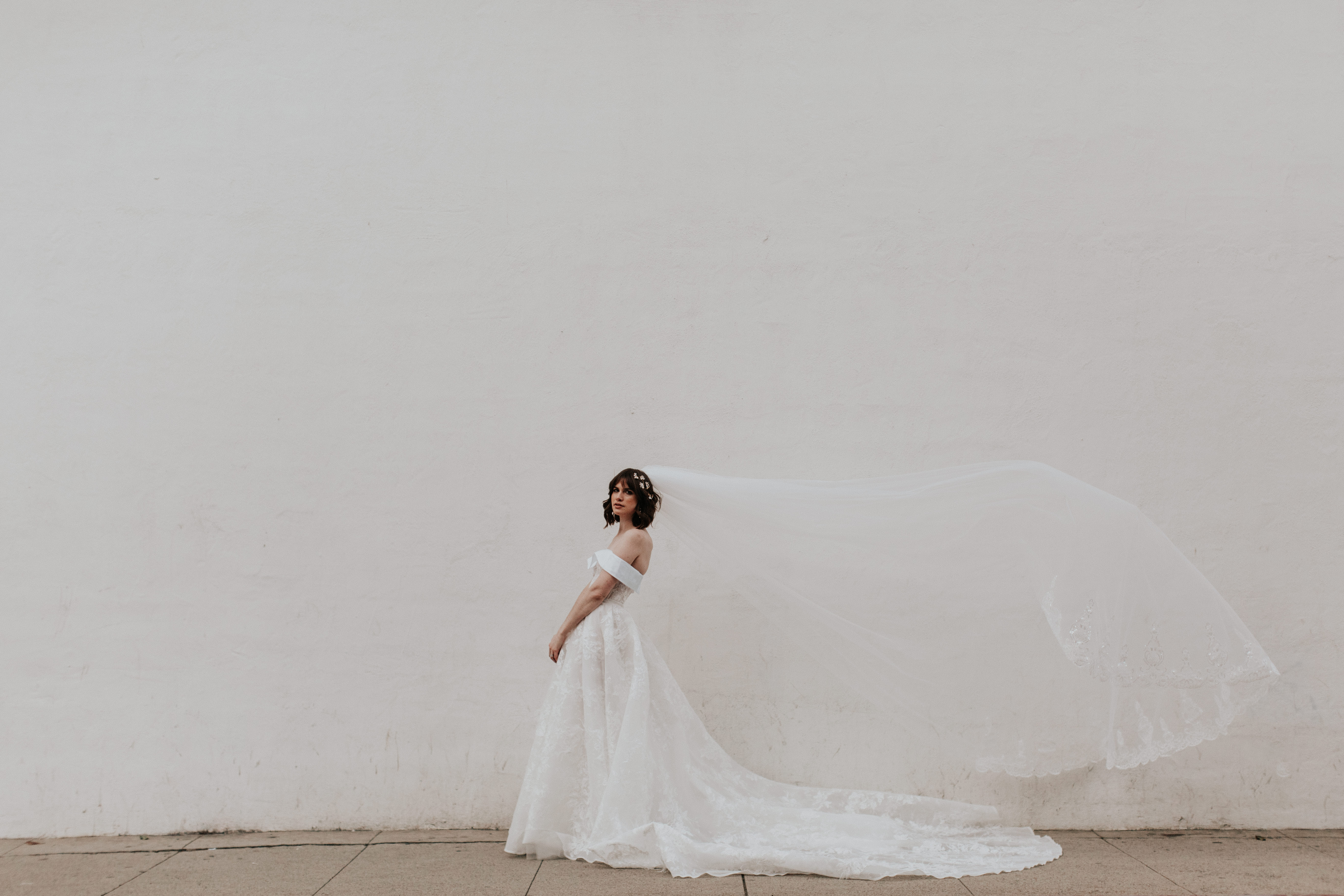 You will be wearing this accessory for several hours, so comfort is a core factor in your decision. It is helpful to consider the weight and the way it anchors into your hair so you can move about with ease throughout the day. We always encourage brides to think about how they plan to move during the reception, whether they are hitting the dance floor or moving from the ceremony to cocktail hour. ### Managing the weight of extra-long cathedral veils While these veils look stunning, they can be surprisingly heavy over time. If you decide to go with a full-length piece, make sure it is attached to a secure, comfortable comb that won't pull on your scalp. You should also consider keeping a second, simpler accessory ready for later in the evening if you want to swap out. ### Ensuring easy movement at your reception If you plan on dancing, a long veil can easily get caught on guests or furniture. Many brides choose to remove their long veil after the ceremony, or opt for a simple pinning technique to keep the fabric away from the floor. Consider these steps for a smooth transition during your event: - Assign a bridesmaid the task of helping you adjust your veil for photos. - Switch to a lighter, shorter piece for your first dance. - Ensure your hair stylist tests your veil placement during your trial. - Keep a small supply of extra pins in your bridal clutch. These minor adjustments can make a world of difference when you are busy enjoying your special day. ### Weighing the pros and cons of using a detachable blusher A blusher is a beautiful tradition for the ceremony, but it can be a bit much for dinner or dancing. A detachable layer allows you to have the formal face-covering for your walk down the aisle and then keep the rest of the headpiece for the duration of the party. It is a smart way to get two looks out of one accessory without the extra expense. ## Styling your hair and headpiece with different lengths Your hairstyle should hold the weight of your veil without feeling strained. A high bun is a natural anchor, providing a sturdy base for a long, heavy veil to sit securely. Conversely, wearing your hair down requires a bit more coordination with bobby pins or a small comb to keep everything in place. ### Placement options for high buns and updos A high bun creates a beautiful point of convergence for your veil, allowing it to fan out or trail directly down your back. This placement is incredibly secure, meaning you won't have to worry about your headpiece shifting during your photos. It is an ideal setup for brides who want to incorporate a decorative comb or tiara. ### Integrating hair vines and decorative clips with your veil Many brides love to stack a veil with a delicate hair vine for a bespoke look. You can tuck the veil comb into the base of your hairstyle and secure the vine around it, creating a seamless piece of floral or crystalline art. This combination feels professional and curated without looking over-the-top. ### Adapting your look when wearing hair down For an effortless, romantic vibe, many brides choose loose waves or a soft half-up style. Because there isn't a tight bun to grip, ensure your stylist uses firm, supportive pins to keep your veil from sliding. A lighter, shorter veil is often more manageable here, but full-length veils can work beautifully with long hair if pinned by a professional. ## How construction and fabric influence veil drama The actual material of your veil dictates how it hangs and interacts with the light. Sheer, fine tulle creates a subtle, ethereal effect that highlights your gown's details, whereas heavy lace or dense beading makes a bold, visual statement. Whatever you choose, remember that the quality of these materials will dictate how gracefully it dances during your photographs. ### The impact of sheer tulle versus heavy lace appliqués Sheer tulle is lightweight and airy, perfect for a subtle touch that doesn't hide the embroidery of your gown. Heavy lace appliqués, however, have a bit of structure and weight. If you go for a design with significant lace, make sure it complements the lace on your dress rather than competing with it. ### Choosing the right edge finish for your desired aesthetic The edge of your veil is the final note of your look. A raw, cut edge is minimal and soft, while a beaded or lace-trimmed edge adds a touch of classic luxury. Think about the style of your dress and choose an edge that pulls the whole look together into something cohesive. ### How veil fullness dictates the overall silhouette Fullness refers to how much fabric is gathered at the comb. A low-fullness veil is sheer and narrow, perfect for a modern, sleek aesthetic. High-fullness veils are dramatic and lush, creating a striking spread on the floor that frames you beautifully. ## Conclusion Choosing the perfect accessory is about finding a balance between your personal aesthetic and the practical needs of your wedding day. Whether you settle on a dramatic piece that trails miles behind you or a subtle, chic length that touches your fingertips, the most important part is feeling like yourself. By considering the construction, silhouette, and your unique venue, you can confidently pick a style that enhances your radiance and provides exactly the touch of magic you need for the walk down the aisle. ## Frequently Asked Questions ### What is the most popular wedding veil length for modern brides? Fingertip length is widely considered the most versatile and popular choice because it complements almost every gown silhouette and provides a balanced, approachable look. ### Should my veil be longer than the train on my dress? While personal preference is key, a general rule of thumb is to choose a veil that is either several inches longer than the train or significantly shorter to avoid a messy, cluttered appearance where the fabrics fight for dominance. ### How do I store my veil to keep it from wrinkling? You should hang your veil in a garment bag in a cool, dry place away from direct sunlight, or drape it over a padded hanger to prevent harsh creases from setting into the tulle. ### Can I wear a headpiece and a veil at the same time? Yes, you can absolutely wear both by placing one in front of the other or by selecting a hair vine that can be woven around the base of your veil comb for a cohesive, decorated look. ### Is it better to choose a single-tier or multi-tier veil? Single-tier veils offer a sleek, modern, and lightweight feel, while multi-tier veils provide more volume and allow for the traditional blusher layer during your ceremony. ### How do I secure a heavy cathedral veil to my hair? We suggest using a long, high-quality comb with flexible teeth, and we recommend having your stylist use hidden bobby pins as an extra layer of security to ensure the weight doesn't pull on your hair. ### What fabric is best for a veil that catches the light? Soft tulle with delicate pearling or light embroidery is ideal for catching the light, while heavy satin-trimmed edges offer a structured, more traditional reflection that feels very formal.