
Beach Wedding Accessories: What to Wear and What to Skip
Key Takeaways
Beach accessories should feel light, secure, and intentional rather than fussy. A little planning around the sand, wind, dress code, and weather will help every detail work harder.
- Choose accessories that suit the ceremony surface, climate, and level of formality.
- Secure hairpieces, veils, and jewelry before the ceremony begins.
- Favor lightweight materials and comfortable footwear you can actually walk in.
- Coordinate metals, textures, and details with your dress and bouquet.
- Keep practical pieces close so sun, wind, and cool evenings do not distract you.
Start with the beach setting and wedding dress code
A barefoot ceremony on soft sand calls for different accessories than a formal wedding at a waterfront hotel. Before choosing earrings or a veil, think through the actual setting: Is the ceremony directly beside the water, on a boardwalk, or on a lawn near the shore? The answer affects your shoes, hairstyle, and how much movement your accessories can handle.
The best beach wedding accessories look relaxed without looking unfinished. Start with the dress code, then layer in a few polished details that feel like you. Your accessories should support the dress and the setting, not compete with either one.
Match accessories to the venue’s sand, wind, and weather
Beach conditions can change quickly. Salt air, humidity, bright sun, and a steady breeze may all show up in the same afternoon, so test each accessory with those realities in mind. A necklace that feels fine indoors may become irritating when warm, while a loose comb can shift the moment you step outside.
Ask your venue about the ceremony surface and typical wind conditions. If the sand is soft, choose secure pieces and skip anything that depends on delicate balance. For more inspiration, browse these beach wedding accessories for lightweight, natural ideas that suit a seaside celebration.
A simple venue check can guide your choices:
- Soft sand usually calls for flat or barefoot-friendly footwear.
- Strong wind favors low hairstyles and firmly secured hairpieces.
- Bright sun makes reflective crystals and metal finishes more noticeable.
- Humidity makes lightweight layers more comfortable than heavy jewelry.
After that quick check, you can shop with a much clearer idea of what will feel good from vows through dancing.
Use the dress code to guide how formal you go
A casual beach ceremony gives you room for woven textures, delicate pearls, or a simple comb. A formal seaside wedding may call for more sparkle, a longer veil, or refined drop earrings. Neither approach is more bridal; the goal is to match the atmosphere your couple has created.
Look at the invitation, venue, and time of day together. An evening reception can handle more shimmer than a midday ceremony, while a simple slip dress may need one intentional statement detail instead of several small ones. If your gown is already embellished, keep the accessories quieter so the whole look can breathe.
Balance relaxed coastal style with polished bridal details
Coastal style does not have to mean seashells everywhere. Try one subtle reference, such as pearls, a soft gold finish, a natural floral motif, or a delicate braided texture. Then pair it with a classic bridal element so the result still feels polished in photographs.
For a broader approach to matching accessories with your gown, this bridal accessorizing guide can help you think through the neckline, silhouette, fabric, and hairstyle together. The same framework works beautifully for a beach setting, especially when you want the look to feel personal rather than themed.
Choose hair accessories that can handle the elements
Your hairstyle is part of the accessory plan, not something to decide after everything else. Wind can loosen a polished updo, flatten soft waves, or turn a long veil into a distraction. Choose the hairstyle first, then select the comb, pins, vine, or headband that will support it.
A beach ceremony usually rewards a little movement, but movement should not mean constant adjusting. Bring a few backup pins and ask your stylist to test the finished look outdoors if possible. The goal is to feel comfortable enough to forget about your hair once the ceremony begins.
.jpg)
Secure veils and combs for breezy ceremonies
A comb should sit firmly in the hair rather than simply rest on top of it. For fine hair, texture spray, strategic pins, or a small hidden braid can create a more reliable anchor. Ask your stylist to secure the veil at more than one point if the fabric is long or the forecast is breezy.
Try walking, turning your head, and giving the veil a gentle tug during your trial. If it shifts then, it will probably shift on the beach. Poppy Lane Bridal offers modern veils, jewelry, hair accessories, gloves, belts, and other bridal essentials, so you can compare the finishing pieces as one outfit rather than making each decision in isolation.
Compare beach-friendly styles for updos, waves, and braids
Low buns and textured chignons give combs a stable base and keep hair away from the face. Loose waves can look beautiful by the water, but a headband or a few discreet pins will help keep the front sections in place. Braids are especially practical when you want softness with a little more structure.
A delicate vine can follow a braid or low bun, while a compact comb works well at the side of an updo. If you prefer your hair down, a headband often stays more comfortable than several small pins. Choose one focal point and let the hairstyle provide the rest of the visual interest.
Skip delicate pieces that snag, slip, or feel heavy
Tiny exposed wires, sharp edges, and overly heavy clusters can catch on lace or pull at your hair. Very loose pieces may also slide as humidity changes the texture of your hair. This is one reason a headpiece trial matters: beauty is only half the test.
Run your fingers over the piece and check whether it catches on a scrap of tulle. Wear it for at least an hour before the wedding, including while walking and sitting. A headpiece should feel secure and light enough that you are not counting the minutes until you can remove it.
Select jewelry that complements a seaside look
Jewelry catches beach light in a lovely way, but the setting can make every detail more visible. Bright sun reflects off crystals, warm metal can feel hotter against the skin, and wind can move dangling earrings more than expected. Think in terms of balance: one noticeable feature, supported by quieter pieces.
Pearls, soft crystals, and warm metals can all work beautifully by the water. The most flattering choice depends on your dress fabric, neckline, hairstyle, and personal coloring. Start with the piece you most want to wear, then build around it.
.jpg)
Layer pearls, crystals, and gold for different bridal styles
Pearls bring a soft, organic feeling that suits a relaxed ceremony. Crystals add sparkle for an evening reception, while gold can warm an ivory gown and echo a sunset setting. You can combine them, but give one material the lead so the result feels edited.
For example, pearl earrings with a slim gold bracelet feel easy and romantic. Crystal drops may need only a simple ring. If you love several textures, use the layered bridal jewelry guide to choose one hero accessory and keep the supporting pieces delicate.
Poppy Lane Bridal is built around direct-to-consumer bridal accessories at factory-direct prices, with modern jewelry among its categories. That can be useful when you want a thoughtful combination of pieces without assuming a higher price automatically means better styling.
Choose metals and finishes that suit the light and setting
Warm gold looks especially inviting in late-afternoon light, while silver and bright crystal can feel crisp for a daytime ceremony. Rose gold brings a softer blush tone, though it should still relate to the undertones in your dress and other details. You do not have to match every metal perfectly, but repeat at least one finish so the mix feels deliberate.
Your hairstyle matters here, too. Hair worn up will show more earring, while waves or a veil may frame the face and make a shorter style easier to see. For more specific proportion advice, this guide to choosing bridal earrings is a useful place to compare jewelry with different necklines.
Avoid pieces that tarnish, overheat, or compete with the dress
Beach air and perspiration are good reasons to avoid jewelry that feels fussy or requires constant care. Test earrings for weight before the wedding, especially if they are long or highly embellished. A necklace should lie comfortably rather than stick to warm skin or tangle when the breeze picks up.
Keep the neckline in view when deciding what to skip. A detailed bodice may need only earrings, while a clean strapless gown can support a necklace or a stronger earring. Comfort is part of the look, because a piece you keep touching will show in photos and distract you during the ceremony.
Find a veil that works with sand and wind
A veil can look incredible against the horizon, especially when the fabric catches a light breeze. It can also collect sand, drag through damp grass, or pull at your hairstyle if the length and attachment are not right. Choose it with the ceremony route and reception plan in mind, not just the mirror.
Try the veil with your dress, shoes, and intended hairstyle. Walk outside, turn, sit, and practice entering the ceremony space. A few minutes of movement will tell you more than a still fitting-room photo.
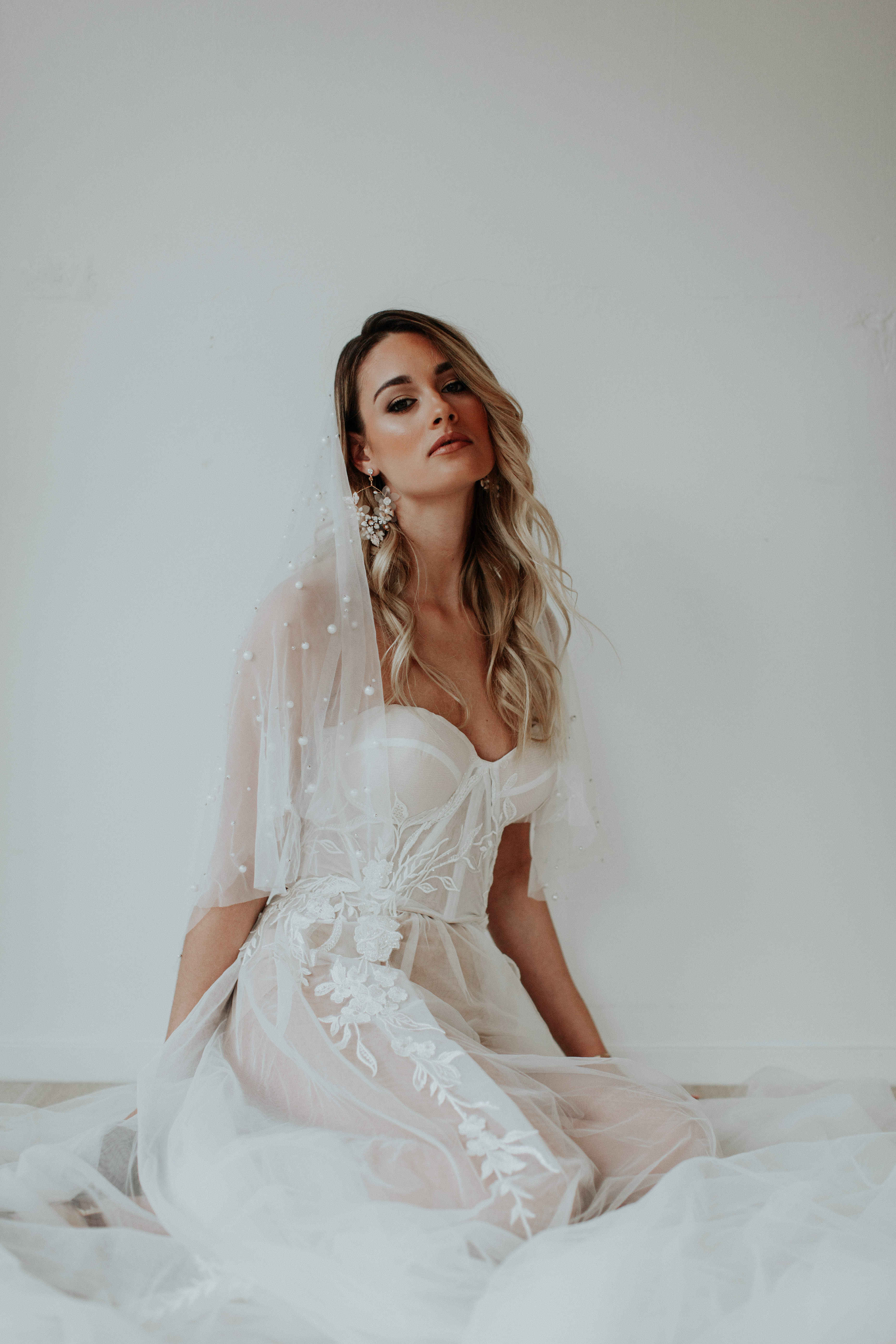
Pick a length and fabric that move beautifully outdoors
A shorter veil is easier to manage on sand, while fingertip and chapel lengths create more movement when the ground is even. Soft, lightweight fabric tends to float more naturally than a stiff, heavy layer. If you want a dramatic train, arrange for someone to help carry or bustle it after the ceremony.
Consider the wind direction when you test the veil. It should move, but not cover your face every few seconds. A simple edge or restrained embellishment often looks especially lovely outdoors because the setting already provides plenty of visual texture.
Coordinate the veil with the neckline and train
A veil should follow the lines of the gown. A clean veil can let a lace neckline or open back remain the focus, while a lightly detailed veil can echo a simpler dress. Match the level of embellishment rather than trying to repeat every motif exactly.
The train matters as well. A long veil behind a long train can look intentional and dramatic, but both pieces may be difficult on soft sand. If your dress has a shorter train, a veil with movement can add ceremony without overwhelming the silhouette.
Know when to skip a veil or choose a simpler alternative
There is no rule that says a beach bride must wear a veil. A pearl headband, floral comb, crystal pins, or a slim headpiece can give you a finished look with less fabric to manage. This is especially sensible if you want to move freely between the shoreline, lawn, and reception.
If you love the veil for photos but not for dancing, wear it for the ceremony and remove it afterward. A second hairpiece can make that transition feel intentional. The right choice is the one that lets you enjoy the setting instead of worrying about what the wind is doing.
Wear footwear that looks good and works on sand
Shoes are one of the first beach decisions to make because they affect your posture, dress length, and ability to walk. A beautiful heel is not helpful if it sinks with every step. Consider where you will stand, how far you will walk, and whether the reception moves to a firmer surface.
Try your footwear with the gown during a full-length rehearsal. Walk on sand, grass, wood, and tile if your day includes all four. That little test can prevent a surprisingly stressful shoe change later.
Choose flat sandals, wedges, or barefoot-friendly options
Flat sandals are easy and practical, while wedges give you height without the same sinking problem as narrow heels. Barefoot-friendly foot jewelry or a simple anklet can work for a ceremony directly on the sand, provided you are comfortable walking without shoes. Keep the overall detail light so it does not feel costume-like.
If you choose sandals, check the straps for rubbing and make sure embellishments do not snag the hem. A fresh pedicure and a small emergency kit are more useful than a pair you cannot comfortably wear. The best footwear disappears into the day because it lets you move naturally.
Match shoes to the ceremony surface and reception plans
Ask whether the ceremony is on loose sand, packed sand, a platform, or a nearby lawn. Then think about the next location. You might wear barefoot-friendly accessories for the vows and change into sandals for dinner, or choose a single pair that works across the whole celebration.
Your shoes should also relate to the dress length and formality. A sleek sandal can suit a simple gown, while a more embellished pair may echo beading on a formal dress. When the shoe is visible, treat it as part of the accessory story rather than an afterthought.
Skip narrow heels and hard-to-walk-in styles
Narrow stilettos tend to sink into soft ground, and stiff shoes can make even a short walk feel awkward. New footwear may also create blisters before the reception begins. If you want a heel, practice in it and bring a comfortable alternative.
Do not wait until the wedding morning to discover that your shoes pinch. Wear them around the house, test them outdoors, and check the hem afterward. A confident walk will always look more polished than an uncomfortable shoe.
Add practical accessories without losing your style
Practical details can still look bridal. A wrap, parasol, small pouch, or second pair of shoes may not appear in your inspiration board, but each can make the day easier. Choose versions that fit your color palette and texture so they feel like part of the plan.
Beach weather deserves a little respect. Sun, humidity, and evening breezes can change how you feel within a few hours. Pack for the real conditions while keeping the ceremony look clean and romantic.
Keep sun protection elegant with wraps, hats, or parasols
A lightweight wrap can protect your shoulders during a cooler evening and add softness to a simple gown. A refined parasol can provide shade for portraits, while a structured hat may suit a fashion-forward daytime celebration. Pick one practical statement rather than adding all three.
Check how the accessory photographs and whether it blocks your face. A wrap should not hide the neckline you chose, and a parasol should be easy for someone else to carry when you need both hands. The best practical piece supports the moment without becoming the moment.
Carry essentials in a small clutch or ceremony-ready pouch
Keep a few useful items close: lip color, tissues, blotting papers, hair pins, and a small amount of powder. A compact clutch can hold them during the reception, while a trusted attendant can keep a smaller pouch nearby during the ceremony. Match the pouch to your shoes, bouquet ribbon, or metal details for a coordinated finish.
Avoid overpacking. You do not need your whole beauty bag beside you, and a bulky clutch can become tiring quickly. Decide what you will genuinely use and hand the rest to your getting-ready group or planner.
Prepare for cool evenings, humidity, and unexpected weather
Look at the forecast, but do not treat it as a promise. A breathable wrap, waterproof makeup plan, spare pins, and a second footwear option can cover most small surprises. If rain is possible, ask the venue where guests and the ceremony setup can move.
Even unrelated planning pages can be useful reminders that conditions deserve attention: for example, a weather protection checklist and a home radon guide are built around preparing for environmental concerns, though your wedding plan should stay focused on comfort and logistics. A cookie policy is a completely different kind of practical detail, but it is another reminder to read the small information that affects an experience. For campaign planning, Unbounce is a landing-page platform; it is not a bridal styling tool, but the same habit of checking details before publishing applies to your wedding-day plan. And health questions belong with a qualified clinician; a yeast infection guide should never replace medical advice.
That may be more planning than you expected from an accessory guide, but it is worth a quick review. The calmer you feel about weather and logistics, the more you can enjoy the shoreline, your guests, and the photos.
Build a cohesive beach wedding accessory look
Once you have considered the conditions, dress code, hair, veil, jewelry, and shoes, step back and look at the complete outfit. A cohesive look does not mean everything has to match. It means the pieces share a mood, a level of detail, or a repeated texture.
Lay everything out together, including the bouquet and shoes. Take a few photos in natural light because accessories can appear more dramatic on camera than they do in person. Then remove one piece and compare; editing is often the quickest route to a polished result.
Coordinate accessories with the bouquet and other details
Your bouquet can quietly connect the whole look. Pearl accents, soft ribbon, warm metal, or a floral motif may echo a headpiece or earrings without making the wedding feel overly themed. If the bouquet is lush and detailed, keep the jewelry cleaner; if it is minimal, a more noticeable hairpiece can add interest.
Think about the groom’s boutonniere, ceremony chairs, and stationery too, but do not copy every detail. One or two shared notes are enough. For a relaxed, texture-led approach, this boho bridal styling guide offers useful ideas for combining natural details with polished finishes.
Keep the overall look balanced instead of over-accessorized
Choose one focal point first: perhaps the veil, earrings, or hairpiece. Let the other accessories support it with smaller shapes and less sparkle. This keeps the face, dress, and natural setting visible in photographs.
A helpful rule is to repeat a detail two or three times, not everywhere. You might echo pearls in the earrings and hairpiece, or repeat gold in the earrings, bracelet, and bouquet ribbon. If every item makes a separate statement, the look can feel busy even when each piece is beautiful.
The most memorable bridal styling usually leaves a little room for the bride herself.
That breathing room is especially valuable at the beach, where the ocean, sky, and movement already create a beautiful backdrop. If an accessory makes you feel unlike yourself, it is probably the piece to skip.
Use affordable bridal accessories to create a polished finish
A considered look does not require the highest price tag. Focus on proportion, comfort, secure construction, and how well each piece works with the gown. Buying direct can also make it easier to spend thoughtfully across several categories rather than putting the entire accessory budget into one item.
Poppy Lane Bridal is for stylish, savvy brides who want modern veils, jewelry, hair accessories, gloves, belts, and bridal essentials at factory-direct prices. If you are comparing options, build your bridal bundle around the pieces you will actually wear, then try everything on together before making the final call. You can also shop the collection when you are ready to see the available bridal styles.
Affordable can still feel elevated when the choices are intentional. Finish with the pieces that make you feel comfortable, confident, and unmistakably yourself.
Find Your Bridal Finishing Pieces
When you are ready to bring the look together, explore Poppy Lane Bridal for modern bridal accessories and veils made for stylish, savvy brides who want beautiful choices at factory-direct prices.
Conclusion
The best beach wedding accessories are the ones that respect the setting while still feeling completely you: secure in the wind, comfortable on the sand, and polished enough for every photograph. Choose a focal point, test everything outdoors, and leave room for your own personality to shine.
Frequently Asked Questions
What accessories work best for a beach wedding?
Lightweight jewelry, secure hairpieces, practical veils, and flat sandals or wedges are dependable choices. Select details that can handle wind, humidity, sun, and the ceremony surface.
Should I wear a veil for a beach wedding?
You can, especially if you choose a manageable length and lightweight fabric. If wind or sand makes a veil stressful, a comb, headband, or floral hairpiece can create a finished bridal look instead.
What jewelry should I avoid at the beach?
Avoid pieces that feel heavy, overheat against your skin, snag on the dress, or require constant adjustment. Very delicate finishes may also need extra care around salt air and perspiration.
Are heels a bad idea for a beach ceremony?
Narrow heels are difficult on loose sand because they can sink and make walking awkward. Flat sandals, wedges, or a barefoot-friendly option are usually easier, but the right choice depends on the surface and your comfort.
How do I keep my hair accessory secure in the wind?
Choose a piece that suits your hairstyle and have your stylist anchor it with pins, texture, or a braid. Test it by walking and turning outdoors before the wedding day.
How many accessories should a bride wear?
There is no fixed number, but one focal accessory with a few supporting details often looks balanced. Repeat a metal, pearl, crystal, or floral motif without making every piece equally noticeable.
What should I pack for changing beach weather?
Bring a light wrap, spare hair pins, comfortable backup footwear, tissues, lip color, and a small pouch for essentials. Check the forecast and ask the venue about shade, wind, and rain plans.