
The Complete Bridal Accessories Timeline: When to Buy What
Key Takeaways
A bridal accessories timeline gives you room to make thoughtful choices instead of rushing through the finishing touches. Use the dates as a flexible guide, then adjust them around your dress, venue, and wedding date.
- Set your style and accessory budget before you start shopping.
- Choose veils, headpieces, and other custom pieces early.
- Buy shoes and jewelry in time for fittings and styling trials.
- Test the full look before the final weeks arrive.
- Pack, protect, and assign every accessory before the wedding day.
12+ months before: Set your bridal accessory strategy
This is the calmest point in your bridal accessories timeline, so use it to decide what you actually want to wear. You do not need to purchase everything yet. Instead, create a clear direction for your look, your spending, and the practical needs of your celebration. A little planning now can keep small decisions from piling up later.
.jpg)
Define your wedding-day style and priorities
Start with the feeling you want your outfit to have: clean and modern, soft and romantic, fashion-forward, or beautifully traditional. Think about which accessory should lead the look. It might be a dramatic veil, sculptural earrings, a delicate headpiece, or simply the gown itself.
Write down your non-negotiables and your nice-to-haves. A short list could look like this:
- One focal accessory that feels most like you
- Comfortable shoes you can wear for several hours
- Jewelry that works with your neckline and hairstyle
- A practical option for changing your look later
This keeps shopping focused without making your style feel overly planned. The goal is a look that feels like you on a very special day, not a costume assembled from every trend at once.
Build an accessory budget that fits your dress budget
Set aside an accessory budget while your gown budget is still fresh in your mind. Include the veil, hair accessories, jewelry, shoes, belts, gloves, and any alterations or care supplies you may need. You can spend more on the piece that matters most and keep the rest simple.
Poppy Lane Bridal is designed for brides who want modern veils, jewelry, hair accessories, gloves, belts, and bridal essentials at factory-direct prices. That direct-to-consumer approach can help you compare pieces by style and value, rather than assuming a wedding label must come with a high markup.
Check your venue, season, and ceremony requirements
Your setting changes what will feel comfortable and secure. Wind may affect a long veil, an outdoor aisle may call for stable shoes, and a winter celebration may make gloves or a cape more appealing. Also check whether your ceremony has any rules about head coverings, uncovered shoulders, or removable pieces.
Ask your venue or ceremony officiant early if you are unsure. It is much easier to adjust your accessory plan now than to discover a restriction during your final fitting.
Save inspiration for veils, jewelry, shoes, and hair accessories
Create one inspiration folder rather than saving random images everywhere. Include full looks as well as close-ups of necklines, hair arrangements, veil lengths, and shoe shapes. Notice what repeats across your saves: pearls, warm metals, clean lines, floral details, sparkle, or a particular silhouette.
A focused folder also makes appointments easier. You can show your stylist and dress consultant the overall direction without needing to explain every image separately.
9–12 months before: Choose your dress-defining pieces
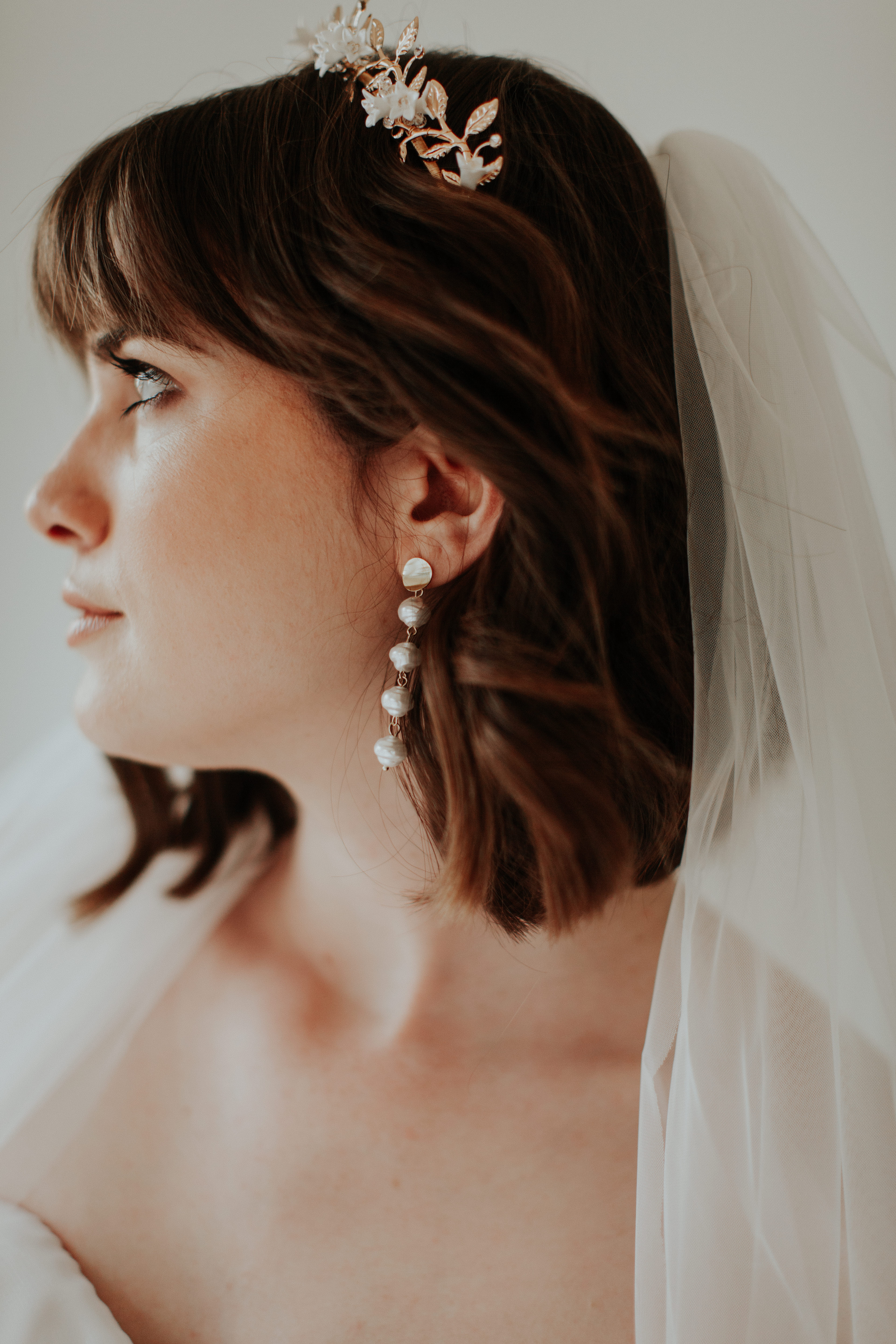
Once your gown is chosen, accessories become much easier to judge. Bring photos of the dress, including its neckline, fabric, back, and embellishments, when you shop. This is the stage for pieces that shape the whole outfit, especially a veil or headpiece. Leave enough time for custom work, delivery, and any small adjustments.
Decide whether you want a veil, headpiece, or both
Try to decide whether your hair should carry the main detail, whether the veil should make the statement, or whether the two should work as a layered look. A headpiece can stay on for the reception, while a veil may be removed after the ceremony. If you want both, make sure they have distinct roles instead of competing for attention.
Bring your hairstyle ideas into the decision. A comb, vine, headband, or pins may suit different placements, and the right choice depends on where your hair will be secured.
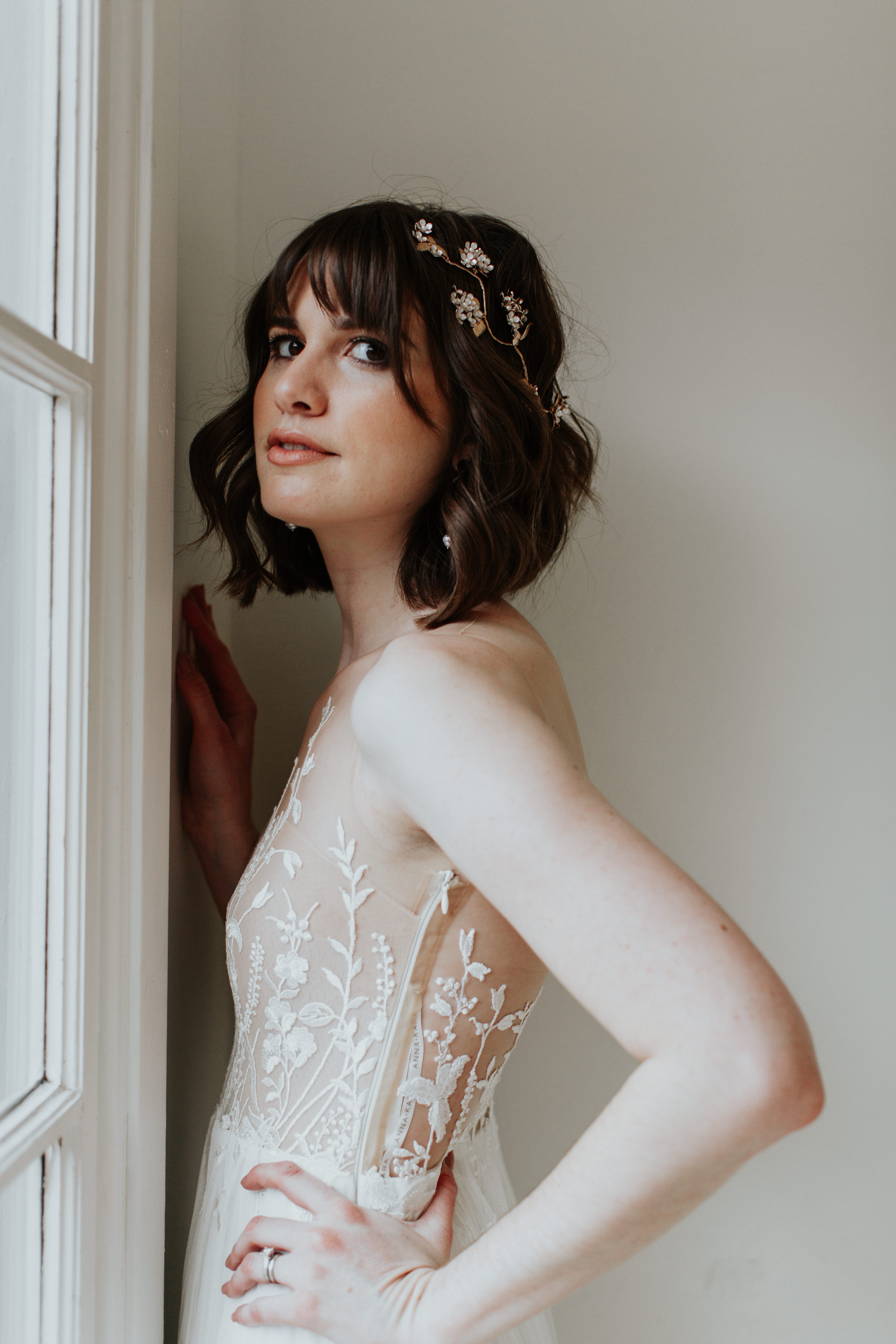
Match accessories to your gown’s neckline and details
Let the dress guide the amount of visual activity around your face and neckline. A detailed bodice may pair best with quieter jewelry, while a clean gown can give a stronger accessory more room to stand out. Consider the gown’s color, texture, waistline, and back as well as its neckline.
For a closer look at pairing choices, browse this bridal accessory styling guide when you need ideas for veils, jewelry, belts, gloves, and hair adornments. The useful test is simple: does the accessory support the dress, or does it pull focus away from it?
Order custom or made-to-order bridal accessories early
If a piece is custom, made to order, or dependent on a specific delivery window, place the order well before your final fittings. Ask about production timing, measurements, color options, and whether the piece can be adjusted. Keep your order details and confirmation in one place.
Ordering early gives you options if the first choice is not quite right. It also means you can style the actual accessory with your gown instead of relying on a similar sample.
Consider heirlooms, sentimental pieces, and borrowed accessories
A family veil, borrowed earrings, or a small sentimental detail can make your outfit feel personal without adding another major purchase. Inspect delicate pieces for loose stones, weak clasps, tarnish, or fabric damage before committing to them.
Take a photo of the piece beside your dress. If the colors or proportions feel off, you can still honor its meaning by wearing it at another point in the day or carrying it safely with you.
6–9 months before: Buy shoes and jewelry
Shoes and jewelry deserve their own planning window because they affect both comfort and fit. Your shoes can change the length of your gown, and jewelry may influence your hairstyle or neckline styling. Buying these pieces now gives you time to wear them, assess them, and bring them to fittings.
Choose wedding shoes that balance style and comfort
Look for a heel height and shape you can manage while standing, walking, and dancing. Consider the surface of your venue, the length of your dress, and whether you want a second pair for the reception. A shoe can be beautiful and still be the wrong choice if you cannot comfortably wear it for more than a few minutes.
Wear the shoes indoors on clean surfaces and save the packaging. That lets you test the fit without marking them before the wedding.
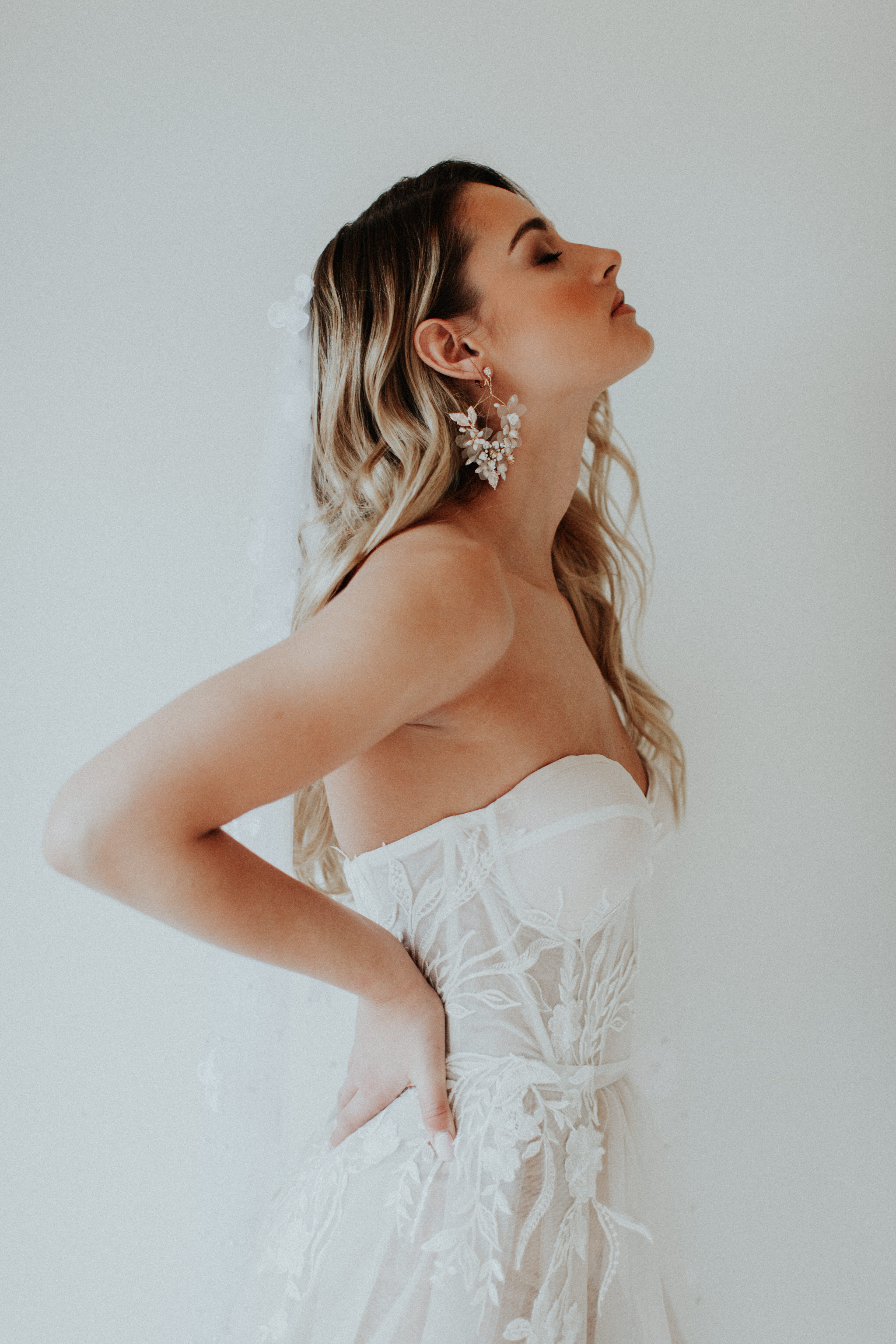
Select earrings, necklaces, bracelets, or other jewelry
Choose jewelry after you understand the neckline and the scale of the gown. Some dresses need only earrings, while others suit a necklace, bracelet, or a few carefully chosen layers. If you are shopping online, check dimensions and weight rather than judging size from a photograph alone.
Poppy Lane Bridal offers bridal jewelry alongside veils, hair accessories, gloves, belts, and other bridal essentials, so you can compare the overall mood of your pieces in one place. For more focused earring ideas, this bridal earrings guide can help you compare studs, drops, hoops, and chandeliers.
Coordinate metals, stones, pearls, and dress embellishments
Matching every finish exactly is not required, but the combination should look intentional. Compare your jewelry with the gown’s hardware, embroidery, beading, and any accessories already selected. If you mix metals, repeat one of them somewhere else so the choice feels connected.
Choose a clear focal point, then let the other accessories support it.
After that, look at the full outfit from a little distance. Subtle differences that seem noticeable in your hand often disappear once the dress, hair, and veil are together.
Plan accessories for the ceremony, reception, and second look
Decide which pieces will be worn for the ceremony and which can change afterward. You might remove the veil, add a belt, swap earrings, or move from formal shoes to a more flexible pair. Planning these changes now prevents you from buying accessories that only work for one brief moment.
Write down who will help with each change. A stylist, attendant, or family member should know where the pieces are and how they fasten.
3–6 months before: Fill in the finishing details
By this point, your main accessories should give you a strong foundation. Now you can add details that bring texture, tradition, or a little personality to the outfit. Keep checking each new piece against the gown and the accessories you already own. Edit with intention so the final look feels polished rather than crowded.
Add a bridal belt, gloves, cape, or detachable sleeves
These pieces can change the shape and mood of your dress without requiring a second gown. A belt can define the waist, gloves can add structure, and a cape or detachable sleeves can bring coverage or texture. Think about when you will wear each piece and whether it needs special fastening or alterations.
If your wedding is in a cooler season, removable layers are especially useful. You can wear them for an outdoor portrait or ceremony and remove them when the celebration becomes more active.
Choose a garter, hair comb, pins, or floral accessories
Small accessories are easier to choose once the main pieces are settled. Pick a garter or hair detail that has a reason to be there, whether it adds a personal tradition, echoes the bouquet, or simply makes you smile. Check that pins and combs feel secure without pulling at your hair.
Keep the scale consistent. A large floral hairpiece may need simpler earrings, while a few tiny pins can sit comfortably beside more noticeable jewelry.
Shop for something blue and other traditional details
Something blue does not have to be visible to everyone. It can be stitched inside a garment, placed in a ribbon, worked into a hairpiece, or included in a small accessory. Choose a detail that feels natural rather than adding color only to satisfy a checklist.
The same goes for other traditions. Keep the ones that feel meaningful and skip anything that makes you uncomfortable or distracts from your day.
Confirm accessories work with your hairstyle and makeup plans
Send your accessory photos to your hairstylist and makeup artist before the trial. They can advise on placement, balance, and whether the veil or headpiece will affect the hairstyle. Your makeup plan may also change how much sparkle or color feels right near your face.
Bring the actual pieces whenever possible. A screen image cannot show how a comb sits, how earrings move, or how a veil frames your features.
1–3 months before: Test and adjust your complete look
This is when separate decisions become one outfit. Your dress, shoes, jewelry, veil, hair, and makeup should be considered together rather than in isolation. Try the look in natural light and take photos from the front, side, and back. Small changes now can make the wedding morning feel much calmer.
Schedule a hair and makeup trial with your accessories
Bring your veil, headpiece, earrings, and any hair pins to the trial. Ask your stylist to show you how the veil is secured and how it can be removed without disturbing the hairstyle. Take a few photos with and without the veil so you can compare the overall balance.
If something feels heavy, scratchy, loose, or unlike you, say so during the appointment. This is exactly the time to adjust it.
Bring shoes and undergarments to your dress fitting
Wear the undergarments and shoes you expect to use on the wedding day. They help your seamstress check the hem, proportions, and movement of the gown. If your shoe height changes, tell the person handling alterations before the hem is finalized.
Pack these items in a labeled bag for every fitting. It is an easy habit that keeps the right pieces from being left at home.
Check veil length, train placement, and bustle compatibility
Have someone walk behind you while you move, sit, turn, and practice your ceremony entrance. Check where the veil falls against the train and whether the bustle can be fastened without catching it. Also practice removing the veil so the transition does not become a mystery on the day.
A few minutes of rehearsal can reveal a surprising amount. You may need extra pins, a different veil placement, or help from someone taller than you expected.
Replace uncomfortable, damaged, or poorly matched pieces
Do not keep an accessory simply because you bought it. Replace anything that pinches, slips, snags the dress, irritates your skin, or looks wrong beside the gown. There is still enough time to find a better option if you act now.
Your wedding accessories should support your comfort and confidence. A simpler piece that stays in place is usually more useful than a dramatic one you spend the day adjusting.
2–4 weeks before: Finalize fit, care, and backups
The creative decisions should be mostly finished now. Use these weeks for inspection, organization, and practical preparation. Put every accessory in one place and confirm that nothing is missing. This is also a good time to check any borrowed or sentimental pieces with extra care.
Collect and inspect every accessory
Lay everything out together, including shoes, jewelry, veil, headpiece, belt, gloves, garter, and any second-look pieces. Check clasps, hooks, combs, ribbons, hems, and embellishments. Photograph the layout so another person can recreate it if needed.
Make a simple list of what you have and where it will be packed. It sounds basic, but it prevents a tiny hair pin from disappearing into a crowded wedding bag.
Break in your shoes without damaging them
Wear your shoes for short periods indoors and walk on different surfaces where it is safe. Practice stairs, standing, and small turns. Avoid anything that scuffs or stretches them, and stop if the fit causes pain rather than hoping it improves on its own.
Add comfortable insoles or blister protection only after testing them with the shoes. New inserts can change the fit.
Prepare jewelry boxes, garment bags, and storage solutions
Store jewelry separately so chains do not tangle and stones do not rub against one another. Keep the veil and dress accessories in clean, protective packaging, away from moisture, makeup, and sharp objects. For longer-term preservation after the wedding, this guide to storing bridal accessories covers ways to gather, clean, and protect your pieces.
Label bags by when the item will be worn. Ceremony, reception, and keepsake pieces should not be mixed together at the last minute.
Create an emergency kit with practical accessory fixes
Your kit does not need to be huge. Include the small tools that could solve the most likely problems:
- Clear fashion tape and safety pins
- Spare earring backs and hair pins
- A small sewing kit with matching thread
- Blister covers and tissues
Give the kit to the person managing your outfit, not to yourself. You will have enough to think about without searching for a missing earring back between photographs.
Wedding week and wedding day: Pack and wear everything smoothly
The final week is for gentle care, not major style experiments. Keep delicate accessories away from steam, perfume, hairspray, and crowded surfaces until they are needed. Confirm the plan with the people helping you, then let the morning unfold one step at a time. Your timeline has done its job if you can focus on getting married instead of locating your veil.
Assign a trusted person to manage your accessories
Choose someone calm, organized, and comfortable handling small items. Give them your accessory list, emergency kit, and instructions for ceremony-to-reception changes. If a piece is valuable or sentimental, tell them exactly where it should go after use.
Poppy Lane Bridal’s direct-to-consumer approach is made for the stylish, savvy bride who wants beautiful bridal accessories without unnecessary retail markups. Whether you choose a veil, jewelry, hair accessory, glove, or belt, the best day-of plan is still a clear one.
Steam, polish, and safely transport delicate pieces
Steam the gown and veil only as directed by the professionals caring for them, and keep jewelry away from moisture and cosmetics. Polish suitable metal pieces with the correct cloth, then pack them in separate compartments. Transport everything in a stable bag or box rather than loose in a car.
Do one final visual check before leaving for the venue. It is much easier to spot a missing comb or tangled chain at home.
Follow the planned order for putting on each accessory
Usually, hair and makeup come before the dress, while earrings and other pieces are added at a planned point around dressing. Follow the instructions from your stylist and dress team, especially if the gown has a delicate neckline or a fitted bodice. Keep the veil nearby but protected until the hairstyle is ready.
Have your helper repeat the order aloud if the morning gets busy. A short sequence written on paper can be surprisingly reassuring.
Pack reception changes and secure valuables after the celebration
Place reception accessories in a labeled bag before the wedding day. Decide who will collect the veil, jewelry, shoes, and borrowed items after photographs and dancing. Ask that person to return everything to its storage container rather than leaving pieces on a venue table.
Afterward, clean and store the pieces when you have the energy. The celebration can be over while your accessories still deserve a little care.
Complete Your Bridal Look
When you are ready to shop, shop the collection for modern bridal accessories that fit your style and your smart-spending plan. Take your time, choose the pieces that feel like you, and let the rest of your look follow naturally.
Conclusion
A bridal accessories timeline is less about strict deadlines and more about giving each choice enough breathing room. Start with your gown and priorities, make room for fittings and trials, then finish with careful packing and a trusted helper. With that plan in place, your accessories can feel effortless, personal, and ready for every part of the celebration.
Frequently Asked Questions
When should I start shopping for bridal accessories?
Start thinking about accessories as soon as your dress search begins, then make major choices around 9–12 months before the wedding. Custom pieces, veils, and headpieces may need extra time.
Should I buy the veil before or after the dress?
Choose the veil after you have selected your dress. The gown’s neckline, fabric, train, color, and embellishments will help you decide on the most balanced length and detail.
When should I buy wedding shoes?
Buy your wedding shoes around 6–9 months before the wedding, or early enough to bring them to dress fittings. The heel height can affect the gown’s hem and overall proportions.
How far in advance should I order custom accessories?
Order custom or made-to-order accessories as early as possible, ideally 9–12 months before the wedding. Confirm production, delivery, and adjustment timing before placing the order.
Do my jewelry, veil, and headpiece have to match exactly?
No. They should look intentional together, but exact matching is not required. Repeat a metal, stone, pearl, or design detail to create a connection across the look.
When should I have a hair and makeup trial with my accessories?
Schedule the trial 1–3 months before the wedding and bring the actual veil, headpiece, earrings, and hair accessories. This lets your team test placement, comfort, and removal.
What should I do with bridal accessories after the wedding?
Inspect and gently clean each piece according to its material, then store it in a dry, protective container. Keep jewelry separated and avoid storing delicate fabric in ordinary plastic for long periods.