
Cut-Edge vs. Lace-Edge Veils: Which One Is Right for You?
Key Takeaways
Choosing the right veil is a special moment that ties your whole bridal look together. Here are the five most important things to keep in mind:
- Raw cut edges offer a modern, clean look that lets your dress take center stage.
- Lace edges introduce romantic, textured details perfect for traditional or soft bridal aesthetics.
- Consider your dress silhouette; heavier embroidery often pairs best with a simpler, cut-edge veil.
- Your venue and overall wedding theme should influence the length and level of detail you choose.
- You can find your perfect veil that looks expensive without the massive retail markup.
Understanding the cut-edge veil
You might have noticed that many of the most chic veils skip the heavy trim entirely. A cut-edge veil is exactly what it sounds like: a length of soft tulle that has been carefully cut at the end with no decorative border, ribbon, or lace. Because of this, the fabric seems to float around you, creating a dreamlike, cloud-like effect that feels very high-fashion.
What exactly is a raw cut edge?
A raw cut edge means the edge has not been folded, hemmed, or finished with an appliques. It uses the natural, lightweight properties of the illusion tulle to hang straight without extra weight. This design choice is all about purity and grace, allowing the material to drape seamlessly as you move.
The appeal of a clean, minimalist look
When your dress has a lot of structural interest or bold patterns, you don't want your accessories fighting for space. A clean silhouette really shines when you keep the veil simple. Many modern brides opt for this style because it feels fresh, effortless, and intentionally understated.
Why it won’t distract from your dress
If you spent months searching for the perfect gown with its own complex lace or beading, you want people to notice those details. A simple veil acts as a frame rather than a competitor. It provides that traditional bridal moment at the altar without pulling focus away from your dress's specific design elements.
Handling the delicate tulle
Because the edge is raw, the quality of the tulle matters immensely. You want a material that feels soft against your skin and holds its shape without looking stiff. Whether you choose Poppy Lane Bridal or another source, ensure the tulle is high grade so it doesn't snag or fray before you even walk down the aisle.
Exploring the charm of lace-edge veils
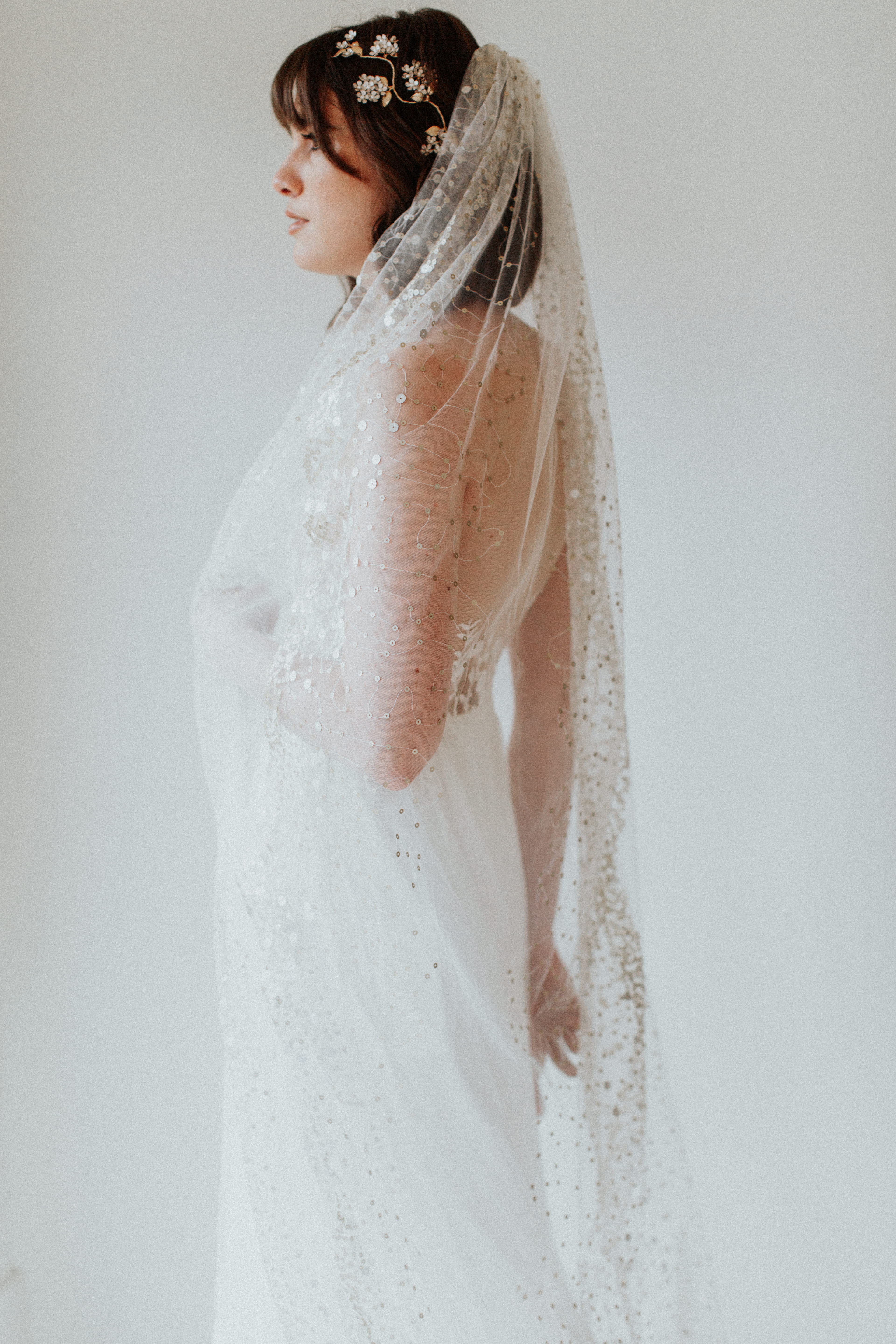
There is no denying the romantic allure of a lace-trimmed veil. Lace adds a layer of history and intentionality, bringing a custom-made feel to your overall look. Whether you love subtle scalloped edges or bold, vintage-inspired work, this type of veil changes the way your silhouette appears in photos.
Types of lace trim to consider
When exploring options, you will find several common types of lace trim to consider for your special day:
- Chantilly lace, which is fine and delicate.
- Corded lace, which features a raised outline for depth.
- Guipure lace, known for its thicker, bolder physical texture.
- Beaded lace, for that extra touch of evening sparkle.
These varied textures allow you to match the vibe of your ceremony perfectly, whether you are going for something dainty or grand.
Adding drama and romantic detail
A veil with a lace border creates a clear line of sight, often drawing attention to your face or the line of your back. This makes for incredible portraits, especially when the veil is long enough to drape across the floor. You can think of it as a soft, ethereal frame that enhances your natural glow.
Choosing the right lace for your fabric
It helps to match the weight of your lace to the material of your dress. If your gown is made of a heavy, structured satin, you might consider a bolder lace trim. If your dress is light and bohemian, a delicate, airy edge will keep the proportions balanced and light.
How to make lace feel modern
Lace doesn't have to look vintage. By choosing a veil with a graphic, minimalist pattern rather than a traditional floral motif, you keep the style current. You can also pair a structured, modern dress with an unexpected lace trim to balance the sharpness with a bit of softness.
Matching your veil to your wedding dress style
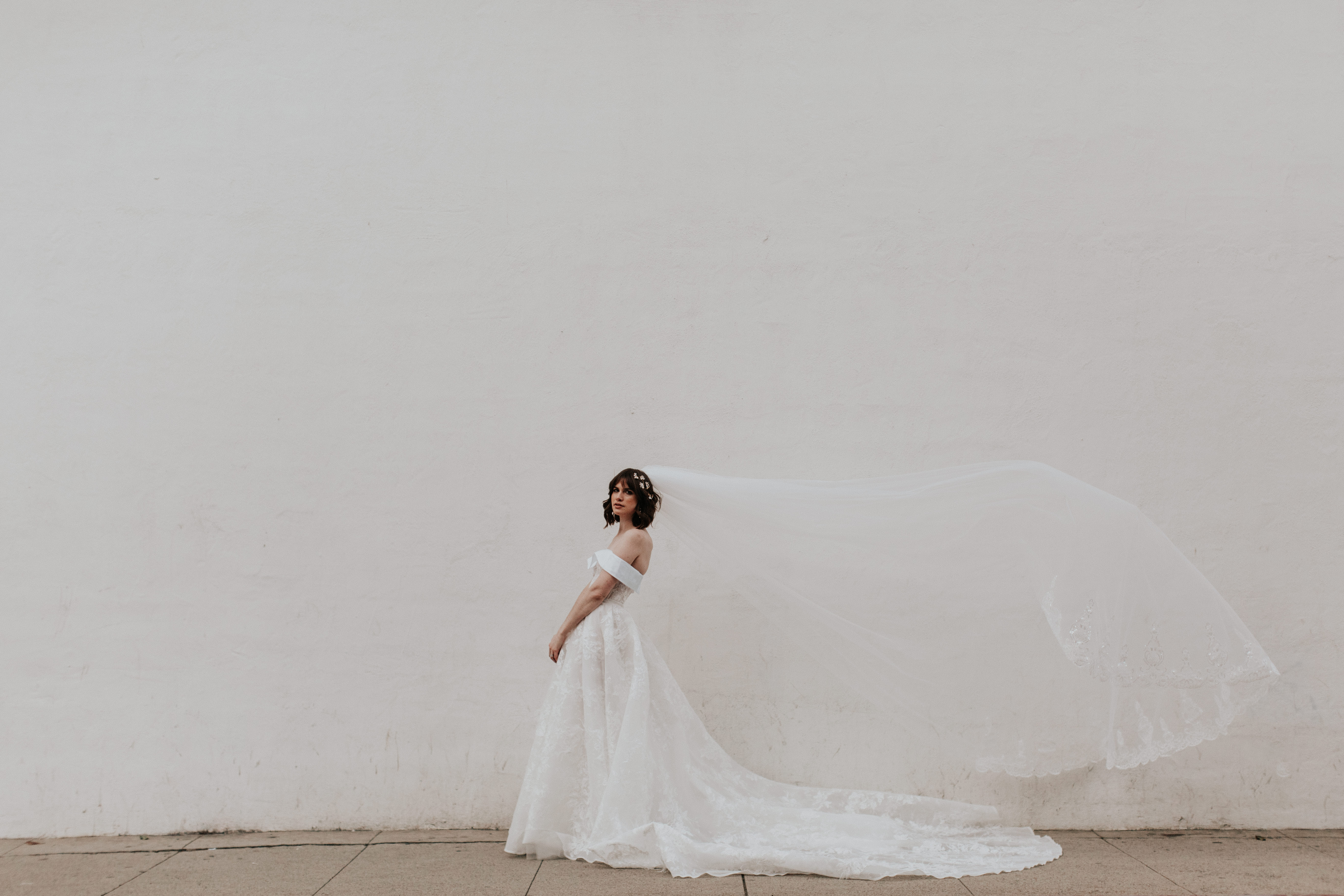
Finding that perfect harmony between your gown and your accessories is the secret to a polished bridal look. It is helpful to treat your veil as a supporting character that highlights the star of the show. We suggest thinking about the total weight of your ensemble when making your final decision.
When to choose a cut-edge veil for intricate gowns
If your dress features heavy beading, 3D floral petals, or intricate embroidery, a simple cut edge is your best friend. It provides the necessary "veil" look without adding visual clutter. Using a plain veil lets you avoid having two different types of patterns competing for attention near your face.
Selecting a lace veil for simple, crepe dresses
When you wear a gown with clean lines and no embellishments, you have a blank canvas. This is the moment to bring in a veil with a stunning lace border. > A veil with intricate detailing acts as the focal point, transforming a minimalist dress into a rich, layered ensemble in an instant.
This simple addition adds high-end texture to a smooth, unadorned fabric, making the entire look feel complete and intentional.
Considering the neckline details
Your neckline dictates where your veil should sit or how much detail it should have. A high-neck or heavily decorated bodice is often complemented best by a simpler veil or one with a light lace trim that starts lower down at the waist or fingertip level. You want to avoid having too much "activity" around your collarbone and shoulders.
Balancing embroidery and beadwork
Don't be afraid to mix textures if the scale is different. If your dress has small, delicate pearls, a lace veil with similar tiny details can look beautiful. The key is ensuring that the styles of embroidery don't clash; if you are unsure, keeping the veil simple is almost always the safer and more elegant choice.
Considering your overall wedding aesthetic
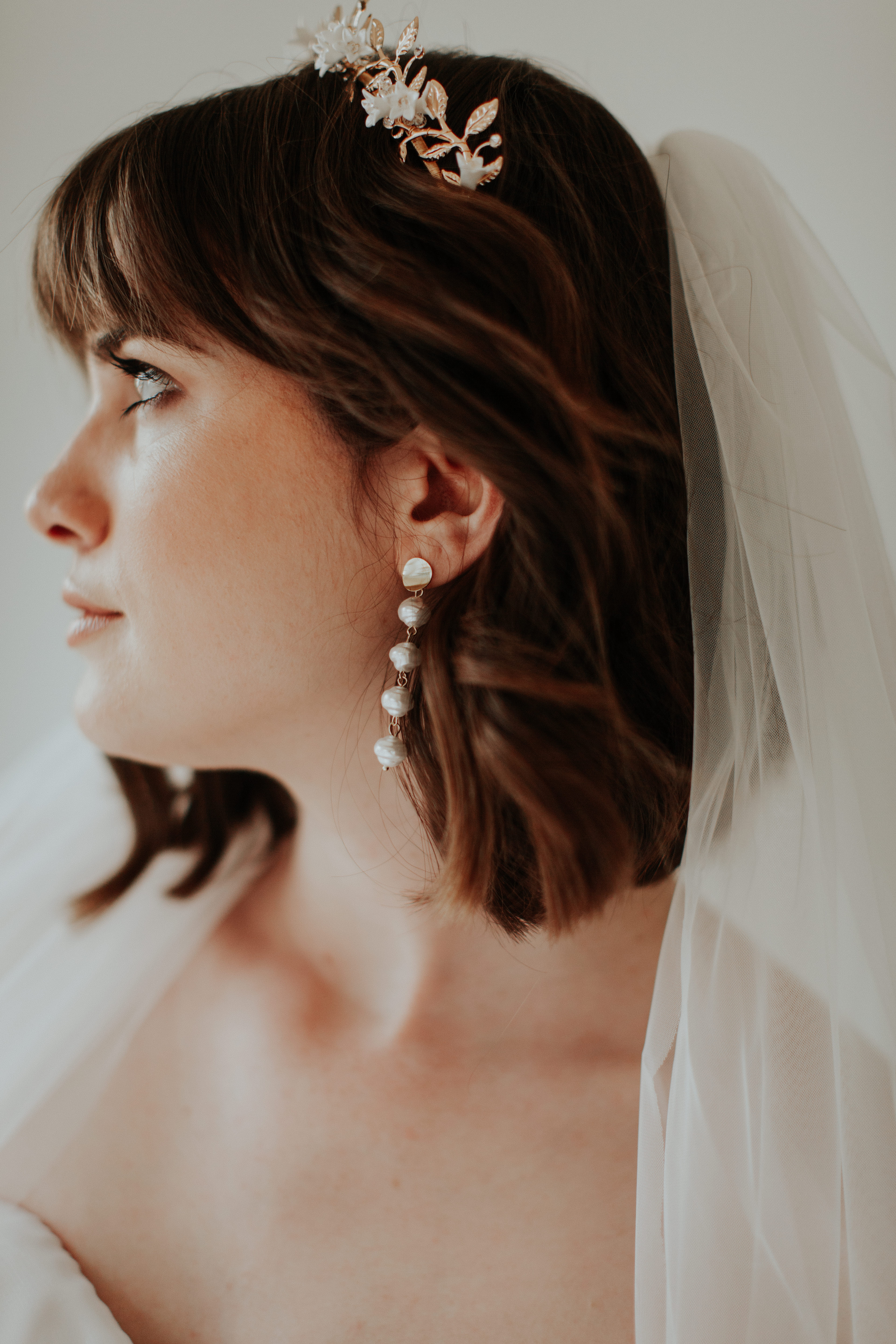
Your accessories should feel like they belong at your specific venue. A beach elopement calls for an entirely different vibe than a black-tie ballroom affair, so your veil choice should mirror that shift. You can discover stunning accessories that help ground your look according to your venue.
Selecting a veil for a bohemian wedding
A bohemian aesthetic is all about freedom and earthiness. A veil with a soft, trailing lace edge or even a bit of floral-inspired trim fits perfectly. Stay away from stiff, overly formal materials, choosing lighter tulles instead.
Creating a timeless look for black-tie affairs
For a formal ballroom wedding, long is usually better. A cathedral-length, raw-edge veil looks incredibly majestic in a large space. It creates a sense of occasion without having to resort to fussy embellishments that might catch on furniture or look out of place.
Perfecting a backyard or beach elopement style
In an outdoor environment, you want to be comfortable. A fingertip-length cut-edge veil is practical and avoids getting tangled in sand or grass. It stays light during the ceremony, allowing you to move freely and celebrate with your guests.
Coordinating with your venue’s vibe
Think about the lighting at your venue. Minimalist veils are great for bright, airy locations, while veils with sparkle or lace can catch candlelight beautifully. Always consider how the environment interacts with the fabric of your veil to ensure everything photographs as beautifully as you imagined.
Taking your bridal budget into account
Your budget is something to handle with total honesty, and there is no need to overspend to get a luxury result. Because many traditional bridal boutiques have high overhead costs, the price of a veil can quickly climb. Being a smart shopper means looking for quality materials directly from the experts.
Why cut-edge veils are often more affordable
There is less labor involved in creating a cut-edge veil. Because the design is intentionally minimal and doesn't require complex lace cutting or hand-application, the costs remain lower. You aren't paying for the hours of stitching that ornate lace borders require.
Evaluating the cost of hand-applied lace
Hand-applied lace is beautiful, but it is often priced as a premium option. If you are eyeing a veil with a stunning lace edge, make sure you understand whether the lace is machine-applied or hand-sewn, as this significantly impacts the price. We believe in providing affordable luxury by cutting out the middleman, so prices remain grounded in reality.
Finding value without compromising on quality
Quality is found in the tulle, not the price tag. When you buy from brands like Poppy Lane Bridal that sell directly to you, you save on retail markups. This means you can often afford a longer, more dramatic veil for the same price as a shorter, simpler one from a traditional shop.
Investing in an heirloom-quality piece
Even an affordable piece can be saved as a memory. If you choose a veil with classic lace or simple, high-grade tulle, you can easily store it away to pass down. It is the sentiment and the care you put into it that makes it an heirloom, not what you paid at the register.
Practical tips for choosing your veil length and volume
Your veil should fit your body rather than the other way around. The right length can balance your silhouette, while the right volume can add that touch of drama you might be craving. We recommend testing your veil with your shoes and hair accessories in advance.
Deciding between fingertip and cathedral lengths
Fingertip length is the most versatile option; it hits around your hips and doesn't hinder your ability to hold a bouquet. Cathedral length is much more dramatic and works best for formal ceremonies where you will have a grand entrance. Think about whether you want to wear the veil for the entire reception—if so, a shorter style is usually the winning choice.
How volume affects the look of your edge trim
More tiers mean more tulle, which can make lace trim look more intense. If you want a softer, subtle lace look, go for a single-tier design. If you want lots of volume, ensure your veil is balanced so the trim doesn't end up looking too "heavy" around your head.
Coordinating the veil with your hairstyle
A high bun or a complex updo might need a veil with a shorter, more discreet comb. If you are wearing your hair down in loose waves, you have more freedom for a wider variety of attachments. Always test the "feel" with your hairstylist during your trial.
Considering ease of movement on your big day
Remember that you will be laughing, dancing, and walking quite a bit. Choose a length that won't require a handler to follow you around all night, but don't be afraid to go for length if you have someone to help. Your peace of mind matters just as much as the aesthetic.
Conclusion
Whether you decide on a modern, raw cut-edge veil or a romantically intricate lace option, the best choice is the one that makes you feel most like yourself. By understanding how these veils interact with your gown, venue, and personal style, you can confidently check this piece off your list while feeling great about your decision. Remember that beauty and quality don't have to break the bank, so take your time, browse your options, and find that final detail that completes your look for the walk down the aisle.
Frequently Asked Questions
Does a cut-edge veil look too simple for a fancy wedding?
Not at all; many high-fashion brides choose simple, raw-edge veils because they provide a sophisticated, minimalist look that lets the gown's architecture speak for itself.
How do I know if the lace matches my dress?
Try to match the base fabric and the color tone first. If you can, look for designs where the lace pattern complements the style of lace on your dress, whether it is floral, geometric, or scalloped.
Can I wear a long veil if I am petite?
Yes, absolutely. A longer veil can actually create a beautiful, elongated effect that looks stunning in photos, provided the volume isn't so heavy that it overwhelms your frame.
What if I want both a simple look and an intricate look?
Consider a two-tier veil where one layer is simple and the other has a lace edge, or use a hairpiece to add interest while keeping your veil plain.
Should I worry about my veil snagging on jewelry?
If you have delicate jewelry, especially earrings with prongs, take extra care. Opting for a higher-quality, smoother tulle can significantly reduce the risk of snags.
How early should I buy my veil?
It is best to have your veil at least two months before your wedding. This ensures you have time to see how it works with your hair trial and any final dress alterations.
Does the veil need to match the dress exactly?
It should coordinate well, but it does not need to be an identical match for the exact weave of the lace. Focus on matching the shade of white or ivory so that the colors look cohesive in photos.