
How to Choose a Wedding Veil for Your Dress Neckline
Key Takeaways
Your neckline is the best starting point, but the whole dress matters too. Think about proportion, detail, movement, and how comfortable you want to feel from ceremony to reception.
- Match the veil’s shape and length to your neckline and dress silhouette.
- Use simple tulle when your gown already has lace, beading, or a dramatic train.
- Let a veil frame your face and shoulders without hiding the dress details you love.
- Try the complete look with your hairstyle, jewelry, shoes, and venue in mind.
- Shop with a clear budget so you can spend on the details that matter most to you.
Start with your dress neckline and overall silhouette
Before you fall for a veil because it looks beautiful in a photo, look at your dress as a whole. The neckline creates the first visual line, while the skirt and train determine how much movement the veil should add. A good veil for neckline choice feels connected to the gown rather than added at the last minute.
Start with the dress you already love, then use the veil to support its shape. Poppy Lane Bridal makes modern bridal accessories available at factory-direct prices, which can make it easier to compare a few styles without treating the veil as an afterthought.
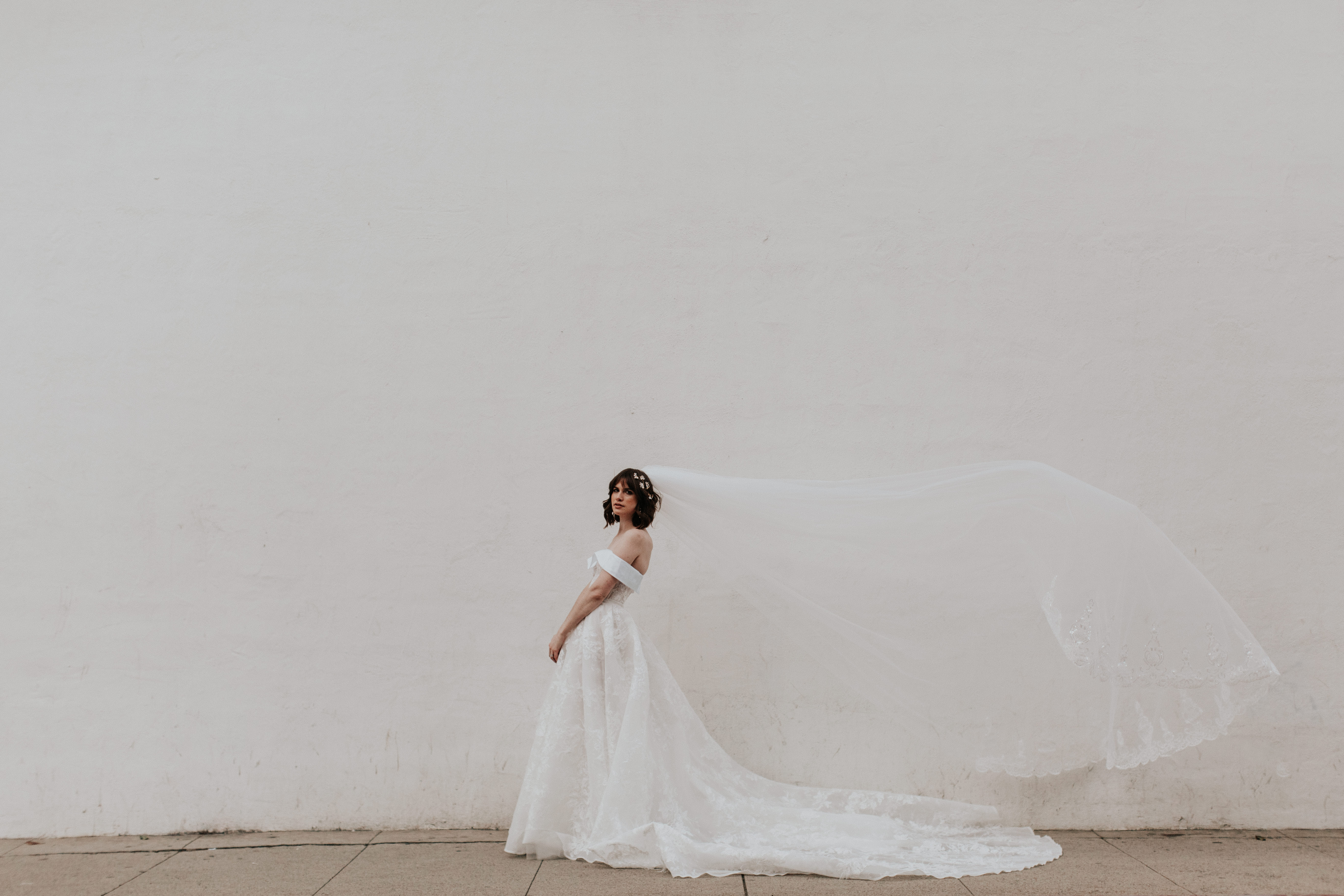
Identify the neckline shape before choosing a veil
Look closely at where the dress meets your skin. Is the line straight, curved, pointed, asymmetrical, or high and covered? A strapless neckline usually leaves more open space around the shoulders, while a V-neck creates a strong vertical direction that a veil can echo.
Take a quick photo from the front and side, since a neckline can look different in a mirror than it does in pictures. If you are still comparing lengths, this veil length guide can help you think through how shorter, mid-length, and cathedral styles change the overall impression.
Consider how the veil frames your shoulders and back
A veil is visible from more than one angle, especially during the ceremony. Notice whether it rests on your shoulders, falls beside your arms, or trails down the back. If your gown has an open back, a sheer veil can add softness without covering the detail completely.
Ask your stylist to pin the veil at different heights. A crown placement can add height and drama, while a lower comb placement often feels relaxed and lets the neckline remain the focus.
Match the veil to your dress’s silhouette and train
The skirt gives you another useful clue. A sleek sheath or fit-and-flare gown often works with a clean fingertip, waltz, or chapel veil. A full ball gown can carry more volume or a longer cathedral train, provided the layers do not overwhelm your proportions.
The train matters too. A veil that ends near the same point as the dress train can look coordinated, while a noticeably different length creates contrast. Neither choice is wrong; the key is making it look intentional.
Decide whether you want balance or contrast
Some brides want the veil to quietly soften the gown. Others want it to bring a bold second layer of texture or drama. Decide which feeling sounds more like you before you compare lace edges, pearls, bows, or embroidery.
The best veil does not compete with the dress; it gives the dress a clear supporting line.
If the gown is ornate, balance usually comes from a cleaner veil. If the dress is minimal, contrast can be a lovely reason to choose a detailed edge or a longer train.
Choose a veil for strapless and sweetheart necklines
Strapless and sweetheart dresses leave the collarbone and shoulders open, so the veil has room to create a soft frame. Curved necklines can look especially romantic with tulle that follows the shape rather than cutting across it harshly. Your choice can be understated or dramatic, depending on the skirt and ceremony setting.
This is also a neckline where your accessories are easy to see. If you plan to wear noticeable earrings, keep the veil light around the face and check that the comb does not crowd your hairstyle.
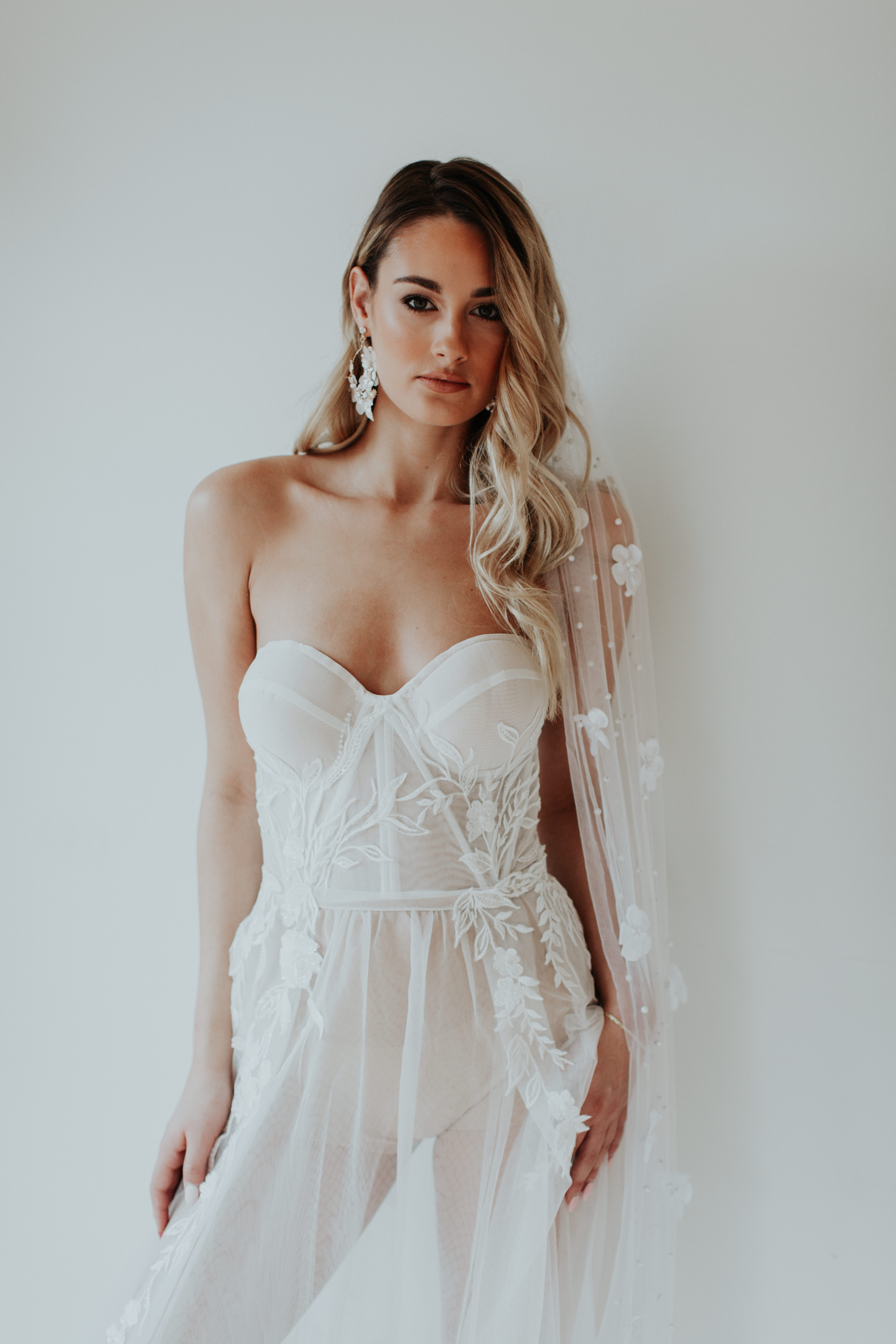
Why fingertip and cathedral veils work well
A fingertip veil often lands around the hand or hip area, giving a strapless gown movement without adding a long train. It is a flexible choice for a smaller ceremony or a bride who wants to remove the veil easily after the ceremony.
A cathedral veil creates more ceremony and extends the line of a fuller gown. With a simple strapless bodice, its length can provide the drama, while with a sweetheart ball gown it can echo the fullness of the skirt.
Creating a soft frame around a strapless bodice
Choose tulle that falls away from the face instead of forming a stiff border across the neckline. A single tier can keep the look clean, while a two-tier veil adds a little more volume and gives you the option of a blusher.
Pin placement changes the effect. A veil worn slightly behind the crown feels modern and open; one placed closer to the face creates a more traditional frame. Take a few walking photos before deciding.
Pairing a sweetheart neckline with blusher veils
A blusher can mirror the curved shape of a sweetheart neckline and add a gentle moment before the ceremony begins. It works best when the front layer remains light enough to show the neckline underneath.
If you love the idea but worry about feeling covered, ask for a shorter blusher or plan to move it back before portraits. The veil should feel like part of your experience, not a layer you are constantly managing.
Avoiding a veil that hides important dress details
A strapless neckline often draws attention to a shaped bodice, corsetry, ruching, or appliqué. A heavily embellished veil placed directly over that area can blur the details that made you choose the dress.
Try the veil with the bodice fully fastened and photographed from several distances. If the texture disappears under the tulle, a raw-edge or lightly finished veil may preserve more of the gown’s design.
Find the right veil for V-neck and plunging necklines
V-neck and plunging necklines already create a strong line from the shoulders toward the center of the body. A veil can reinforce that direction, soften it, or deliberately interrupt it. The most flattering option depends on whether the gown feels sleek, romantic, bold, or heavily decorated.
Keep the front of the veil in mind as well as the back. A sheer layer can add coverage without changing the neckline, while an opaque or richly detailed edge may draw attention away from the clean V.
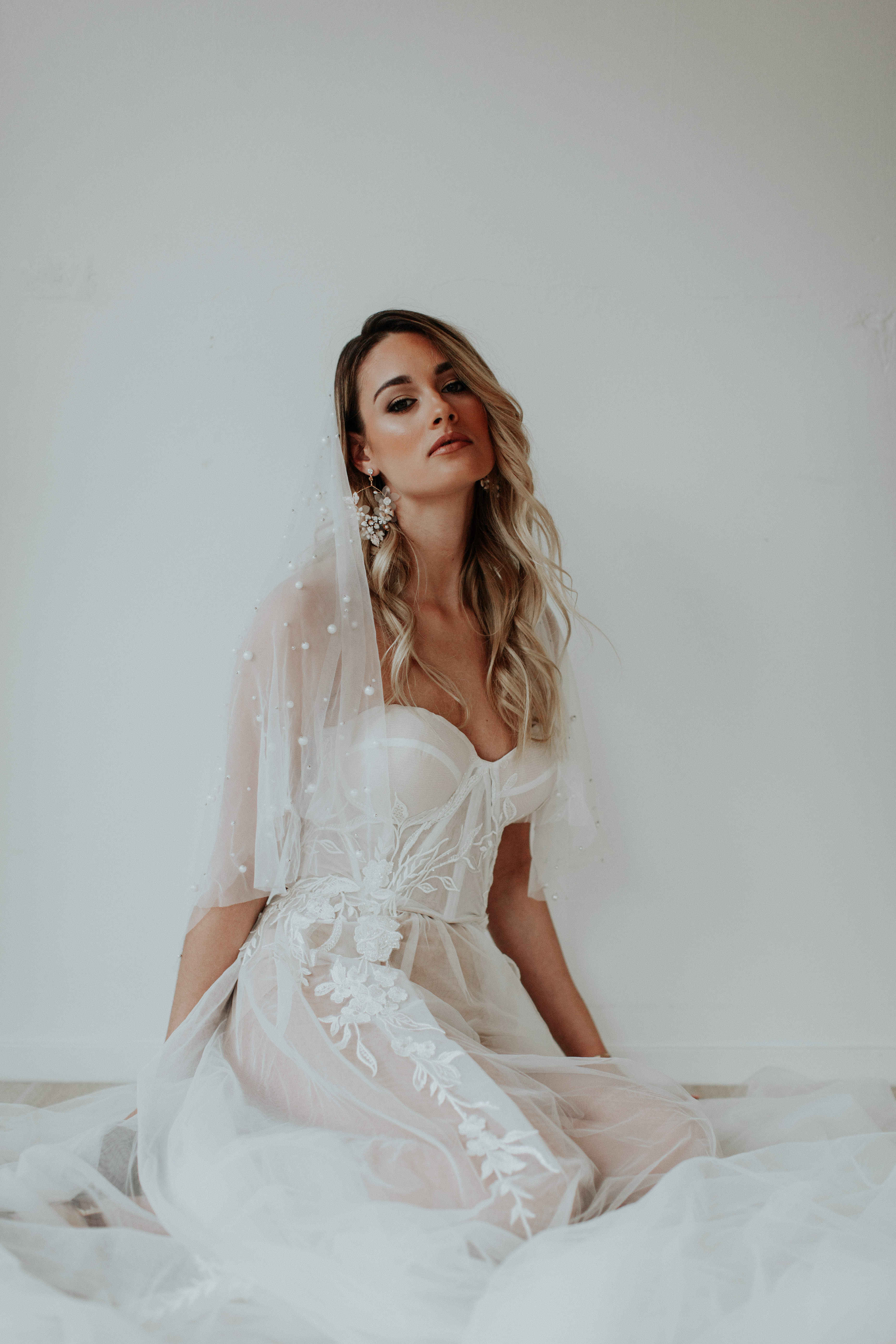
Using a veil to echo the dress’s vertical lines
A long single-tier veil often follows the downward movement of a V-neck and makes the entire outfit feel elongated. This works particularly well with a slim skirt or a gown with long, clean seams.
A veil with vertical lace placement or spaced motifs can do the same thing without requiring a cathedral length. Keep the details open and airy if the neckline includes illusion mesh or delicate straps.
Choosing between fingertip, waltz, and cathedral lengths
Fingertip length is easy to move in and gives the V-neck a soft finish without adding too much drama. A waltz veil falls lower, often around the calf, and can bridge the gap between a shorter accessory and a formal train.
Cathedral length is the boldest of the three and suits a ceremony where the aisle and train have room to breathe. Before buying, check the dress train so the two lengths do not create an accidental visual stop.
When a simple sheer veil creates the best balance
A deep neckline already has plenty of visual interest. A plain, sheer veil lets the shape remain visible while adding movement around your shoulders and back. This is often the most effortless choice for a gown with lace, sequins, or beading.
You can still make a simple veil feel special through its length, volume, or placement. A clean edge and an interesting hairstyle may be all the styling the look needs.
Styling tips for deep or illusion V-necklines
For a deep V, avoid placing a bulky comb or thick gathered section where it pulls attention toward the chest. Position the veil slightly behind the crown and let the tulle fall beside the body instead.
Illusion necklines need a little more care because lace or mesh may be delicate. Ask your stylist to check that the comb, pins, and veil edge do not catch on the fabric, and consider earrings that will not snag.
Select a veil for square, bateau, and high necklines
Square, bateau, and high necklines bring more structure around the upper body. They can look polished with a veil that adds air and movement, but too many competing edges may make the outfit feel crowded. The goal is usually to soften the transition from neckline to veil without hiding the gown’s architecture.
Think about the dress’s fabric before choosing embellishment. Smooth satin, lace, and beaded tulle each reflect light differently, so a veil that looked subtle in the fitting room may become much more noticeable in photographs.
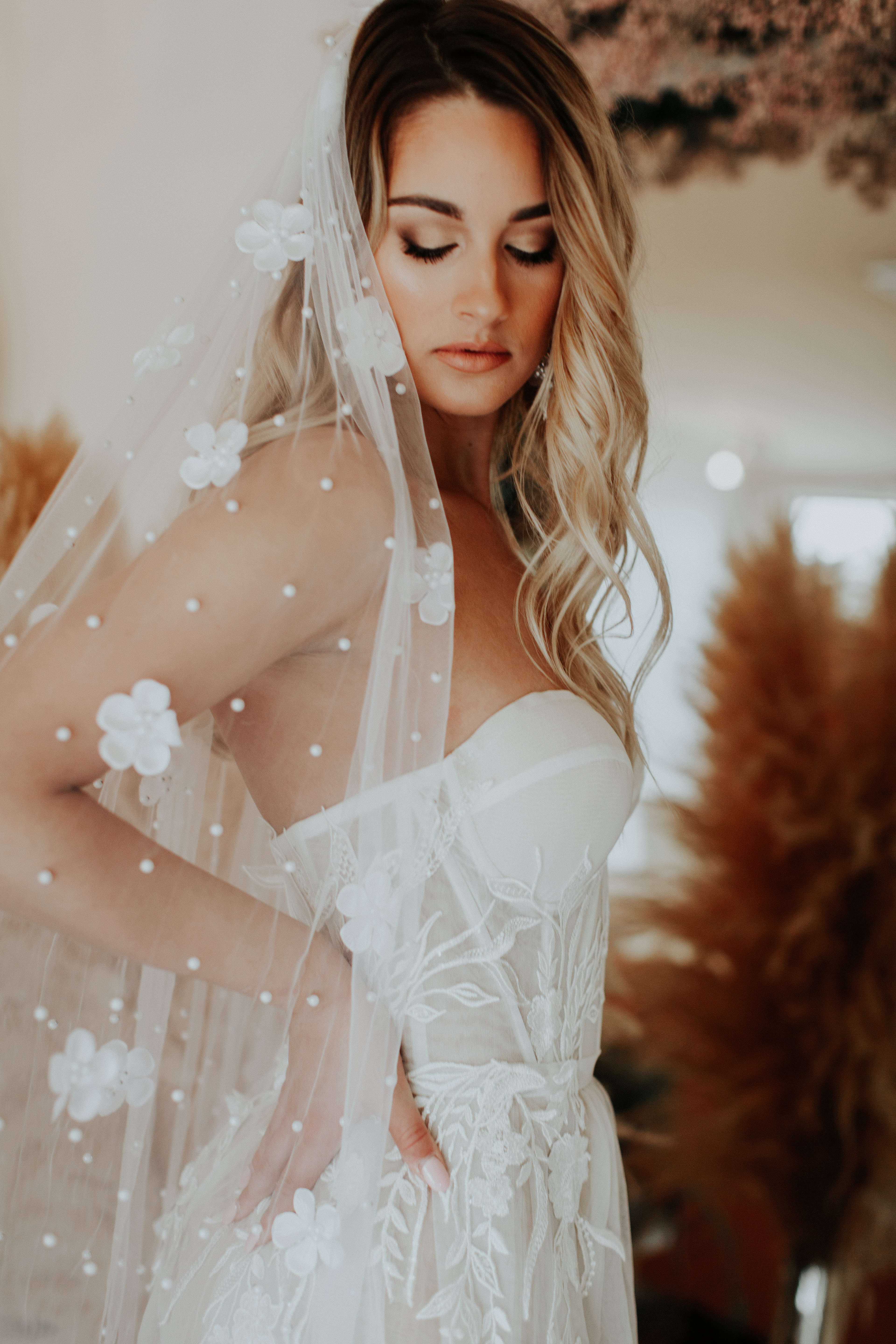
Softening structured square necklines with light tulle
A square neckline has a clear horizontal line and defined corners. Lightweight tulle can soften those angles around the shoulders while keeping the neckline visible. A fingertip or chapel veil is often enough if the gown has a clean, modern shape.
If you want more romance, look for a sparse lace edge rather than dense decoration across the entire veil. That gives the eye a gentle finish without turning the neckline into a busy focal point.
Keeping bateau necklines elegant and uncluttered
A bateau neckline sweeps across the collarbone and already frames the shoulders beautifully. A veil with a simple edge, worn behind the head, lets that elegant line remain uninterrupted.
Longer lengths can work well with a bateau gown because they add movement behind the body rather than across the neckline. Keep the front layer sheer and avoid a thick blusher if you want the bateau shape to stay visible.
Choosing a low-detail veil for high-neck dresses
High-neck dresses have more fabric and detail near the face, so a low-detail veil can create welcome breathing room. A plain single tier or a finely finished raw edge may be all you need.
If the dress has a collar, long sleeves, or a high lace panel, try the veil with your hair styled as planned. This helps you see whether the overall look feels balanced or too covered.
Balancing lace, beading, and covered-up silhouettes
The more texture your neckline carries, the more carefully you should edit the veil. Matching every detail is not necessary; repeating one element is usually enough. You might echo a floral motif at the edge or choose a tulle color that blends into the gown.
For a detailed dress, a minimalist veil can be the more fashion-forward decision. For a clean high-neck gown, a lace edge may add the interest you want without changing the dress itself.
Style veils with off-the-shoulder, one-shoulder, and halter dresses
These necklines have a strong sense of direction, whether the dress exposes both shoulders, crosses one shoulder, or wraps around the neck. The veil should respect that direction instead of flattening it. A carefully chosen length and placement can keep the gown expressive from the front and back.
When a neckline is asymmetrical, symmetry in the veil is not always a problem. It can create balance, but only if the veil remains light enough for the dress to stay in charge.
Preserving the neckline’s shape and asymmetry
For an off-the-shoulder gown, pin the veil high enough that it falls behind the shoulders rather than cutting across them. With a one-shoulder dress, a centered veil can provide calm contrast, while a side placement can emphasize the asymmetry.
A halter neckline often benefits from a veil that begins behind the head and leaves the neck clear. Take side and back photos, since the attachment point may be more visible than you expect.
Choosing a chapel or cathedral veil for dramatic gowns
Off-the-shoulder and one-shoulder gowns often have a dramatic presence, especially when paired with a fitted skirt or a long train. A chapel veil adds a graceful trail without taking over the aisle. A cathedral veil is a stronger choice when the venue and dress can support extra length.
Let the gown’s structure guide the amount of volume. A slim, single-tier veil can be dramatic through length alone, which is often more polished than piling on layers.
Using a birdcage or shoulder-length veil for a modern look
A birdcage veil changes the mood immediately. It feels fashion-forward, works beautifully with a structured neckline, and keeps the dress easy to see. A shoulder-length style gives a similar sense of lightness while framing the face.
These shorter options are especially useful if you want a statement accessory for the ceremony but do not want a long train to manage. Try them with sleek hair or a simple updo so the neckline remains the star.
Preventing the veil from competing with statement sleeves
Puff sleeves, bows, gloves, and sculptural shoulders already create volume. A heavily embellished veil can make the upper half of the look feel crowded, especially in close portraits.
Choose one main statement and let the other pieces support it. If the sleeves are the focus, a clean veil with a soft edge usually gives the outfit enough movement.
Match the veil’s details to your wedding dress
Once you know the right shape and length, look at the details. Lace, pearls, sequins, embroidery, ribbon, and raw edges each give the veil a different personality. The goal is not to match every element exactly; it is to create a conversation between the accessory and the gown.
Poppy Lane Bridal offers bridal veils and other accessories directly to brides, so you can focus your spending on the finish that makes the biggest difference to your outfit. Start with the detail you want guests to notice first, then keep everything else edited.
Coordinating lace patterns without making the look too busy
Lace does not have to be identical to work together. Look for shared scale, shape, or mood instead. Large floral appliqués on a dress may pair better with a veil that has a few spaced motifs than with a dense all-over pattern.
Bring a fabric swatch or a clear dress photo when shopping. If the lace patterns are close but not quite right, a plain veil may look more intentional than an almost-match.
Pairing embellished dresses with minimalist veils
A beaded or sequined gown already catches the light as you move. A sheer veil with little or no decoration can give those details room to sparkle and keeps the photographs from looking overly textured.
This does not mean the veil has to feel plain. Length, gathering, and placement can create plenty of impact, and a narrow edge can add a finished line without competing with the dress.
Choosing the right tulle color for white, ivory, and champagne gowns
Hold the veil beside the dress in natural light, not only under warm boutique lighting. White tulle can look sharp against ivory, while ivory usually blends more softly. Champagne gowns may need a warmer veil color to avoid a gray or stark contrast.
If your dress has several tones, match the dominant shade near the neckline. That is the area where differences are easiest to notice, especially in close-up photos.
Deciding between raw-edge, ribbon-bound, and lace-trimmed veils
A raw edge is light and barely there, making it a natural choice for clean gowns or detailed necklines. Ribbon-bound edges create a crisp border and can suit structured dresses. Lace-trimmed veils add romance and visual weight.
For a closer comparison of edge finishes, browse this guide to cut-edge and lace-edge veils. Then consider whether the edge will brush against the train, sleeves, or jewelry as you walk.
Check the full look before you buy
A veil can look perfect on a hanger and feel completely different once it is pinned into your hair. Try to judge it as part of the outfit, not as a separate accessory. The final test is whether you feel comfortable, recognizable, and excited when you move.
This is also the moment to be honest about your priorities. If photographs matter most, test the veil from several angles; if dancing matters most, make sure the attachment is secure and the length is manageable. For more coordinated accessory ideas, this bridal styling guide is a useful place to continue your planning.
Try the veil on with your actual dress or a similar neckline
Bring the dress to your appointment if possible. If that is not practical, use a dress with a similar neckline, fabric weight, and train length. A veil’s proportions can change dramatically when the bodice or skirt is different.
Take photos in daylight and indoor light, from the front, side, and back. You will notice details in the images that are easy to miss while standing in front of a mirror.
Consider your hairstyle, veil placement, and accessories
Your hairstyle determines where the comb can sit and how much volume the veil adds. An updo may support a higher placement, while loose waves can work better with a low comb or a shorter style.
Try your earrings and headpiece at the same time. A delicate bridal headpiece can work beautifully with a simple veil, but a large hair accessory and ornate edge may compete for attention. Keep the metal tones and overall scale in the same visual family.
Account for your venue, ceremony length, and movement
A cathedral veil needs room to spread, be carried, and move behind you. A chapel veil offers a more practical trail, while a fingertip or birdcage style may be easiest for an outdoor ceremony or a busy reception.
Walk, sit, turn, and hug someone while wearing the veil. If you plan to remove it after the ceremony, practice taking it out without disturbing your hairstyle.
A little movement testing now can save you from spending the day tugging at tulle. If you are comparing affordable options, you can also shop veil styles with your preferred length and finish in mind.
Set a budget without sacrificing the details that matter most
Decide what deserves the largest share of your accessory budget. It might be the veil length, a particular lace edge, a headpiece, or jewelry that you will wear again. Once that priority is clear, simpler choices elsewhere feel intentional rather than limiting.
Poppy Lane’s direct-to-consumer approach is built around bridal accessories at factory-direct prices, so a polished look does not have to depend on a high markup. Compare construction, finish, and comfort—not just the number on the tag—and choose the veil that gives you the feeling you want.
Find Your Bridal Veil
When you are ready, explore Poppy Lane Bridal’s collection of modern veils and bridal accessories. Bring your neckline, dress photos, and priorities with you, then choose the piece that feels beautiful, comfortable, and completely like you.
Conclusion
Choosing a veil becomes much easier when you start with the neckline, then check the silhouette, train, details, hairstyle, and venue as one complete look. Trust your eye, edit where the dress is already detailed, and remember that a thoughtful accessory can feel elevated without requiring an oversized spend.
Frequently Asked Questions
How do I choose a veil for my dress neckline?
Identify the neckline’s shape and direction first, then choose a veil that either echoes it or provides gentle contrast. Check the result with the full dress so the veil supports rather than hides the bodice.
What veil works best with a strapless wedding dress?
Fingertip, chapel, and cathedral veils can all work with a strapless dress. Choose based on the gown’s silhouette, train, ceremony setting, and how much drama or movement you want.
Can I wear a veil with a V-neck dress?
Yes. A sheer veil often complements a V-neck by following its vertical lines, while a simpler edge keeps a plunging or illusion neckline visible.
Should my veil match my wedding dress exactly?
The veil should coordinate with the dress color and overall mood, but it does not need to copy every detail. Repeating one texture or motif is usually enough to make the look feel connected.
Is a cathedral veil practical for every venue?
Not always. Cathedral veils need enough aisle and floor space to spread comfortably, so a chapel, waltz, fingertip, or birdcage veil may be easier for smaller or outdoor venues.
How can I stop my veil from hiding my dress details?
Choose a lighter veil, a less decorated edge, or a placement behind the crown. Try it with the actual dress and photograph the outfit from the front, side, and back.
When should I buy my wedding veil?
Buy it after you have chosen the dress and have a clear idea of your hairstyle and accessories. Leave enough time for trying it on, checking the fit, and making any needed styling decisions.