
What to Expect to Spend on Bridal Accessories (And How to Spend Smart)
Key Takeaways
Bridal accessories can be planned thoughtfully without taking over your wedding budget. Start with your dress, choose your priorities, and price the complete look rather than one beautiful piece at a time.
- Set an accessories budget before shopping, then divide it among the pieces you actually plan to wear.
- Veils, jewelry, hair accessories, shoes, and finishing pieces can vary widely in price.
- Choose one focal point and let the rest of your accessories support it.
- Check the full cost, including shipping, alterations, rush fees, and care needs.
- Try on your complete look before the wedding so comfort matters as much as style.
Start with a realistic bridal accessories budget
Accessories are often purchased in small steps, which makes them easy to underestimate. A pair of earrings here, a veil there, and suddenly the total is much higher than expected. This bridal accessories cost guide will help you create a number that feels realistic before you fall in love with every finishing touch.
Your budget does not need to follow someone else’s wedding. It should reflect your dress, your venue, your timeline, and the pieces that will make you feel most like yourself. A simple plan gives you room to spend intentionally instead of making rushed decisions later.
.jpg)
What counts as a bridal accessory
A bridal accessory is any wearable or practical piece that completes your wedding-day outfit beyond the dress itself. That may include a veil, earrings, necklace, bracelet, hair comb, pins, tiara, belt, gloves, cape, shoes, handbag, shapewear, or garment-friendly underlayers. You may also want to include backup shoes, fashion tape, and jewelry storage if they are part of your day-of plan.
Not every bride needs every category. If your gown has a detailed neckline, you may skip a necklace. If your hairstyle is the main feature, a veil may be enough for your head. Write down what you genuinely want first, then separate it from the items that are simply nice to have.
Typical spending ranges for different budgets
There is no single standard price for a complete bridal accessory wardrobe. A pared-back look might include earrings and shoes, while a more layered look could include a veil, headpiece, jewelry, belt, gloves, and a reception change. As a broad planning guide, consider setting aside about $150–$350 for essentials, $350–$800 for a classic coordinated look, or $800 and up for several detailed or statement pieces.
These are planning ranges, not rules. You can create a polished outfit below the first range by borrowing a veil, wearing shoes you already own, or choosing one versatile accessory. You can also spend more if a custom veil or heirloom-quality piece is central to your vision.
The useful question is not whether your total matches an average. It is whether the total includes everything you intend to wear and leaves a little breathing room for changes.
How accessories fit into your total bridal look
Treat accessories as part of your bridal attire budget, not as a completely separate afterthought. If your dress takes a larger share than expected, you may want to simplify the accessories. If you found a sample gown at a lower price, you might have more flexibility for a dramatic veil or special jewelry.
A simple split can make the decision easier: reserve one portion for the head and face, one for jewelry, one for shoes and practical pieces, and a small cushion for unexpected costs. For example, a $500 accessories budget might allow $180 for a veil, $100 for earrings, $80 for a hairpiece, $100 for shoes, and $40 for delivery or small adjustments.
Your overall silhouette comes first. Accessories should support the shape and details of the gown rather than compete with them. For more ideas on putting the pieces together, use this dress accessorizing guide after you have chosen your gown.
Why your wedding style and location affect costs
A formal ballroom wedding may call for a cathedral veil, sparkling earrings, and a structured hairpiece. A garden ceremony might suit a lightweight comb, soft earrings, and a shorter veil. A beach wedding changes the practical conversation too: wind, heat, sand, and long periods outdoors all make secure, comfortable pieces more valuable.
Location can also affect delivery costs and lead times. A destination wedding may require extra shipping, protective packaging, or a backup plan if a piece is delayed. Seasonal details matter as well. A winter celebration could make gloves, a cape, or a wrap part of the look instead of an optional extra.
Think of your setting as a filter. It helps you decide which accessories will look right, stay secure, and earn their place in the budget.
Break down the cost of each bridal accessory
The easiest way to understand your total is to price each category separately. A veil may be your largest single purchase, while shoes and jewelry can quietly add up across several smaller orders. Listing the pieces also makes it easier to compare options without losing track of what you already have.
Prices usually rise with length, detail, materials, and the amount of handwork involved. A clean, uncomplicated piece may be very affordable, while a similar item with layers, embroidery, pearls, crystals, or a custom finish can cost considerably more. The right choice depends on what will be visible and meaningful in your photographs and throughout the day.
Veils from simple styles to statement designs
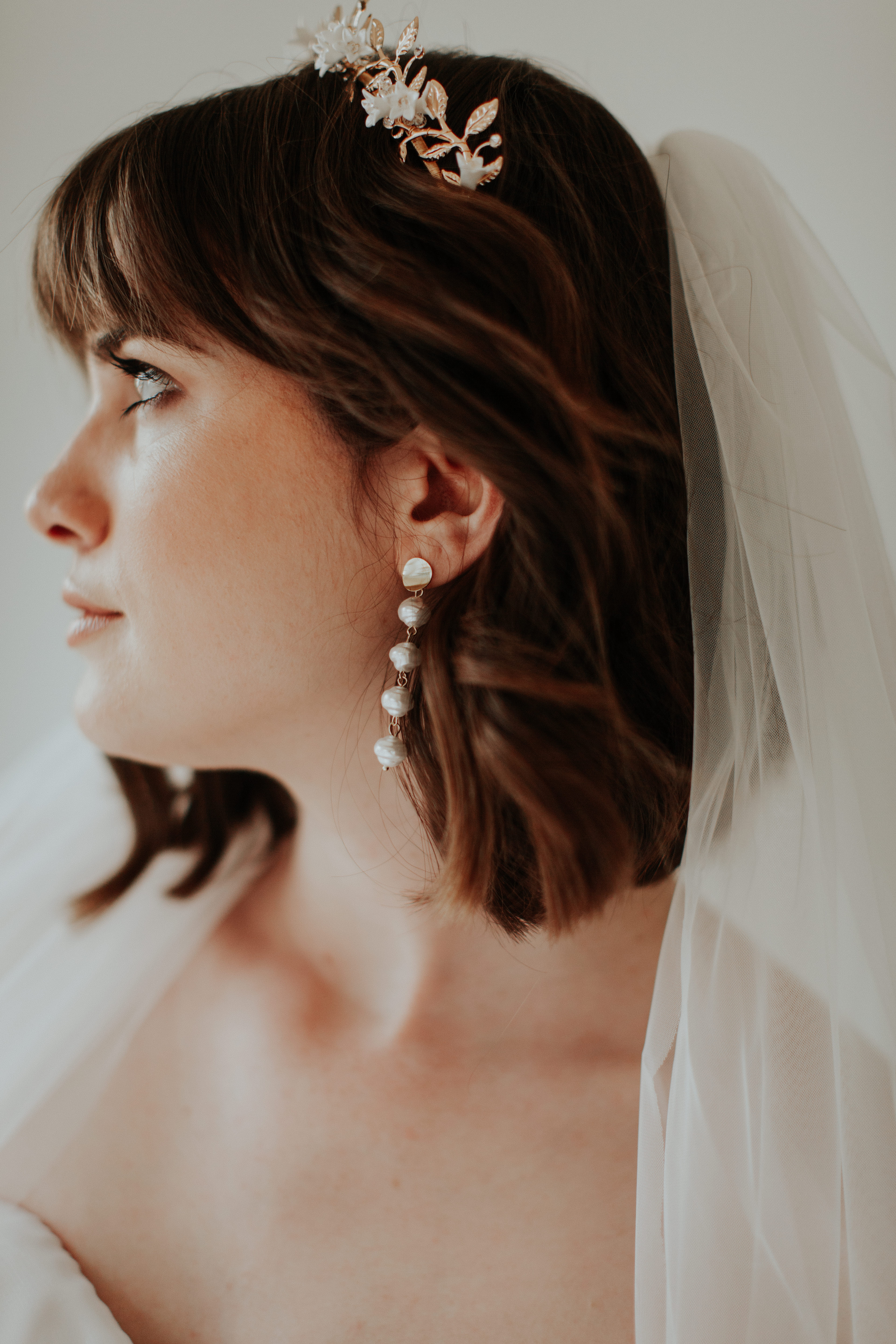
Veils can range from a short, minimal layer to a dramatic style that extends beyond the train. Length, fabric, edging, appliqués, beading, comb construction, and the amount of gathering all affect the price. A simple fingertip or elbow-length veil may fit comfortably into a modest accessories budget, while a heavily embellished cathedral veil needs a larger allowance.
Start by asking how the veil works with the back of your dress. If the gown already has lace or beading, an understated veil may create a cleaner finish. If the dress is sleek, a textured edge or longer silhouette can become the main detail.
Also price any changes you may need, such as adding a comb, adjusting the length, or matching a particular shade of white. Those details are easiest to handle before the final weeks.
Bridal jewelry, including earrings, necklaces, and bracelets
Jewelry prices depend on the base metal, plating, stones, pearls, crystal detail, construction, and whether the piece is handmade or produced at scale. Earrings are often the easiest place to begin because they frame the face and work with nearly every hairstyle. Necklaces and bracelets should be chosen with more care when the dress already has a detailed neckline or sleeve.
For a bright look without a fine-jewelry price, materials such as cubic zirconia and quality gold plating can offer sparkle at a lower cost. This bridal earrings buying guide is useful when you are comparing finishes, stone types, and proportions online.
Comfort deserves equal attention. Heavy drops can become distracting after several hours, and a necklace that catches on lace may not be worth the styling effect. Try to choose pieces you can wear through photos, dinner, hugs, and dancing.
Hair accessories such as combs, pins, and tiaras
Hair accessories can be among the most flexible purchases because a small piece can still make a clear visual difference. Combs and pins are usually easier to place than a larger headpiece, while tiaras and headbands create a stronger outline around the face. The price often reflects the number of stones, pearls, flowers, wires, and hand-finished details.
Your hairstyle should guide the choice. A low bun can support a comb, scattered pins can add detail to a braid, and a sleek style may suit a narrow headband. Bring an inspiration photo to your hair trial, but expect your stylist to adjust the placement based on your actual hair texture and hold.
A hairpiece that can move from ceremony to reception may be more useful than a very elaborate piece worn for only a few minutes. That flexibility is worth considering when you compare prices.
Belts, gloves, capes, and other finishing pieces
Belts can define the waist and echo embellishments on the gown, while gloves add structure or a vintage note. Capes, wraps, and other layers may contribute both style and comfort, especially for an outdoor or cold-weather wedding. Their prices can vary based on fabric, lining, closures, beading, and whether they are made to fit a particular dress.
These accessories should be tested with the gown rather than judged alone. A belt may look beautiful online but sit awkwardly over a seam. Gloves can change how you hold flowers or exchange rings. A cape needs to attach securely without pulling at the neckline.
When a finishing piece serves a practical purpose as well as a style purpose, it can be a smart use of the budget. Just make sure you will actually wear it for enough of the day.
Shoes, handbags, and practical day-of accessories
Wedding shoes can be a major cost, but they do not have to be traditional bridal shoes. Look for a pair that matches your hem, feels stable, and can survive standing and dancing. You may prefer a dressier ceremony shoe and a comfortable reception change, especially if your venue has grass, cobblestones, or uneven flooring.
A small handbag or clutch can hold essentials, although many brides leave that job to a trusted person. Other practical items might include fashion tape, blister protection, earring backs, a veil repair kit, and a garment bag. These purchases are less visible, but they can prevent a small problem from becoming a stressful one.
Build these practical costs into the plan instead of treating them as random extras. A comfortable pair of backup shoes may matter more than another decorative detail.
Understand what drives bridal accessory prices
Two accessories can look similar in a product photo and still have very different prices. The difference may be the fabric, the way a stone is secured, the finish on the metal, or the time required to create the piece. Understanding those variables helps you decide whether a higher price reflects something you will actually notice or value.
It also makes shopping feel less mysterious. You can ask better questions, compare like with like, and spot where a lower price is simply a different construction rather than a problem. Price should have a reason.
Materials, craftsmanship, and embellishments
Materials are often the first price driver. Silk, fine lace, genuine pearls, precious metals, and carefully finished crystals generally cost more than synthetic or plated alternatives. That does not make the more affordable option wrong; it simply means you should know what you are comparing.
Craftsmanship matters too. Neat stitching, balanced placement, secure settings, smooth edges, and strong attachment points can make a piece more comfortable and durable. Embellishment adds both material cost and labor, especially when details are applied individually.
If a piece will be photographed close to your face, focus on finish and scale. If it will mostly be hidden under your hairstyle or veil, you may not need to pay for detail that will never be seen.
Handmade, designer, private label, and direct-to-consumer pricing
The route an accessory takes from maker to bride affects its price. Designer labels may include brand positioning and boutique overhead. Handmade work reflects the time and skill of an individual maker. Private-label and direct-to-consumer models can have different pricing structures because fewer retail layers sit between production and the customer.
Poppy Lane Bridal offers modern veils, jewelry, hair accessories, gloves, belts, and bridal essentials at factory-direct prices. The brand describes its approach as selling directly to brides and eliminating retail markups, so this direct-to-consumer pricing guide can help you understand what to compare when shopping.
The goal is not to choose a shopping model based on a label alone. Look at the actual material information, construction, photos, dimensions, and care instructions, then decide whether the price matches what you are receiving.
Customization, personalization, and made-to-order details
Customization can include a particular veil length, a different comb, a matching metal tone, added initials, special embroidery, or a made-to-order color. These requests often add cost because someone must review the details, source materials, create the adjustment, and check the finished piece.
Ask for a clear quote before ordering. Confirm whether the customization is reversible, whether it changes the return policy, and how much extra time it requires. A small change can be worthwhile if it helps the accessory work perfectly with your dress, but not every detail needs to be personalized.
Sometimes a ready-to-ship piece in the right shape gives you almost the same result with less risk. Compare the visual difference, not just the idea of having something made specifically for you.
Shipping, alterations, rush fees, and other hidden costs
The listed price is only one part of the purchase. Shipping, taxes, rush production, custom sizing, cleaning, pressing, and alterations can all affect the final number. Veils may also need steaming, while delicate jewelry may require careful storage before and after the wedding.
Before you check out, write down the complete cost and the date you need the item in hand. If you are ordering internationally or sending an accessory to a destination venue, allow extra time for delivery and inspection. A lower item price is less helpful if a late arrival forces you into an expensive replacement.
A simple checkout review can include:
- Item price and available options
- Shipping, tax, and duties
- Customization or alteration charges
- Expected delivery date and rush options
- Return, exchange, and damage policies
Once those numbers are visible, you can compare options fairly. This is also the point where a slightly higher upfront price may turn out to be the better value.
Decide where to splurge and where to save
Smart spending is not about making every accessory as inexpensive as possible. It is about putting money toward the pieces that affect your confidence, comfort, photographs, and enjoyment. The same accessory can be a splurge for one bride and an easy save for another.
Begin with the moment you most want to remember. Maybe it is the veil coming off after the ceremony, the close-up of your earrings, or the way a cape changes your silhouette at sunset. Once you know that, the rest of the budget becomes easier to shape.
Choose one standout accessory as your focal point
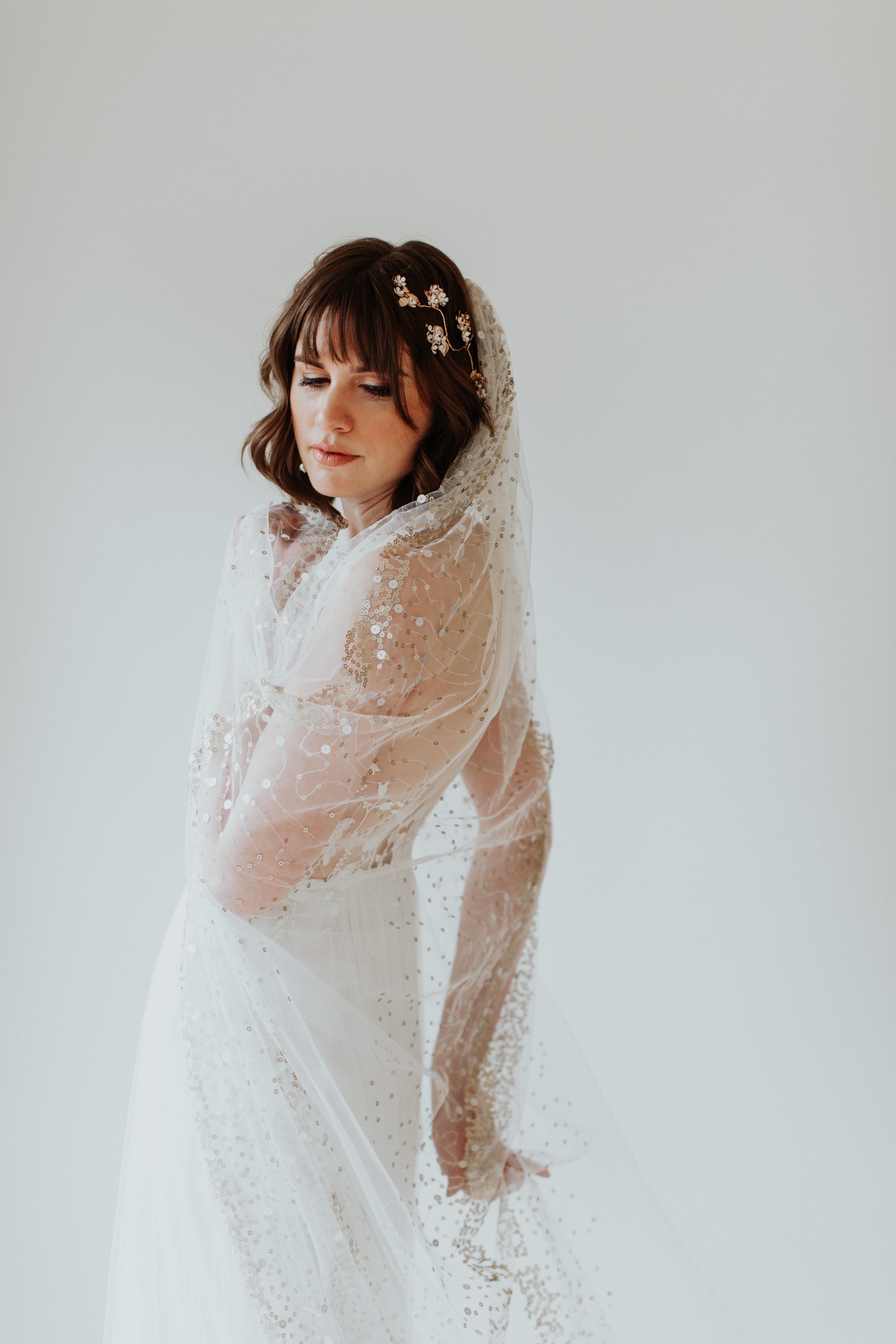
A focal piece gives your look direction. It might be a statement veil, sculptural earrings, an ornate comb, or a pair of gloves that changes the whole mood of a simple gown. Spending more on one strong detail can feel more intentional than buying several pieces that compete for attention.
Use the focal point to set the scale for everything else. If the veil is detailed, choose quieter jewelry. If your earrings are dramatic, the hairpiece can be small or omitted. For help with layering without creating visual clutter, explore this guide to layering bridal jewelry.
The focal piece should also be something you will actually see and feel during the day. A detail hidden by your hair or covered by a veil may not deserve the largest share of your budget.
Save on pieces that are hidden by your dress or hairstyle
Some accessories have a supporting role and may not need premium materials or elaborate detail. A hair comb beneath a veil, a belt covered by a bouquet in many photos, or a necklace hidden by a high neckline can often be simplified. You can still choose a well-finished piece; just avoid paying for features that will disappear.
Borrowing is another thoughtful option. A family veil, vintage earrings, or a friend’s clutch can add meaning without adding a new purchase. If you borrow something delicate, confirm how it should be stored and who will be responsible for it on the day.
Saving in a hidden area gives you more room for a visible detail, a comfortable shoe, or a practical backup.
Invest in quality when comfort and durability matter
Comfort is worth prioritizing for anything touching your skin or staying in place for hours. Secure earring backs, smooth glove seams, a stable shoe, and a comb that does not pull at your hair can make a real difference. Durability matters when an accessory will be worn through hugs, dancing, weather, and repeated handling.
Read product details carefully and look for clear dimensions and material information. It is also helpful to see how a piece looks on a person rather than only in a styled flat lay. Quality does not always mean the highest price, but it does mean knowing what you are buying.
If you want a lower-cost starting point, Poppy Lane Bridal features affordable headpieces under $50 in its headpiece guide, with options described using crystals, pearls, and durable base metals. That gives you a useful example of how a focused accessory can stay accessible without making the whole look feel unfinished.
Use your venue, dress, and wedding timeline to guide priorities
Your venue can tell you what will be comfortable and secure. Your dress tells you what will coordinate. Your timeline tells you how much wear, changing, packing, and travel each accessory must handle. Consider all three before deciding where to spend.
A windy beach ceremony may make a secure hairpiece and lightweight earrings more important than a long veil. A winter wedding may justify a wrap or gloves. A ceremony followed by a formal reception may make a detachable veil or second pair of earrings especially useful.
The best priority is the one that solves a real styling or day-of need. That is how you spend with purpose rather than simply adding more.
Shop smart without sacrificing your bridal look
Shopping carefully does not mean settling for pieces that feel unrelated to your dress. It means slowing down long enough to compare construction, timing, and the complete cost. A little research is often what makes an affordable choice look polished.
Save screenshots of your gown details, fabric color, jewelry tone, and hairstyle ideas. Keeping those references together makes it easier to notice when a piece truly fits your look instead of only looking pretty on its own.
Compare the full price instead of the sticker price
When comparing two similar accessories, put both totals in the same note. Include shipping, taxes, customization, rush charges, and any care or alteration costs. Then compare materials, dimensions, fastening methods, and return terms rather than looking only at the first number.
Bundles can sometimes make sense when you already want several coordinated pieces. Just check whether the bundle includes items you would have purchased anyway. A lower combined price is not a saving if one item stays in the box.
This approach keeps the decision practical while leaving room for the emotional part of shopping. You can still choose the piece you love, but you will know what it really costs.
Look for factory-direct and no-frills bridal options
Direct purchasing can be one way to look for modern bridal accessories at a more approachable price. Poppy Lane Bridal describes its collection as coming directly to brides at factory-direct prices, with no frills. For a bride who wants polished veils, jewelry, hair accessories, gloves, or belts without automatically paying for traditional retail layers, that model may be worth exploring.
The same rule still applies: check the details. Look at photos, dimensions, materials, care instructions, and policies before placing an order. A direct-to-consumer price is useful when the accessory also suits your dress and practical needs.
Shop sample sales, seasonal promotions, and discontinued styles
Sample sales and discontinued styles can be smart places to look when you are flexible about color, size, or exact design. Seasonal promotions may also help, particularly if you are shopping well before the wedding. Set a maximum price before browsing so a promotion does not encourage you to buy more than planned.
Inspect sample pieces carefully for marks, missing stones, stretched elastic, or signs of handling. Ask whether the item is final sale and whether it can be returned. A lower price is only helpful if the condition and timing work for you.
If you find a discontinued piece you love, order early enough to inspect it and build a backup plan if needed.
Check return policies, lead times, and color accuracy
Online photos can make ivory, white, champagne, silver, and gold look different depending on the screen and lighting. Read the color description, review close-up images, and compare the accessory with a photo of your gown taken in natural light. If possible, order early enough to see the piece in person before your final styling appointment.
Lead times matter just as much as color. Made-to-order work, customization, international delivery, and busy wedding seasons can all extend the schedule. Put the order date and try-on date in your wedding calendar.
For more timing help, this bridal accessories timeline offers a useful way to think about when to choose veils, jewelry, shoes, and other pieces.
Avoid buying accessories before your dress details are final
It is tempting to start with accessories because they feel easier and more fun than dress decisions. But the neckline, fabric, color, sleeve, back, and embellishments of the gown will shape nearly every accessory choice. Buying too early can leave you with a necklace that fights the neckline or a veil that hides the dress detail you loved most.
You can collect inspiration before the dress is final, but wait to purchase the key pieces until you know the gown’s actual details. Earrings and shoes may be exceptions if they are versatile and easy to return.
Once the dress arrives, take photos from the front, back, and side. Those images will make online comparisons much more reliable.
Build accessory budgets for different bridal styles
Your personal style is a useful budgeting tool. It tells you which categories deserve attention and which ones can stay simple. Instead of trying to recreate a complete editorial look, build a version that feels natural with your dress and wedding plans.
The examples below are starting frameworks, not shopping rules. You can mix them, remove categories, or shift the amounts depending on what you already own. The goal is a look that feels intentional from head to toe.
A minimalist bridal look with only the essentials
A minimalist look may need just earrings, shoes, and one hair or veil detail. With fewer pieces, proportion and finish matter more, so focus on clean shapes and a color that works with the gown. A small pair of earrings and a short veil can be enough to create a finished ceremony look.
A sample plan might give $100–$175 to earrings, $100–$200 to shoes, and $50–$150 to a veil or hair accessory. If you already have comfortable shoes or meaningful jewelry, put that money toward tailoring or another day-of need.
A classic look with a veil, jewelry, and hairpiece
A classic accessories plan usually includes a veil, earrings, and a hairpiece, with optional bracelets or a necklace. Because several pieces are visible, choose one unifying element such as pearls, crystal shapes, a metal tone, or a repeated floral detail.
A $350–$800 range can give you room to balance the categories. You might choose a more detailed veil, moderate jewelry, and a simple comb, or reverse that combination. The overall effect matters more than matching price levels across every item.
A glamorous look with layered statement accessories
A glamorous look may include a long veil, bold earrings, a sparkling headpiece, a belt, and a reception change. This style can become expensive quickly, so decide which two or three pieces will carry the visual impact. The rest should provide structure without adding unnecessary competition.
Plan for approximately $800 and up if you want multiple statement pieces with detailed embellishment. You can bring the total down by choosing a simpler belt, using one jewelry set for both events, or selecting a veil with impact through length rather than heavy decoration.
A modern look with interchangeable pieces
Interchangeable accessories are useful when you want your ceremony and reception looks to feel different without purchasing two complete outfits. A removable veil, earrings that can change from studs to drops, or a hairpiece that can be repositioned can create more than one mood.
Set a budget based on the number of transitions you actually want. A $400–$900 plan may cover a strong base look plus one or two changes, depending on materials and detail. Choose pieces with secure fastenings and practice changing them before the wedding.
A budget-friendly look that still feels intentional
A lower total can still look considered when the pieces share a clear idea. Choose one finish, repeat one detail, and keep the silhouette simple. Borrowing jewelry, buying a versatile hairpiece, or choosing comfortable shoes you will wear again can all help.
Start with a $150–$350 target and divide it among the pieces you will see most. For example, you might choose earrings, a small hair accessory, and shoes while skipping a necklace and belt. The result can feel romantic and complete because every item has a job.
Create a final accessories plan before you buy
Before placing the last orders, make one complete list of what you will wear and when. Lay out the dress details, shoes, jewelry, hair inspiration, veil options, and any layers. This is the moment to notice whether the look feels balanced rather than waiting until the final fitting.
A complete plan also protects your budget. You can see duplicates, missing practical items, and accessories that only work for one part of the day. Keep the list somewhere your stylist, planner, and getting-ready person can find it.
Match every piece to your dress neckline and details
The neckline is usually the first styling clue. A high neckline may look best with earrings and a hairpiece, while a strapless gown can leave room for a necklace or more dramatic earrings. A detailed bodice may call for simpler jewelry, whereas a clean gown can support a stronger accessory.
Look at the back too. A veil, comb, or cape can either frame the back detail or cover it. Try the piece with the actual gown whenever possible, since the effect can change once fabric, seams, and volume are involved.
Coordinate metals, stones, fabrics, and embellishments
Coordination does not require every item to be identical. It helps to repeat one or two details, such as a warm metal, pearl finish, crystal shape, satin texture, or floral motif. Mixing metals can work when the combination feels deliberate and appears more than once.
Compare accessories in the same light where you will get ready. Gold can look warmer, silver can read cooler, and ivory fabric can change how white stones appear. A quick photo can reveal whether one piece feels too bright or too yellow beside the gown.
Plan for the ceremony, reception, and after-party
Decide which accessories stay on all day and which ones change. You may wear a veil for the ceremony, remove it for dinner, switch earrings for dancing, or add gloves or a cape for portraits. These transitions should be simple enough that someone can help you without damaging your hair or dress.
Keep each change in a labeled pouch with its fastenings and instructions. If you are wearing heirlooms, designate one trusted person to handle them. A small plan prevents your reception accessories from getting misplaced during the excitement.
Make a final try-on checklist with your dress and hairstyle
A final try-on should include the real dress, intended undergarments, shoes, hairstyle, veil, jewelry, and any layers. Walk, sit, turn, lift your arms, and practice holding your bouquet. These small tests show whether an earring catches, a belt shifts, or a veil pulls at your hairstyle.
Use a checklist so the appointment covers more than the front view:
- Confirm the neckline and necklace spacing
- Check that earrings feel comfortable and secure
- Test the veil, comb, pins, and hairstyle together
- Walk in the shoes and check the hem length
- Photograph the look from several angles
After the try-on, make only the adjustments that solve a real issue. Too many last-minute additions can make a cohesive look feel crowded.
Leave room for comfort, backups, and last-minute adjustments
Keep a small portion of the accessories budget unassigned until close to the wedding. You may need extra earring backs, a different shoe insert, a veil comb, garment care, or a repair item. A cushion also gives you room to replace something that looked different in person.
Comfort should be part of the final decision, not an afterthought. Pack blister protection, fashion tape, a small sewing kit, and a safe place for jewelry. If you are preserving sentimental pieces after the wedding, this accessory care guide can help you plan storage once the celebration is over.
Conclusion
The smartest bridal accessories budget is the one that reflects your dress, your setting, and the way you want to feel throughout the day. Choose a focal piece, compare the complete cost, leave room for comfort, and remember that beautiful style does not depend on an inflated price tag. When you are ready to find pieces that fit your plan, shop the collection and complete your bridal look with intention.
Frequently Asked Questions
How much should I budget for bridal accessories?
A useful starting range is about $150–$350 for essentials, $350–$800 for a classic coordinated look, and $800 or more for several detailed or statement pieces. Your dress, venue, number of accessories, and existing wardrobe should determine the final amount.
What is usually the most expensive bridal accessory?
The veil is often one of the larger single purchases, especially when it is long, heavily embellished, custom-made, or finished with lace or beading. A detailed cape, jewelry set, or designer hairpiece can also become a significant cost.
Should I buy my accessories before or after my dress?
Buy inspiration pieces whenever you like, but wait to purchase key accessories until the dress neckline, color, fabric, back, and embellishments are final. Those details affect the veil, jewelry, hairstyle, belt, and overall proportions.
Is it worth spending more on bridal accessories?
Spending more can make sense when it improves comfort, fit, durability, or a detail you will clearly see and value. A higher price is not automatically better, so compare materials, construction, policies, and the complete cost.
How can I save money on bridal accessories?
Choose one focal piece, borrow sentimental items, wear shoes or jewelry again, shop early, compare direct pricing, and consider sample or discontinued styles. You can also simplify accessories that will be hidden by your hair, veil, or dress.
Do bridal accessories need to match exactly?
No. Accessories only need a visual connection, such as a repeated metal, stone, pearl, fabric, or motif. Mixing finishes can look modern when the combination is intentional and balanced across the outfit.
When should I order my bridal accessories?
Order after your dress details are confirmed and early enough to allow delivery, inspection, alterations, and a complete try-on. Custom, made-to-order, international, and seasonal purchases may need more time than ready-to-ship pieces.