
Veils That Pair Perfectly with a V-Neck Wedding Dress
Key Takeaways
A V-neck dress already creates a strong vertical line, so your veil should support that shape rather than compete with it. Start with your neckline and silhouette, then fine-tune the length, details, hairstyle, and comfort.
- Fingertip and chapel veils naturally complement the downward line of a V-neck.
- Simple edges work well with detailed gowns, while lace can echo existing patterns.
- Choose a veil length that suits both your dress silhouette and wedding setting.
- Try the veil with your actual dress, hairstyle, and accessories before deciding.
- Beautiful bridal style can feel elevated without overspending.
Understand how a V-neckline shapes your veil choice
A V-neck naturally guides the eye from your shoulders toward the center of your bodice. Your veil can continue that movement, soften it, or add contrast, depending on the mood you want. There is no single perfect answer, but a thoughtful pairing will make the whole outfit feel more connected. For another neckline-by-neckline reference, browse this veil pairing guide before your appointment.
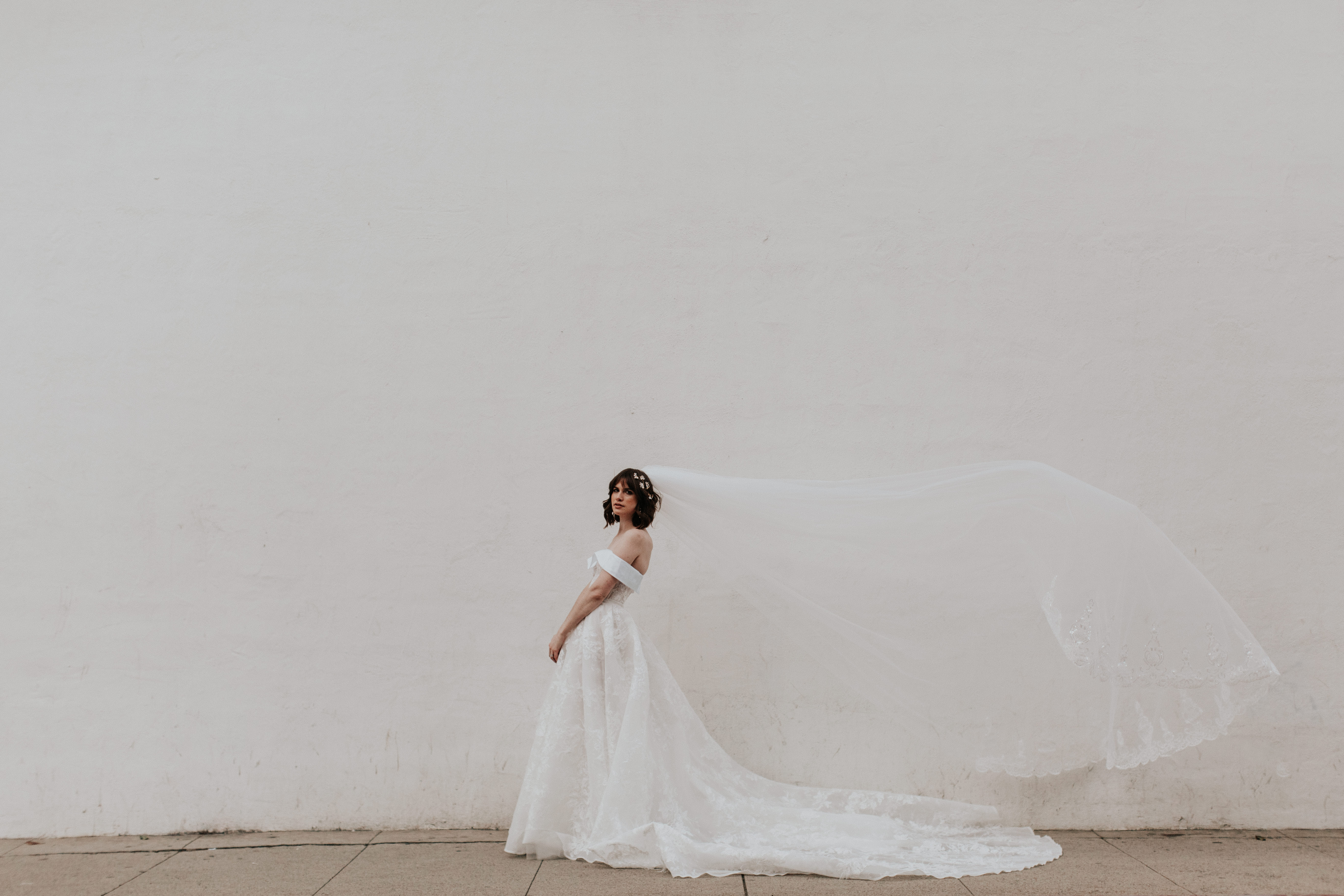
Follow the visual line of the neckline
A veil for v-neck dress styling often looks especially polished when the fabric falls in a clean, vertical path. Fingertip and chapel lengths are easy places to start because they draw the eye downward without hiding the shape of the bodice. Keep the veil attachment centered or slightly above the crown so the tulle falls evenly around your shoulders.
If your gown is sleek, a plain veil can make the V feel intentional and modern. A narrow edge or soft raw finish keeps the eye moving instead of creating a hard horizontal break.
Balance a deep, dramatic V
A plunging V is the star of the bodice, so avoid details that stop right at the bust or cross the neckline visually. A longer, airy veil can add softness behind you while leaving the front of the dress clear. If you want extra ceremony romance, a blusher can briefly cover the neckline and then be lifted for the rest of the day.
Think about proportion rather than trying to disguise the dress. A little softness balances drama without taking away the confident shape you loved when you chose the gown.
Soften a narrow or high V-neck
A narrow or higher V usually feels more refined than dramatic, and a veil with gentle fullness can keep the look from seeming too sharp. Try light tulle, a delicate lace edge, or a two-tier style if you want movement around the face. The goal is a soft frame, not a large cloud of fabric.
A shoulder-length or fingertip veil can also bring attention to your face while preserving the clean neckline. Test the placement with your planned earrings so the layers do not compete around your jaw and collarbones.
Match the formality of your wedding dress
Your veil should feel like it belongs to the same outfit as your gown. Consider the fabric, train, venue, and ceremony before choosing a length or finish. A minimalist satin dress may suit an unembellished veil, while an embroidered gown can carry more texture.
For a broader look at length, silhouette, and venue, this veil length guide is a useful companion. You can also find style references in Poppy Lane Bridal, whose collection includes bridal veils and other accessories offered directly to brides at factory-direct prices.
Choose the best veil style for a V-neck dress
Once the neckline feels balanced, choose the veil style that matches your personality. A V-neck can look clean and fashion-forward, soft and romantic, or wonderfully dramatic. Start by deciding how much attention you want the veil to receive in photos and during the ceremony. Then let the edge, texture, and volume do the finishing work.
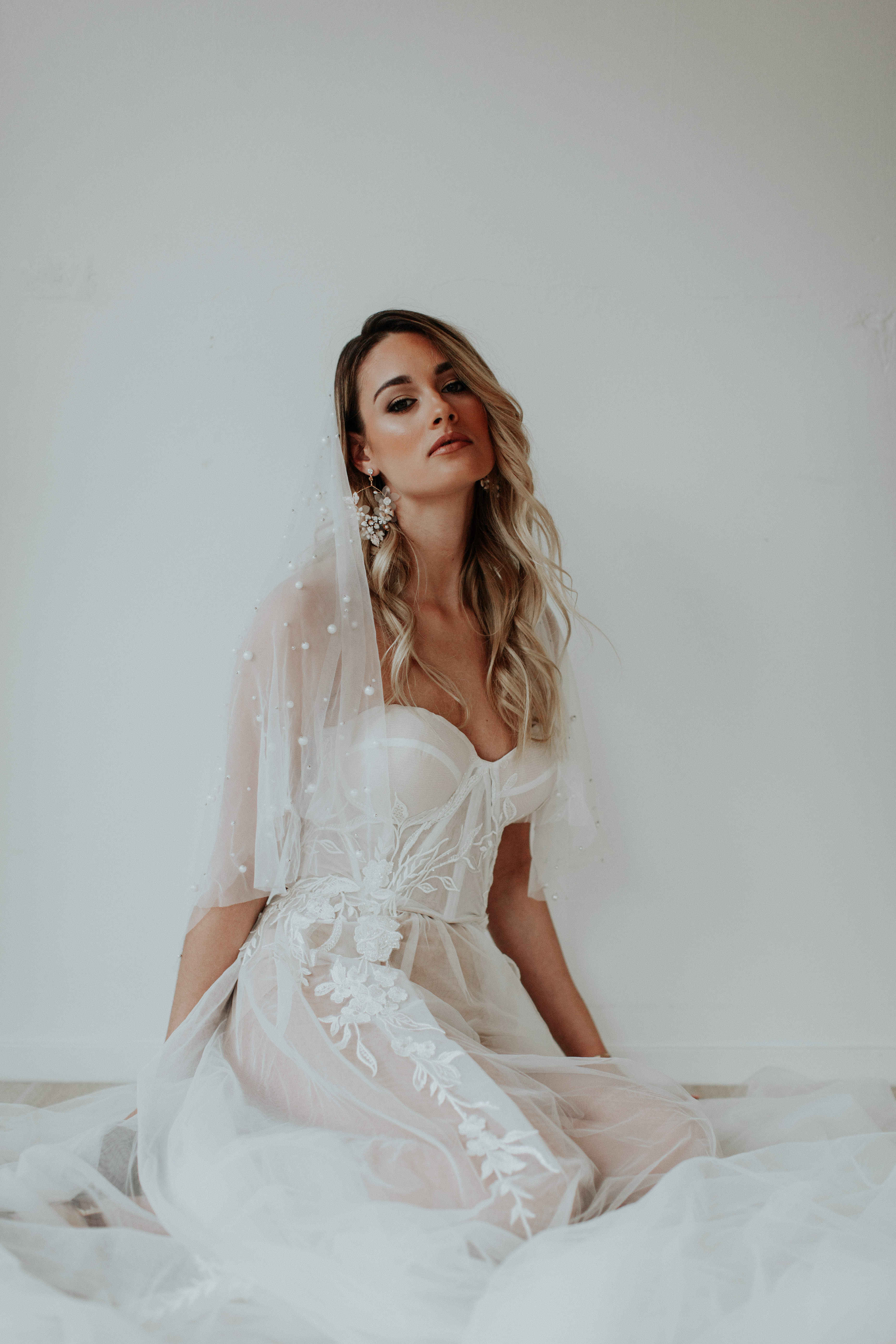
Keep it clean with a simple fingertip veil
A simple fingertip veil is one of the easiest pairings for a V-neck dress. It adds movement behind the gown and usually lets the bodice remain visible from the front and side. Choose a single tier for an effortless finish, especially if your dress has lace, beading, or a strong fabric texture.
This length also works nicely when you want to wear the veil through portraits but still move easily between ceremony spaces. A plain edge keeps the overall effect light.
Add romance with a lace-edged veil
Lace can make a V-neck feel softer, but it should relate to the gown rather than compete with it. If the dress has lace at the shoulders or train, look for a similar scale and visual weight. With a plain gown, a more noticeable border can become the romantic detail that brings the outfit together.
Keep the front of the veil relatively clear if the neckline is intricate. That way, the lace frames the silhouette without interrupting the V.
Create drama with a cathedral-length veil
A cathedral veil creates a grand aisle moment and can look striking with a fitted V-neck gown. The long fall of fabric balances the open bodice and gives the back of the dress room to shine. For a dramatic veil, a simple edge often feels more current than several competing embellishments.
Make sure the venue gives the train and veil enough room. A cathedral length is beautiful when it can move freely, but it may need careful handling in a crowded aisle or outdoor setting.
Make a statement with a mantilla veil
A mantilla veil brings lace close to the face and shoulders, giving a V-neck dress a distinctly romantic, fashion-forward feel. It is especially lovely with a clean gown because the lace becomes the main texture. Place it so the border frames your features without landing awkwardly across the deepest part of the neckline.
If you love this idea, look at examples such as this lace mantilla veil for inspiration around lace scale, edging, and placement. You do not need to copy the exact look; use it to notice what feels soft, structured, or too busy for your dress.
Find the right veil length for your dress silhouette
Neckline is only half the pairing. The skirt shape and train affect how much veil your outfit can comfortably carry, and the right length can make the whole silhouette feel more intentional. Think of the veil as a second line running through the dress, from your head to the hem. This silhouette and veil guide can help when you are comparing several lengths.
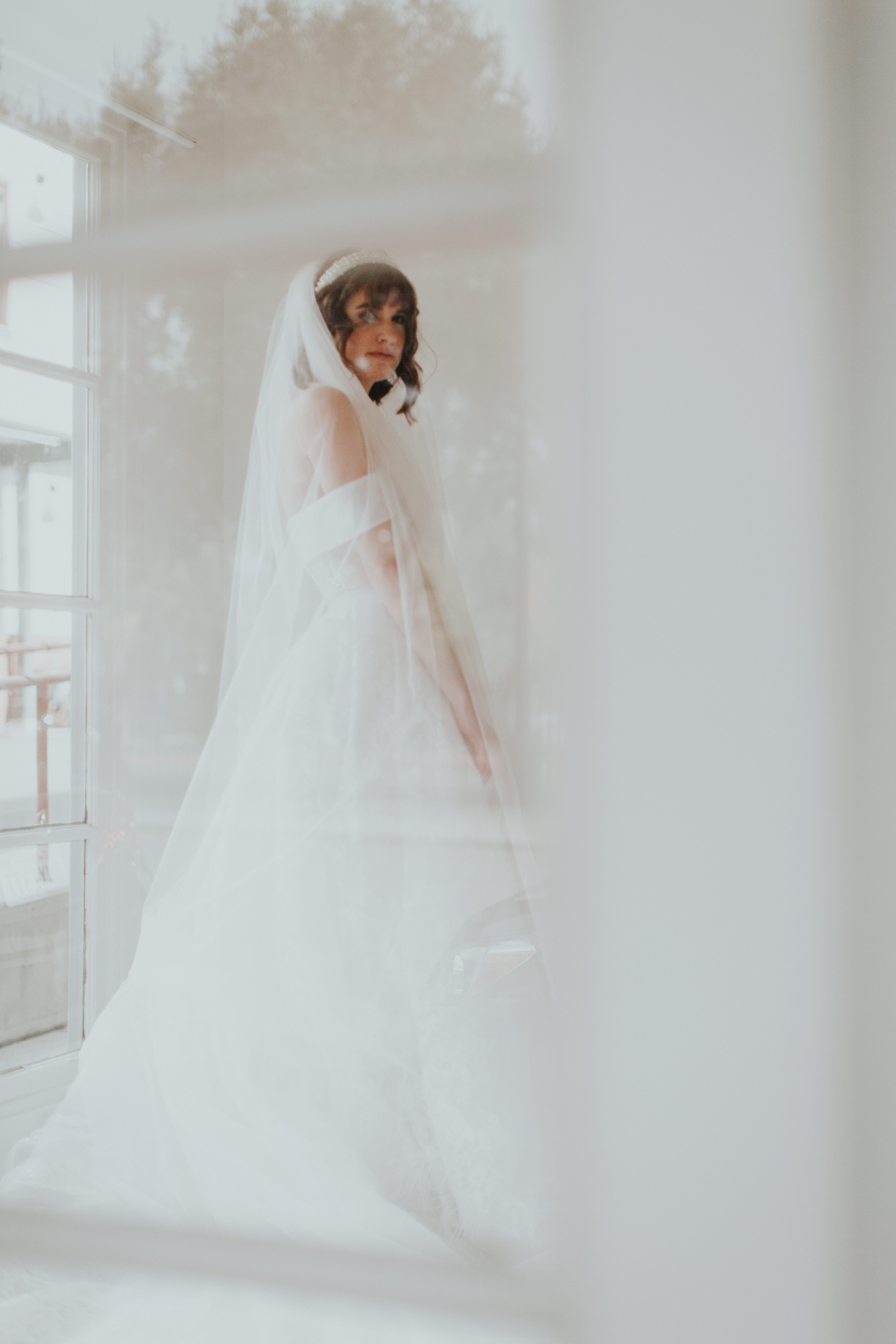
Pair a short dress with a playful shoulder-length veil
A shoulder-length veil keeps a short dress fresh and mobile. It adds bridal movement without making the outfit feel weighed down, and it can highlight shoes, a shorter hem, or a more relaxed celebration. With a V-neck, try a lightly structured veil that echoes the clean shape of the bodice.
Avoid a length that ends at an awkward point across the bust. Slightly above or below that area usually creates a more comfortable visual break.
Complement an A-line gown with a fingertip veil
An A-line gown has a balanced shape, so a fingertip veil is a dependable match. It follows the gentle width of the skirt while adding enough length to feel bridal without covering the entire back. A soft raw edge keeps the pairing modern; lace adds romance when the dress is relatively simple.
You can also use a fingertip veil as a flexible choice for portraits, especially if you want to show both the bodice and the skirt. It gives you movement without taking over the frame.
Elongate a fitted dress with a chapel veil
A chapel veil can extend the line of a fitted gown beautifully, particularly when the dress has a slim skirt or a modest train. Let the veil fall close to the body rather than adding too much side volume. This creates length behind you and keeps the V-neck feeling sleek in front.
Check that the veil does not bunch where the skirt begins to flare. A smooth fall will look more intentional as you walk and turn.
Make a ball gown feel grand with a cathedral veil
A full ball gown can handle a cathedral veil because both pieces share a sense of occasion. The long veil adds scale to the skirt and creates a memorable ceremony silhouette. With a V-neck bodice, a single-tier style can keep the upper half of the outfit from feeling crowded.
A dramatic length does not require heavy decoration. A beautiful, sheer expanse of tulle may be all the gown needs, especially if the skirt already has embroidery or sparkle.
Coordinate veil details with your gown
Details matter most when they repeat a texture or create a deliberate contrast. Look at your gown from a few feet away, not just up close under boutique lighting. The veil should support the main feature of the dress, whether that is the neckline, fabric, train, or back. If you want more ideas for polished, accessible styling, explore these affordable veil details.
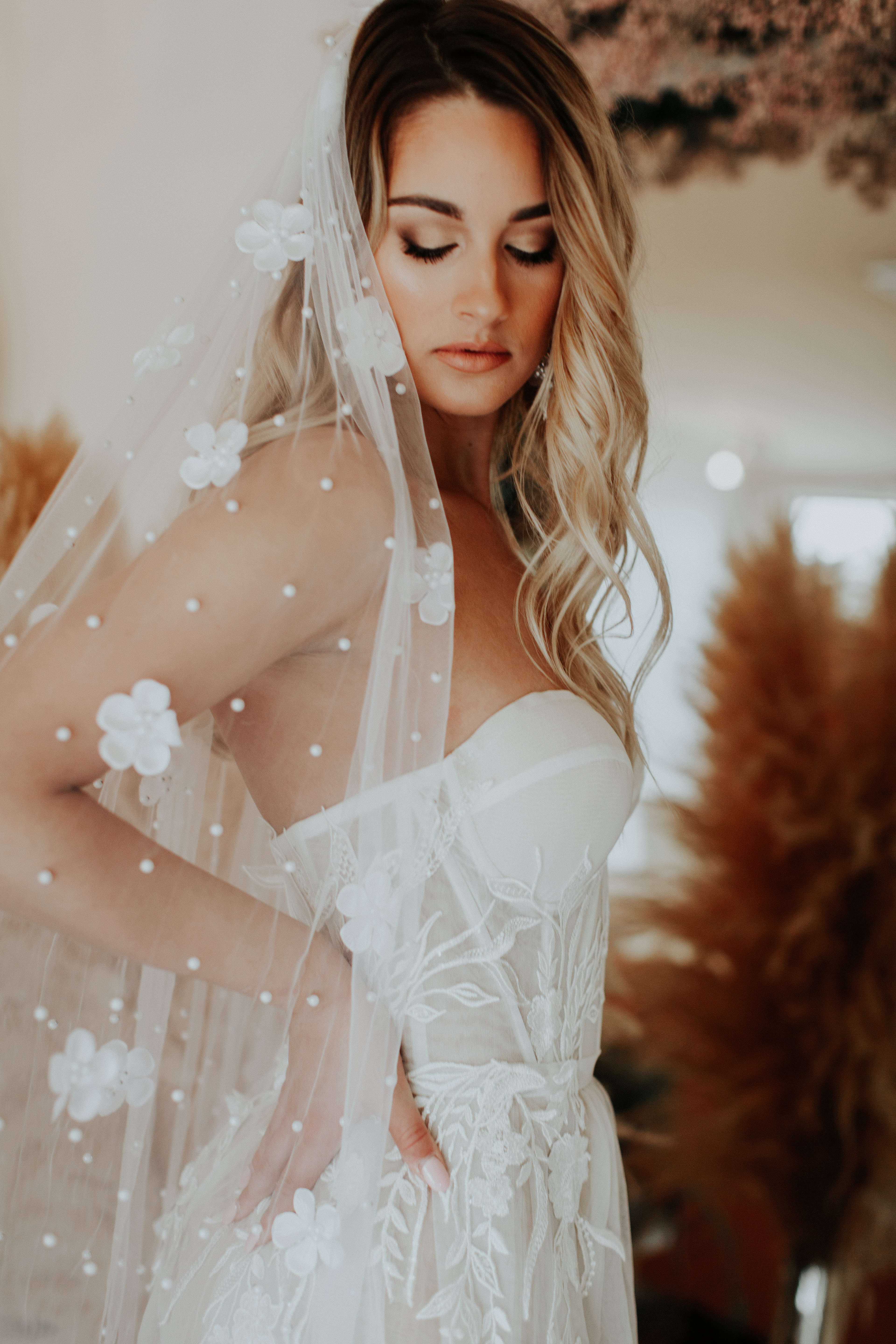
Match lace patterns without overdoing it
Exact lace matching is not always necessary, but the patterns should feel like they speak the same visual language. Compare the size of the motifs, the shape of the border, and the warmth of the ivory. If your gown already has lace from neckline to hem, a plain veil may create the calm space the outfit needs.
When the dress is simple, a lace-edged veil can add interest without requiring extra jewelry. Keep one feature dominant so the result feels styled rather than crowded.
Use beading and sparkle thoughtfully
A touch of sparkle can catch the light beautifully in ceremony photos, but it should have room to breathe. Scattered crystals or subtle beading often work better with a V-neck than a dense, glittering border. If the bodice is already embellished, let the veil remain quieter.
A simple way to edit the look is to choose sparkle in only two places: the veil and your earrings, or the gown and your hair accessory. That keeps the details connected without making everything compete.
Decide between a raw edge and a finished edge
A raw edge gives a veil an airy, barely-there finish and works well with modern, simple gowns. A lace or satin edge adds definition and can echo trim on the dress. For a closer comparison, read this edge finish guide while you are narrowing down your options.
As you shop, hold the edge against the gown instead of judging it on its own. The right finish is the one that supports the dress from a normal viewing distance.
Keep fabric weight comfortable and balanced
A veil can look delicate while still feeling heavy once it is attached to your hair. Ask how the fabric gathers at the comb and whether the weight pulls on your hairstyle. A fitted gown may benefit from a veil with a little presence, but the fabric should still move easily.
The best veil is one you can wear, walk, and enjoy—not just admire on a hanger.
Try sitting, turning, and walking a few steps in the veil. Comfort will affect your posture and confidence more than a tiny difference in trim.
Choose a veil that flatters your face and hairstyle
The veil sits near your face, so placement can change the mood of the entire look. Your hairstyle, earrings, and the height of the V-neck all affect where the tulle should begin. Bring inspiration photos, but stay open to small adjustments in the appointment. Sometimes moving a comb by an inch makes the veil feel completely different.
Place the veil to frame your features
A veil worn near the crown gives a softer, more traditional frame, while a higher placement can add height and show more of the neckline. If the V is deep, keep the front layers light so they do not create a visual line across the bust. A blusher or face-framing layer can be positioned to soften the look for the ceremony.
Look at your face with the veil both on and off. You want the tulle to add atmosphere while still letting your expression come through.
Work with an updo, ponytail, or loose waves
An updo gives the veil a secure anchor and leaves the neckline open from the back. A low ponytail can feel modern with a fingertip veil, while loose waves pair naturally with soft tulle and lighter combs. Your stylist may need to adjust volume so the attachment does not disappear or slide.
Bring the actual hair accessories if you have them. A headband, bow, or comb can change the best veil placement, especially when the V-neck is already a strong focal point.
Choose blusher placement for a V-neck bodice
A blusher can add a romantic ceremony layer, but its endpoint matters with a V-neck. A chin- or collarbone-length blusher usually keeps the neckline visible while creating a soft frame. A longer front layer can feel more dramatic, though it may cover the V until it is lifted.
Try walking and turning with the blusher down. If it catches on earrings or rests heavily against the bodice, adjust the length or styling before the wedding day.
Consider a comb, pins, or halo attachment
The attachment should suit both your hairstyle and how often you plan to remove the veil. A comb is quick and tidy, pins can provide extra security, and a halo-style attachment may work when you want a softer line around the head. Ask your stylist to show you how it will be removed without disturbing the rest of your hair.
For inspiration beyond veils, a carefully chosen bridal hair accessory can help you think through scale around your face. Keep the attachment comfortable enough for several hours of wear.
Make your final veil decision with confidence
By this point, you probably have a sense of the length and mood you want. Now it is about testing the details in real conditions rather than making the decision from a product photo. A veil can look very different under natural light, beside your gown, and in motion. Give yourself permission to choose the option that feels best—not simply the one with the most detail.
Try the veil on with your actual dress
Bring your dress, or return to the boutique for a full styling appointment if possible. The exact ivory, fabric sheen, neckline depth, and train length can change the pairing. Wear similar undergarments and bring the shoes you expect to use so the proportions are honest.
Take a few photos from a distance. A veil that feels plain up close may look beautifully balanced in a full-length image.
Check how it looks from every angle
Ask someone to photograph you from the front, side, and back while you stand and walk. Pay attention to where the edge falls, whether the V remains visible, and how the veil moves around the train. Also check the attachment from behind; that detail will appear in many ceremony photos.
Make a short list before the appointment so you remember to check the things that matter most:
- Does the veil keep the neckline visible?
- Does its length suit the skirt and train?
- Can you turn and sit comfortably?
- Do the details work with your jewelry and hairstyle?
The list is not meant to make the moment fussy. It simply helps you compare options when every veil starts looking lovely.
Think about ceremony and reception needs
Some brides love wearing the veil for the ceremony and portraits, then removing it for dinner and dancing. Others want a lighter style they can keep on longer. Consider your venue, weather, aisle length, and how much movement your reception will involve.
Ask how the veil will be stored or removed during the day. A practical plan lets you enjoy the drama without worrying about tangles or snagging.
Find a beautiful veil that fits your budget
Set a comfortable accessory budget before you fall for a particular finish. Factory-direct bridal accessories can offer an elevated look without the retail markup, which is part of the reason Poppy Lane Bridal speaks to stylish brides who want to shop thoughtfully. Poppy Lane Bridal offers modern veils and other bridal accessories directly to brides at factory-direct prices.
You can also browse Poppy Lane Bridal for ideas about styling, securing, and transitioning a veil from ceremony to reception. Choose the piece that gives you the right combination of beauty, comfort, and value.
Shop the collection
When you are ready, explore Poppy Lane Bridal’s veils and bridal accessories to find a style that feels modern, romantic, and genuinely you.
Conclusion
The perfect veil for a V-neck dress follows the shape, scale, and spirit of your gown while still feeling comfortable enough to enjoy all day. Try a few lengths, take photos from every angle, and choose the details that make you feel confident rather than crowded.
Frequently Asked Questions
What veil length looks best with a V-neck wedding dress?
Fingertip and chapel lengths are popular starting points because they continue the V-neck’s vertical line. A cathedral veil can also work beautifully when you want more ceremony drama, especially with a fitted gown.
Can I wear a lace veil with a V-neck dress?
Yes. Match the lace scale and color to the gown, and avoid adding a dense border if the neckline or bodice is already highly detailed. A lace edge is often most effective when it has room to stand out.
Is a cathedral veil too dramatic for a V-neck gown?
Not necessarily. A cathedral veil can balance an open or fitted V-neck and create a striking aisle silhouette. Choose a simpler edge if the dress already has substantial embellishment.
Should my veil cover the V-neckline?
That depends on the look you want. A clear, single-tier veil keeps the neckline visible, while a blusher or face-framing layer can soften or temporarily cover it during the ceremony.
What hairstyle works best with a V-neck dress and veil?
Updos, low ponytails, and loose waves can all work. Choose the hairstyle based on the veil attachment, the amount of neckline you want to show, and how securely you need the veil to stay in place.
Should my veil match my wedding dress exactly?
The veil should coordinate with the dress’s color, fabric, and overall detail level. It does not need to duplicate every pattern, but noticeably different ivory tones or textures can look disconnected.
How can I make sure my veil is comfortable?
Try it on for several minutes while walking, sitting, and turning. Check the weight at the comb, the security of the attachment, and whether the edge catches on your hair, earrings, or gown.